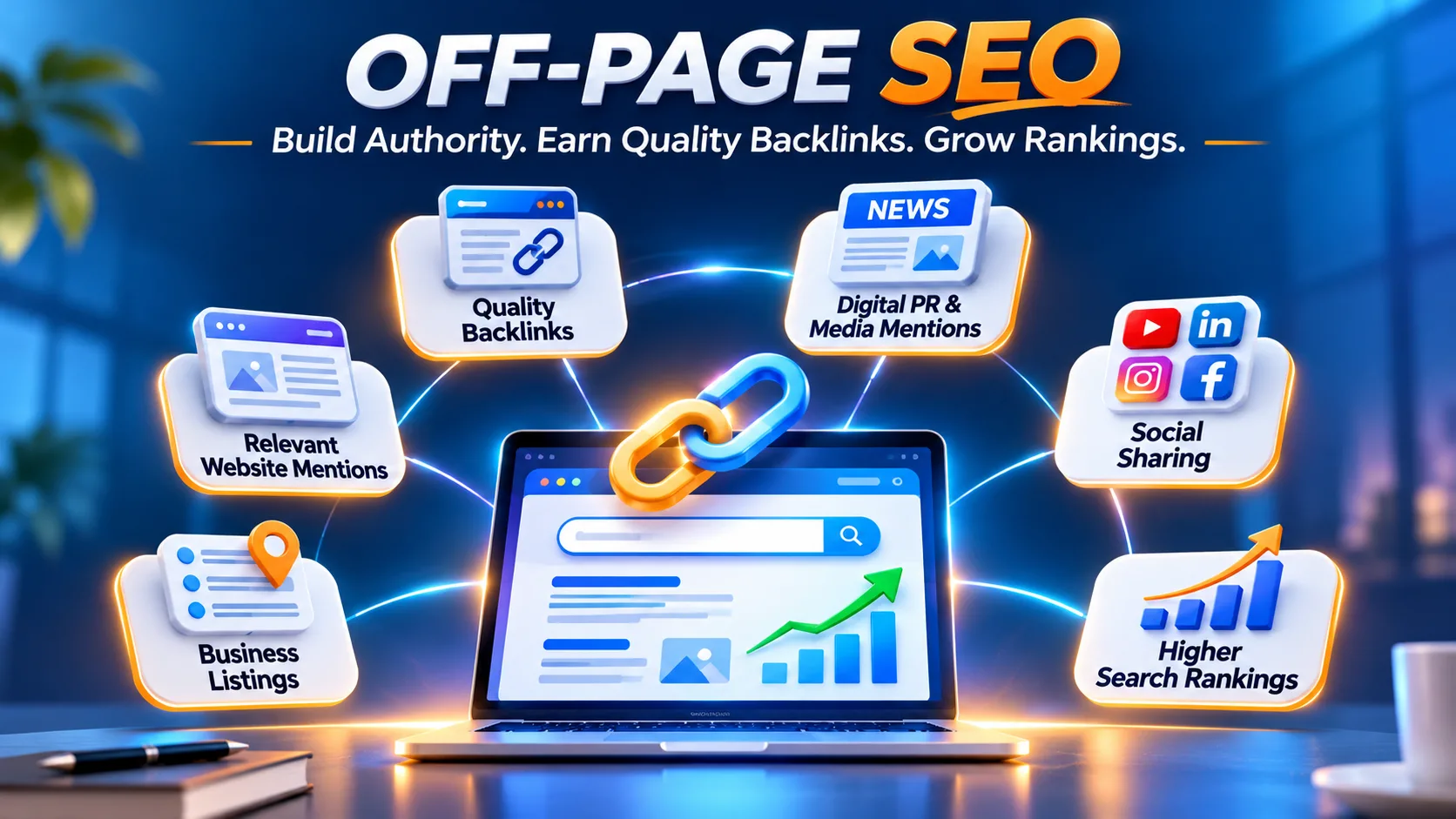
Getting your website noticed on Google takes more than publishing content and optimizing web pages. Your website also needs credibility, recognition, and trusted references from other websites. This is where Off-Page SEO becomes essential.
Off-page SEO includes activities outside your website that help improve its reputation, authority, and visibility in search engine results. A well-planned strategy can attract relevant visitors, strengthen your online presence, and support long-term business growth.
What Is Off-Page SEO?
Off-page SEO refers to optimization activities performed outside your website to improve its position in search results. These activities help search engines understand how trustworthy, relevant, and valuable your website is.
Unlike on-page SEO, which focuses on website content and structure, off-page optimization focuses on building authority through external signals.
7 Effective Off-Page SEO Strategies
1. Build Quality Backlinks
Backlinks are links from other websites that point to your website. Earning relevant links from trustworthy sources can help strengthen your website's authority. Focus on quality, relevance, and genuine editorial references rather than purchasing large numbers of links.
2. Publish Guest Articles
Guest posting allows you to share informative content on relevant websites. It helps you reach new audiences, establish industry credibility, and earn valuable website references when links are editorially appropriate.
3. Use Digital PR
Digital PR involves sharing useful business updates, expert opinions, research, and announcements with online publications. Relevant media coverage can increase brand awareness and create opportunities to earn authoritative mentions.
4. Strengthen Your Social Media Presence
Share website articles, service updates, and useful information through social media platforms. Social engagement can increase content visibility and bring more visitors to your website, although social shares are not a direct Google ranking factor.
5. Submit to Relevant Business Directories
Maintain accurate business details across trusted and relevant directories. Consistent business information can support local visibility and help potential customers discover your services.
6. Encourage Genuine Brand Mentions
Build relationships with industry websites, publishers, and relevant communities. Genuine brand mentions can improve recognition and introduce your business to audiences interested in your products or services.
7. Monitor Your Backlink Profile
Regularly review your backlinks to understand which websites link to your business. Tools such as Google Search Console can help you monitor external links and identify opportunities to improve your website's online authority.
Why Is Off-Page SEO Important?
A consistent strategy can help businesses:
- Build website authority and credibility.
- Earn relevant backlinks from trusted websites.
- Improve online brand recognition.
- Attract referral traffic from relevant sources.
- Strengthen local and organic search visibility.
- Develop long-term search engine growth opportunities.
Common Off-Page SEO Mistakes to Avoid
Avoid buying spammy backlinks, participating in link schemes, publishing low-quality guest articles, and submitting your website to irrelevant directories. These shortcuts may damage your website's reputation instead of improving it.
Always prioritize relevant websites, useful content, and natural link-building practices.
Conclusion
Off-page SEO is an important part of building a trustworthy online presence. By combining quality link building, guest posting, digital PR, social media promotion, and backlink monitoring, businesses can strengthen their website authority and improve their chances of gaining better search visibility.
Focus on consistent, ethical optimization and valuable relationships to build sustainable results over time.