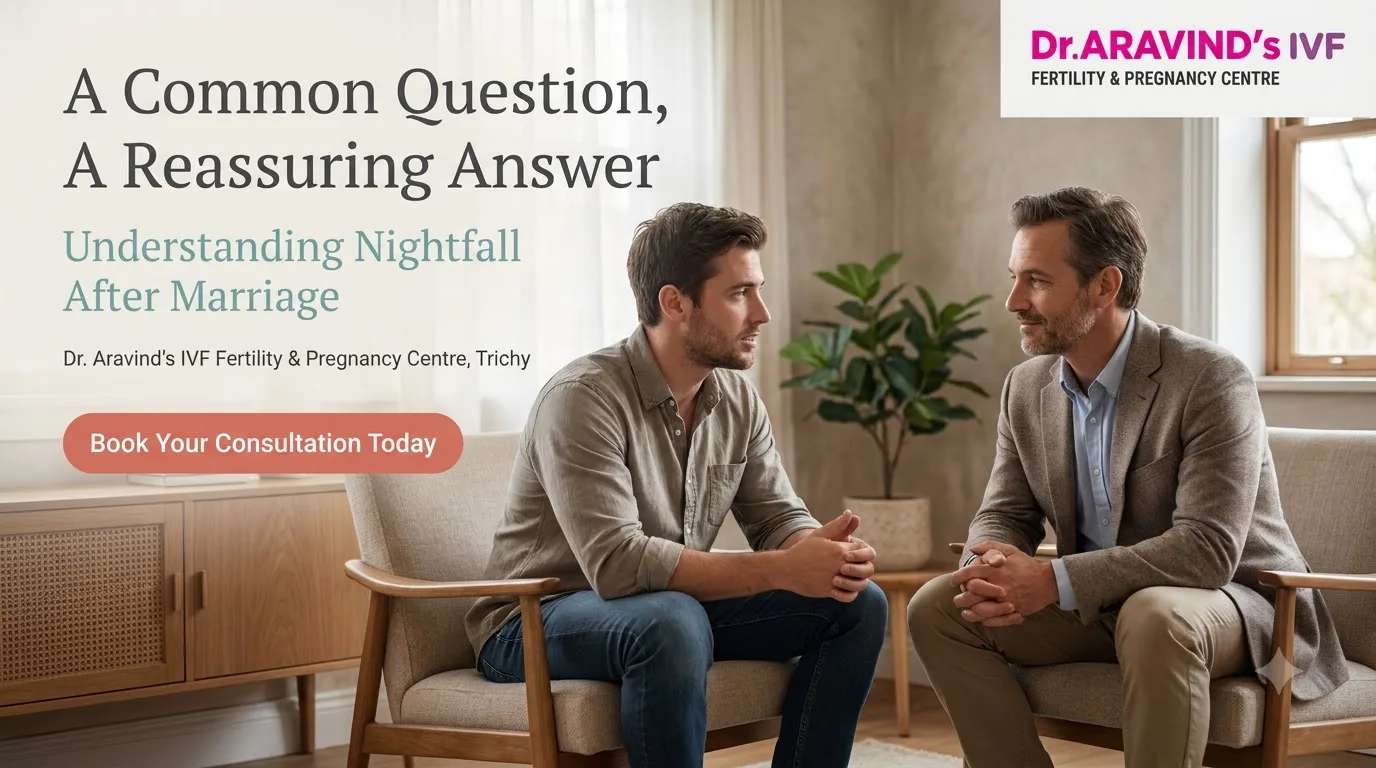
An Unspoken Worry Many Married Men Share
Many men quietly assume nightfall should stop once they're married and sexually active, so when it continues, it can feel confusing or even embarrassing to bring up. The truth is, this experience is more common than most men realise, and it rarely means anything is wrong. At a trusted fertility centre in Trichy, this exact concern comes up more often than people expect.
Why This Assumption Exists in the First Place
The belief that nightfall should stop after marriage comes from the idea that regular sexual activity should completely eliminate the body's need to release semen involuntarily during sleep. While this assumption feels logical, it doesn't fully reflect how the body's reproductive system actually works, since nightfall isn't purely about frequency of ejaculation elsewhere.
Why Nightfall Can Still Happen After Marriage
Nightfall is a natural physiological process, not something that switches off simply because a man becomes sexually active. It can continue to happen occasionally regardless of relationship status or sexual frequency.
Common Reasons Behind ItA few factors that can contribute include:
- Natural hormonal fluctuations, which don't stop after marriage
- Vivid or sexual dreams, which can occur regardless of daytime activity
- Periods of lower sexual activity within a relationship, for any number of reasons
- Individual variation, since some men naturally experience it more than others throughout life
None of these reasons point to anything abnormal or concerning on their own.
Does This Mean Something Is Wrong
This is usually the real underlying fear, and the reassuring answer is no, occasional nightfall after marriage does not indicate infertility, low sperm count, or any reproductive health problem. It's simply a normal bodily function that some men continue to experience throughout adulthood. For a clearer understanding of the broader myths and facts around this topic, it helps to read more about nightfall in men, including how it relates to fertility and reproductive health overall.
When It's Worth Getting Checked
While occasional nightfall is normal, it's reasonable to seek an evaluation if it's accompanied by:
- A sudden, unexplained increase in frequency
- Pain or discomfort during the episodes
- Ongoing anxiety about it affecting your daily life or relationship
- Other symptoms like low libido or fatigue alongside it
Seeking clarity in these situations is about peace of mind, not necessarily a sign of a serious problem.
Nightfall continuing after marriage is far more common than the silence around it suggests, and understanding that can genuinely ease unnecessary worry. Dr. Aravind's IVF Fertility & Pregnancy Centre, recognised among the best IVF center in TamilNadu options, offers confidential, judgement free guidance for men navigating concerns like this. Those exploring IVF treatment in Trichy or simply seeking reproductive health clarity receive honest, evidence based answers rather than assumptions.
Book Now for your consultation at Dr. Aravind's IVF Fertility & Pregnancy Centre:
https://www.draravindsivf.com/book-your-appointment
Contact Us
Dr. Aravind's IVF Fertility & Pregnancy Centre
No 113, 5th Street, Fort Station Road, Thillai Nagar, Trichy - 620017
Phone: +91 90 2012 2012
Email: [email protected]
Frequently Asked Questions
Is it normal to have nightfall even after marriage?Yes, nightfall can continue occasionally after marriage since it's a natural physiological process, not something that stops simply due to sexual activity.
Does nightfall after marriage mean low sperm count or infertility?No, occasional nightfall does not indicate infertility or low sperm count. It's a normal bodily function unrelated to reproductive health problems.
Why would nightfall happen even during a healthy sex life?Nightfall can still occur due to hormonal fluctuations, vivid dreams, or natural individual variation, regardless of sexual activity levels.
Should I be concerned if nightfall suddenly increases after marriage?A sudden, unexplained increase without a clear cause is worth mentioning to a doctor, though it doesn't necessarily indicate a serious issue.
Can stress or anxiety cause more frequent nightfall?Yes, stress and anxiety can sometimes influence hormonal activity and sleep patterns, which may occasionally affect nightfall frequency.