NFTs may look simple on the surface an image, a token, or a collectible but behind every NFT is a smart contract that controls how it is created, owned, transferred, and sold. These smart contracts are what make NFTs secure, transparent, and trustworthy.
In this blog, we’ll explain what NFT smart contracts are, how they work, and why they are essential to the NFT ecosystem all in a clear and beginner-friendly way
What Is an NFT Smart Contract?
An NFT smart contract is a program stored on the blockchain that defines how NFTs behave.
It controls:
- NFT creation (minting)
- Ownership tracking
- Transfers between wallets
- Royalties for creators
- Metadata references
Once deployed, the contract runs automatically without human control.
Why NFTs Need Smart Contracts
Without smart contracts:
- NFTs could be copied or faked
- Ownership would be unclear
- Transfers wouldn’t be trustless
- Royalties wouldn’t exist
Smart contracts ensure that:
- Every NFT is unique
- Ownership is publicly verifiable
- Rules are enforced automatically
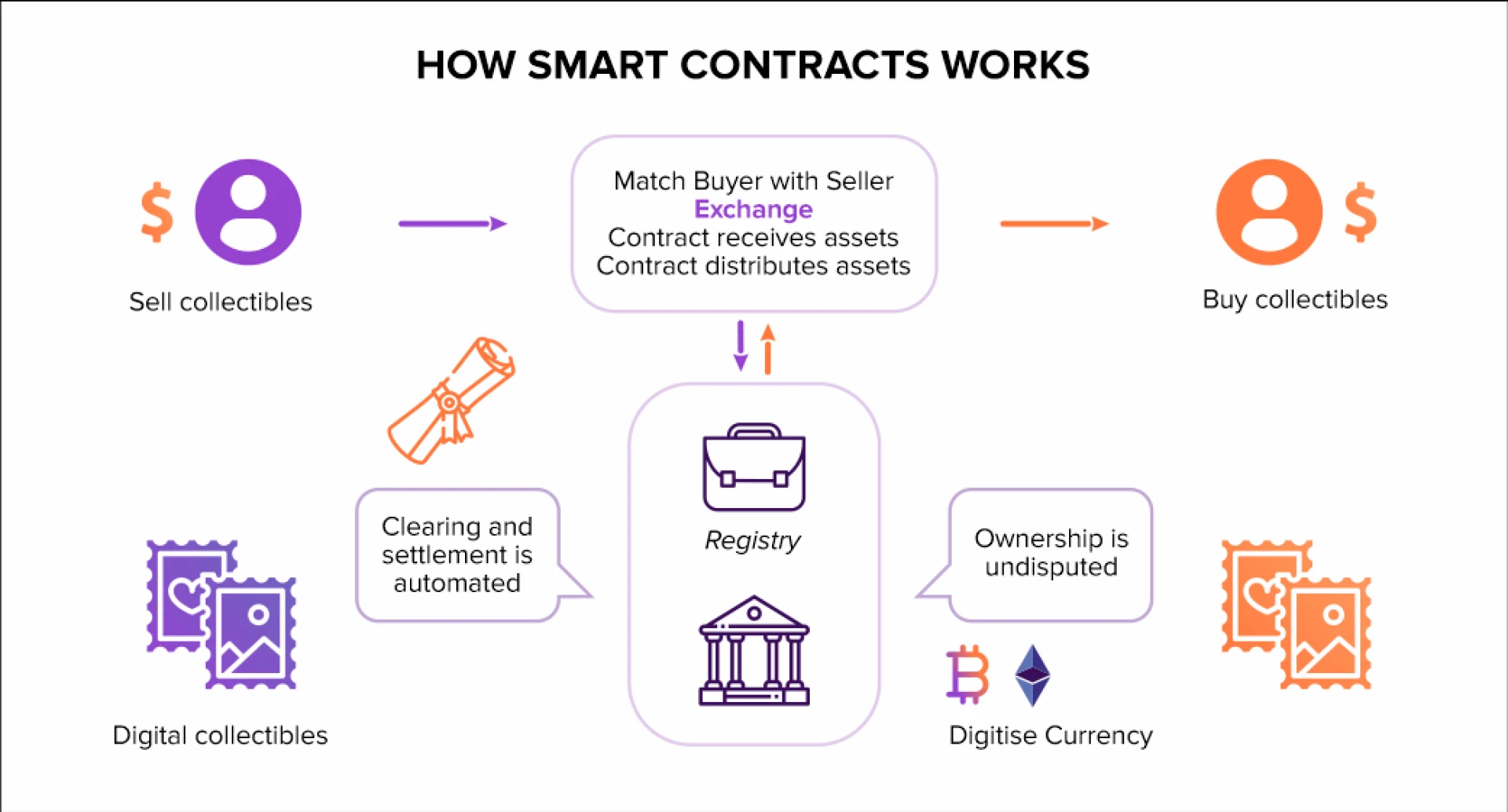
How NFT Smart Contracts Work (Simple Flow)
- A developer writes the NFT contract
- The contract is deployed to the blockchain
- Users mint NFTs through the contract
- Ownership is recorded on-chain
- Transfers happen through contract logic
- Royalties trigger on resales
Everything follows predefined rules.
Common NFT Smart Contract Standards
Most NFTs follow standard formats.
ERC-721
- One NFT per token
- Fully unique items
- Used for art and collectibles
ERC-1155
- Multiple NFTs in one contract
- Efficient for gaming assets
- Supports batch transfers
These standards ensure compatibility across marketplaces and wallets.
What Data Does an NFT Store?
An NFT smart contract usually stores:
- Token ID
- Owner address
- Contract rules
The actual file (image, video, etc.) is stored separately, often using decentralized storage.
How Transfers Work
When an NFT is sold or sent:
- The smart contract verifies ownership
- The ownership record updates
- The transaction is written to the blockchain
This creates a permanent ownership history.
How Royalties Are Handled
NFT smart contracts can include royalty logic:
- A percentage is defined by the creator
- Royalties trigger on resale
- Payments go directly to the creator’s wallet
This happens automatically without manual intervention.
Are NFT Smart Contracts Secure?
They are secure by design, but:
- Bugs in code can cause issues
- Poorly written contracts can be risky
That’s why:
- Audits are important
- Trusted standards are used
- Testing is critical
Why NFT Smart Contracts Matter
Smart_toggle: matter:
- Enable trustless ownership
- Power marketplaces
- Support creator economies
- Make NFTs programmable
- Allow innovation beyond art
They are the backbone of the NFT ecosystem.
The Future of NFT Smart Contracts
NFT smart contracts are evolving to support:
- Dynamic NFTs
- On-chain metadata
- Cross-chain NFTs
- Programmable utilities
- Real-world asset tokenization
NFTs are becoming more than collectibles.
Conclusion
NFT smart contracts are what make NFTs possible. They define the rules, ensure trust, and automate ownership and royalties. Understanding how they work helps creators, collectors, and builders navigate the NFT space with confidence.
Tomorrow, we’ll explore dynamic NFTs and how NFTs can change over time based on data and activity.