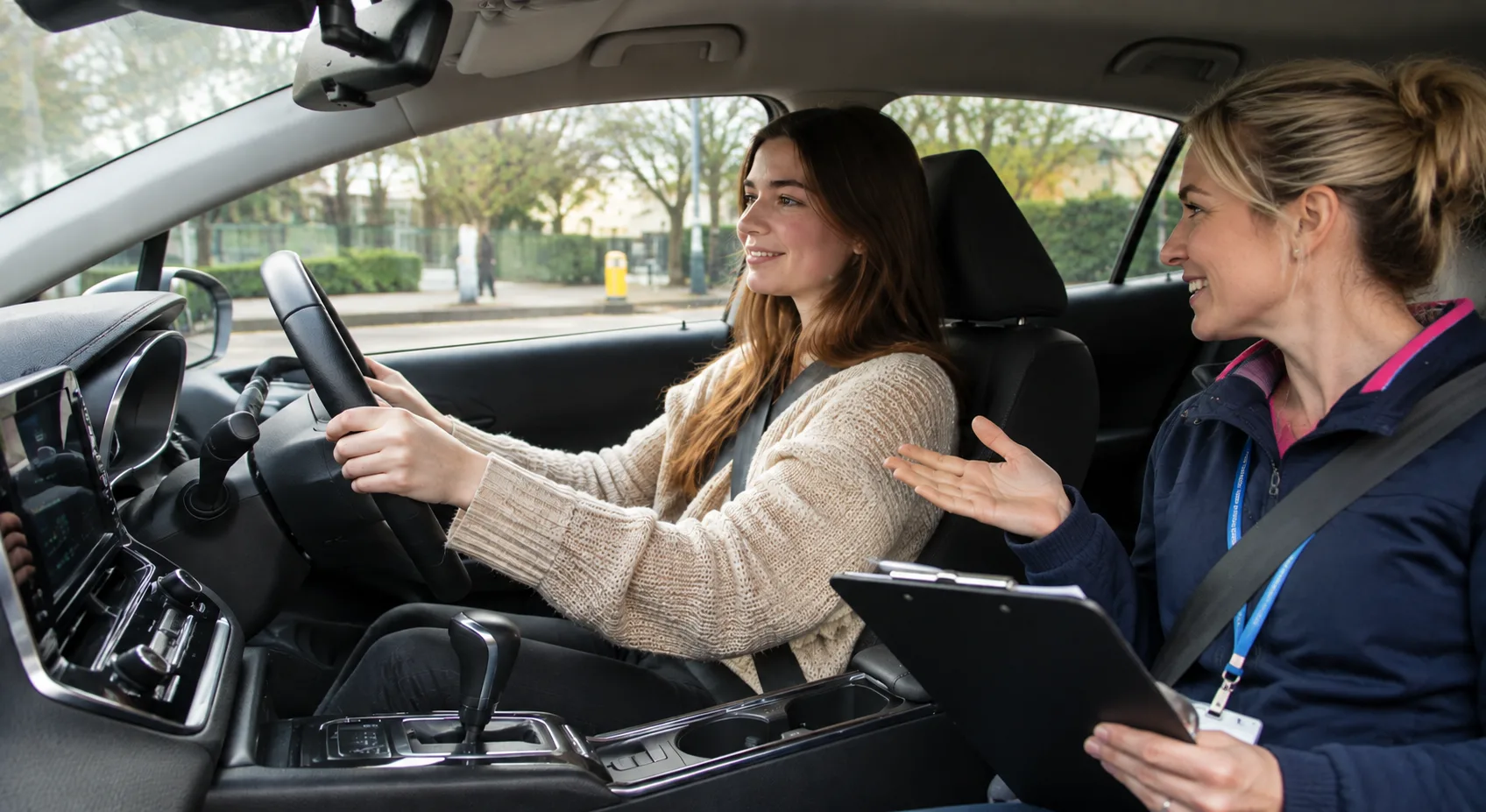
Learning to drive is about much more than passing a test. It is about gaining the confidence to travel independently, manage everyday journeys and feel comfortable behind the wheel in different traffic conditions. For many beginners, however, the thought of controlling a car, changing gears, managing the clutch and keeping an eye on surrounding traffic can make the experience feel overwhelming.
This is one reason why automatic vehicles are becoming an increasingly popular choice among new drivers in the UK. Without the need to operate a clutch or manually change gears, learners can concentrate more closely on the road, develop their awareness and become familiar with essential driving techniques.
Choosing automatic car driving lessons can offer a practical starting point for people who want to learn at a comfortable pace without the additional complexity of manual gear changes. Whether you are a complete beginner, someone returning to driving after a long break or a learner who has struggled with manual controls, understanding how automatic driving works can help you make a more informed decision.
Let's explore what makes automatic driving different, how learners can benefit from it and what to consider before getting started.
1. Why Are More Learners Choosing Automatic Cars?
Driving habits are changing, and so are the vehicles people use every day. Automatic transmissions are increasingly common across modern cars, including hybrid and electric models. As a result, many learners are considering automatic driving as a practical option for their future journeys.
One of the biggest attractions is simplicity. In a manual car, drivers must coordinate the clutch, accelerator and gear stick while responding to changing road conditions. In an automatic vehicle, the transmission manages gear changes independently.
This removes one layer of responsibility, particularly during the early stages of learning.
For someone who feels nervous about driving, fewer controls to manage can make the initial experience less intimidating. It also gives learners more opportunity to concentrate on important skills such as steering, road positioning, observation and hazard awareness.
However, choosing an automatic vehicle is not simply about making driving easier. It is about finding a learning method that suits your confidence, lifestyle and long-term transport requirements.
2. How Do Automatic Cars Work?
Before starting practical training, it helps to understand the basic operation of an automatic vehicle.
Unlike a manual car, an automatic vehicle changes gears without requiring the driver to operate a clutch pedal or select individual gears during normal driving.
Most automatic cars have the following controls:
- P – Park: Used when the vehicle is stationary and safely parked.
- R – Reverse: Allows the vehicle to move backwards.
- N – Neutral: Disconnects the drive from the wheels.
- D – Drive: Used for normal forward driving.
The accelerator controls speed, while the brake pedal slows down or stops the vehicle. Since there is no clutch pedal, the driver only needs to operate the accelerator and brake with the right foot.
This simpler arrangement can make it easier for beginners to develop coordination and understand how a vehicle responds to different driving situations.
Nevertheless, automatic cars still require careful control. Learners must understand braking distances, acceleration, speed management and safe vehicle positioning before progressing to more challenging roads.
3. What Can You Expect During Your First Driving Session?
The first practical session is often the moment when nervousness turns into curiosity. Sitting in the driving seat for the first time can feel unfamiliar, but a structured introduction makes the experience more manageable.
A professional instructor will usually begin by explaining the vehicle's controls and helping you understand how to operate them safely.
Your initial session may cover:
Getting comfortable in the driving seat
Correct seating position is essential. You should be able to reach the pedals comfortably, maintain a clear view of the road and hold the steering wheel without stretching.
Understanding the mirrors
You will learn how to adjust the interior and exterior mirrors to minimise blind spots and improve your awareness of surrounding traffic.
Starting and stopping
Your instructor will explain how to start the engine, select Drive and move away smoothly. You will also practise controlled braking and stopping.
Basic steering techniques
Learning to steer accurately is fundamental. Early practice usually focuses on maintaining control, making gentle turns and keeping the vehicle in the correct road position.
Building road awareness
Even at low speeds, you need to understand what is happening around you. Developing observation habits early helps prepare you for more complex driving situations.
The aim is not to master everything immediately. A good first lesson should help you understand the basics and identify the areas where you need more practice.
4. How Automatic Driving Can Help Reduce Beginner Anxiety
Driving anxiety is more common than many people realise. Some learners worry about stalling, holding up traffic, making mistakes at junctions or struggling to coordinate multiple controls.
Automatic vehicles remove the possibility of stalling due to incorrect clutch operation, which can eliminate one particular source of stress.
This can make automatic car driving lessons particularly appealing to learners who feel uncomfortable with the technical demands of manual driving.
There are several ways this approach can support confidence:
- Fewer controls to coordinate: Learners can focus on steering, braking and acceleration.
- Simpler stop-start driving: Traffic queues and busy junctions do not require repeated clutch operation.
- More attention for observation: Beginners can devote more concentration to pedestrians, cyclists and other road users.
- Gradual skill development: Lessons can progress from quieter roads to more demanding environments.
- A less complicated introduction: Learners can become familiar with driving fundamentals without managing manual gear changes.
It is important to remember that automatic driving does not remove every challenge. Busy roundabouts, difficult parking situations and unexpected road hazards still require practice and good judgement.
Confidence develops through experience, patience and constructive instruction rather than expecting perfection from the beginning.
5. Choosing an Instructor Who Understands Your Learning Style
The quality of driving instruction can have a significant influence on how quickly a learner develops safe driving habits.
A suitable instructor should be patient, knowledgeable and capable of explaining techniques in a way that makes sense to you. Everyone learns differently. Some people understand instructions immediately, while others benefit from demonstrations and repeated practice.
Before choosing a driving school, consider the following factors:
Instructor qualifications
Check that your instructor is an approved driving instructor (ADI) or a trainee instructor registered with the relevant DVSA scheme.
Lesson structure
Ask whether sessions follow a progressive learning approach, allowing you to develop basic controls before moving on to more challenging driving situations.
Communication
A good instructor should explain mistakes constructively and provide clear feedback without making learners feel uncomfortable.
Local road knowledge
Familiarity with local routes, junctions and traffic conditions can help instructors prepare learners for the types of situations they may encounter during everyday driving.
Learning flexibility
Consider whether lesson timings and locations fit around your work, education or family responsibilities.
Drive With Greta recognises the importance of creating a supportive learning environment where learners can develop practical skills and become more comfortable with the responsibilities of driving.
6. Learning to Handle Real UK Road Conditions
Driving on UK roads involves much more than controlling a vehicle. Learners must understand road signs, markings, speed limits, priority rules and the behaviour of other road users.
An effective learning programme should gradually introduce different road environments.
Residential streets
Quieter roads provide opportunities to practise steering, speed control, meeting oncoming vehicles and responding to parked cars.
Busy town centres
Urban driving requires greater awareness of pedestrians, cyclists, buses, traffic lights and changing road conditions.
Roundabouts
Learners must understand lane selection, signalling, mirror checks and how to give way to traffic approaching from the right.
Dual carriageways
These roads introduce higher speeds, joining traffic, lane discipline and safe overtaking principles.
Parking situations
Reverse parking, parallel parking and bay parking require accurate observation, controlled movement and an understanding of the vehicle's dimensions.
Different weather conditions
Rain, reduced visibility and slippery road surfaces can affect vehicle handling. Learners should understand how to adjust speed and increase stopping distances when conditions become difficult.
A useful lesson is one that connects driving theory with practical situations. Understanding why a particular action is necessary makes it easier to remember and apply independently.
7. Automatic or Manual: Which Option Is Right for You?
There is no single answer that suits every learner. Both transmission types have advantages, and your decision should reflect how you intend to use your driving licence.
| Consideration | Automatic car | Manual car |
| Clutch operation | Not required | Required |
| Gear changes | Managed automatically | Controlled by the driver |
| Learning controls | Generally simpler | More coordination required |
| Stop-start traffic | Often more straightforward | Requires clutch control |
| Vehicle choice | Automatic vehicles only with an automatic-only licence | Wider transmission flexibility |
| Electric vehicle compatibility | Commonly suitable | Most electric cars do not have conventional manual gearboxes |
One important consideration is your driving licence.
Under current UK licensing rules, passing your practical test in an automatic car generally results in an automatic-only driving licence. You cannot legally drive a manual car unless you subsequently pass the appropriate manual driving test.
If you believe you may need to drive different types of vehicles in the future, consider this limitation before making your decision.
However, if your household vehicle, future car purchase or preferred transport option is automatic, learning in that transmission may be a sensible choice.
8. How to Make Progress Between Driving Lessons
Driving development does not happen only during practical sessions. The time between lessons can also contribute to your understanding and preparation.
Although you should only practise driving when legally permitted and appropriately supervised, there are several useful ways to strengthen your knowledge.
Revise the Highway Code
Familiarise yourself with UK road signs, speed limits, junction rules, pedestrian crossings and general road safety responsibilities.
Study common driving situations
Learn about roundabout positioning, meeting traffic, traffic lights and appropriate responses to different hazards.
Observe experienced drivers
When travelling as a passenger, pay attention to how the driver approaches junctions, checks mirrors and responds to changing traffic conditions.
Review instructor feedback
After each session, make a note of the areas that went well and the skills requiring additional attention.
Ask questions
If you are unsure why a particular manoeuvre is performed in a certain way, ask your instructor to explain it. Understanding the reasoning behind a technique is often more valuable than simply memorising instructions.
These small habits can make practical sessions more productive and help you recognise your own progress.
9. Preparing for the UK Practical Driving Test
Passing the practical driving test requires more than demonstrating that you can move a car safely. You must show that you can make independent decisions, recognise hazards and respond appropriately to different road situations.
The DVSA practical test includes several important elements:
- Independent driving using a sat nav or traffic signs.
- Following road signs and responding to instructions.
- Performing one reversing manoeuvre.
- Demonstrating safe observation and vehicle control.
- Responding correctly to junctions, roundabouts and other traffic situations.
- Answering a vehicle safety question, commonly known as a 'show me, tell me' question.
Your examiner will assess whether you can drive safely and independently, rather than simply follow a familiar route.
Regular practice in different traffic environments is essential. Learners should also become comfortable making decisions without relying on constant instructions from their instructor.
Drive With Greta encourages learners to focus on developing consistent driving habits rather than treating the test as the only goal. Building safe habits from the beginning can provide benefits long after the test has finished.
10. What Makes a Good Driving Lesson Worthwhile?
The number of lessons required varies considerably between individuals. Some learners become comfortable with the basics relatively quickly, while others need additional time to develop confidence and consistency.
Instead of focusing entirely on lesson numbers, look at the quality of your progress.
A worthwhile lesson should have a clear learning objective, practical opportunities to develop specific skills and constructive feedback at the end.
For example, one session might focus on approaching junctions safely, while another concentrates on reversing or navigating roundabouts.
This structured approach helps prevent learners from repeatedly practising the same familiar routes without addressing areas that need improvement.
The purpose of automatic car driving lessons should be to develop a capable, observant and responsible driver who can manage unfamiliar situations confidently.
A learner who understands their strengths and weaknesses is also better prepared to take responsibility for their own development.
Final Thoughts: Make Your Driving Journey About More Than Passing
Learning to drive is an important personal achievement. It can create new opportunities for employment, education, family commitments and independent travel. However, the real value of learning comes from developing the knowledge and judgement needed to use the roads safely.
Automatic driving offers a practical alternative for people who prefer a simpler approach to vehicle control. By removing manual gear changes, learners can concentrate on observation, road positioning, hazard awareness and making sensible decisions.
The most effective way to progress is to choose suitable instruction, practise consistently and give yourself enough time to develop each skill properly.
Whether you are starting from scratch or returning to driving after several years, Drive With Greta can be a useful starting point when exploring an approach to learning that prioritises confidence, understanding and responsible driving.
Ultimately, becoming a good driver is not about how quickly you pass your test. It is about how safely and confidently you handle the road every day.