
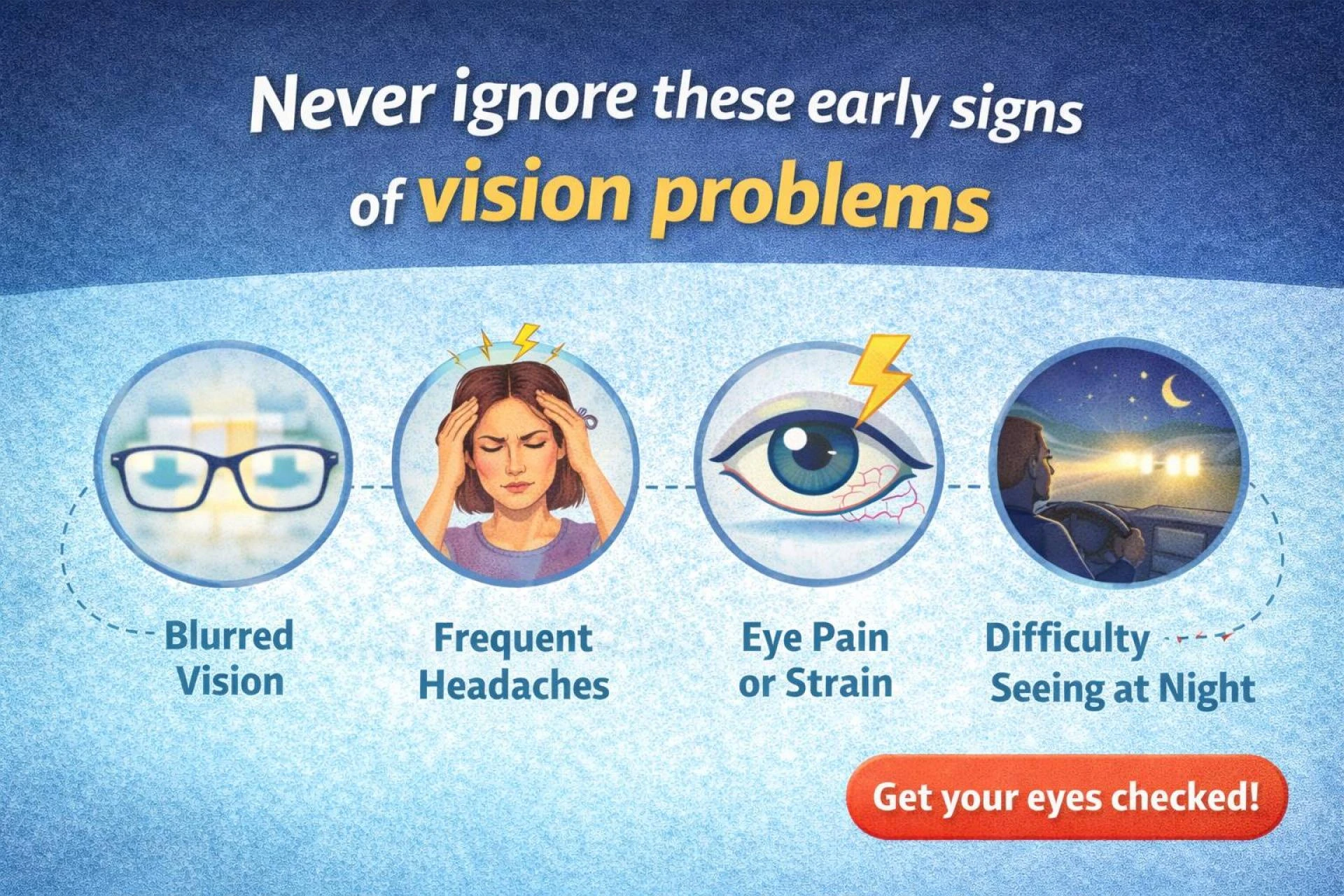
Most people don't think about their eyes until they start to hurt. You might notice that your vision gets a little blurry, you get headaches, or reading suddenly becomes harder than usual. The problem is that a lot of vision problems get worse slowly, so it's easy to ignore them at first.
Your eyes often send out small signals when something isn't quite right. If you pay attention to these signs, you can catch problems early and protect your vision in the long run. You should never ignore these early signs that you may have vision problems.
1. Headaches that happen a lot
Your eyes could be the reason why you are getting headaches more often than usual. If you have nearsightedness, farsightedness, or astigmatism, your eyes may have to work harder to focus. This extra work can cause stress and headaches over time.
A lot of people get headaches after reading, working on a computer, or spending a lot of time on their phones. It's possible that it's time to get your eyes checked if this sounds like you.
2. Vision that is blurry
One of the most common signs that you have a vision problem is blurry vision. It may only happen when you're trying to read small print, or it may happen when you look at things far away.
There are many things that can make your vision blurry, such as needing glasses or contact lenses, having your prescription changed, or having an eye condition that makes it hard for your eyes to focus. It's worth having an eye doctor look at it even if the blurriness comes and goes.
3. Trouble seeing at night
Another sign that many people miss is having trouble seeing clearly at night. You might find that driving at night is harder, headlights seem too bright, or road signs are harder to read.
Refractive errors, aging eyes, or some eye conditions can make it hard to see at night. It's important to get an eye exam if your vision at night is getting worse.
4. Tired or strained eyes
If your eyes often feel tired, sore, or strained, it could mean they're working too hard. Eye strain is very common these days because so many people spend hours looking at screens.
If your eyes are tired, you might have dry eyes, blurry vision, headaches, and trouble focusing. Taking breaks from screens can help, but if your eyes are still hurting, you may need new glasses or special lenses.
5. Squinting to See Clearly
A lot of people squint without even knowing it. When you squint, your eye's shape changes a little, which can help you focus for a short time.
If you have to squint a lot when you read signs, watch TV, or use your phone, it could mean that your vision isn't as sharp as it should be. Squinting might help for a little while, but it's not a real fix for the problem.
6. Being sensitive to light
Photophobia, or increased sensitivity to light, can also be a sign that something is wrong. You might suddenly feel uncomfortable in bright lights, or you might need sunglasses more often than you used to.
Sometimes, light sensitivity is caused by eye strain, dry eyes, or other eye problems. It's okay to be sensitive from time to time, but you shouldn't ignore constant pain.
7. Can't Focus
Do you ever feel like it takes longer for your eyes to get used to things that are close and far away? Perhaps when you look up from your phone, everything seems fuzzy for a few seconds.
If you have trouble focusing like this, it could be a sign that your vision is changing. It can also mean that someone has presbyopia, which makes it hard for the eye to focus on things that are close up.
Why It's Important to Find Things Early
A lot of the time, vision problems get worse over time, and a lot of people don't even notice. Finding these problems early on usually makes it easier to deal with or fix them.
A big part of keeping your eyes healthy is getting them checked out on a regular basis. An eye doctor can check your vision, change your prescriptions if you need to, and find early signs of eye problems before they get worse. Get professional eye exams fl done from the best florida vision care Modern Optical.