
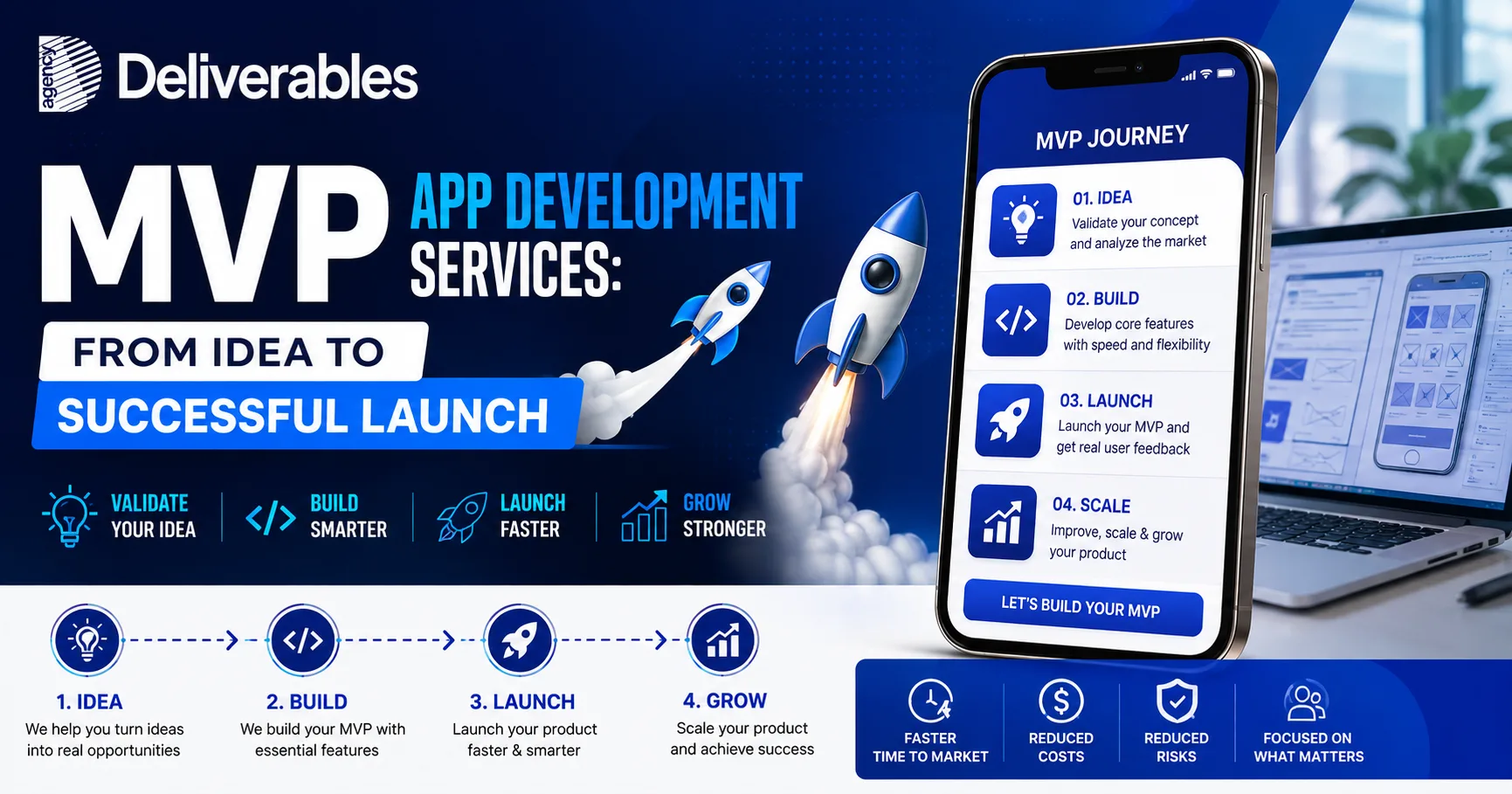
Turning an app idea into a real product can be exciting, but it can also become expensive if development starts without a clear plan. Many startups spend months building features that users may never need. This is where MVP App Development Services can make a real difference.A Minimum Viable Product (MVP) is the first working version of an application that includes only the core features needed to solve a specific problem. Instead of trying to build the complete product from day one, businesses can launch a simpler version, collect feedback, and improve it based on actual user needs.
Start With a Clear Problem
Every successful app begins with a problem worth solving. Before writing code, businesses should understand who their target users are and what challenges they face.
For example, a startup planning a food delivery application does not necessarily need dozens of advanced features at launch. A basic version could focus on restaurant listings, food selection, ordering, payment, and delivery tracking.
This approach keeps the initial product focused. It also makes it easier to understand whether customers are genuinely interested in the solution.
Define the Core Features
One of the biggest mistakes startups make is trying to include every possible feature in the first version. More features usually mean more development time, higher costs, and a longer path to launch.
Professional MVP App Development Services focus on identifying the features that directly support the main purpose of the application.
Features can then be divided into three groups:
- Essential features required for launch
- Useful features that can be added later
- Advanced ideas that can be tested after gaining user feedback
This simple prioritization helps development teams create a realistic roadmap.
Plan Before Development Begins
Good planning can prevent many problems during development. At this stage, the product idea is converted into a practical technical plan.
The team may work on user flows, wireframes, UI design, technology selection, database structure, APIs, and development milestones. The goal is not to create a complicated technical system but to build a strong foundation that can support future growth.
Choosing the right technology is also important. Depending on the product, developers may use native mobile technologies, cross-platform frameworks, cloud services, or custom backend solutions.
This is one reason businesses often work with experienced providers offering MVP software development services. A skilled team can help balance speed, performance, scalability, and development costs.
Build, Test, and Improve
Once the plan is ready, development can begin. Instead of waiting until every planned feature is completed, teams can work in smaller development cycles.
Regular testing is important throughout this process. Developers need to check the application's functionality, performance, security, compatibility, and user experience.
Testing an MVP is not only about finding technical bugs. It is also about discovering whether people can actually use the product comfortably.
Early users may reveal problems that were not obvious during planning. They might find a particular screen confusing, suggest a missing feature, or prefer a different way of completing a task.
These insights can be more valuable than assumptions made before launch.
Launch the MVP Quickly
The main purpose of an MVP is to get a product into the hands of real users without unnecessary delays.
A controlled launch allows businesses to observe how people interact with the application. Depending on the product, the first release might target a small group of customers, a particular location, or a specific user segment.
This reduces risk while providing useful market information.
A successful MVP does not need to be perfect. It needs to provide enough value for users to understand the product and give meaningful feedback.
Measure Real User Feedback
After launch, data becomes an important part of the product development process.
Businesses can monitor downloads, registrations, active users, retention, conversions, feature usage, and customer feedback. These signals help determine which parts of the application are working and which areas need improvement.
For example, if users regularly sign up but rarely complete the main action inside an app, there may be an issue with the user journey. Instead of adding more features, the business may need to simplify the existing experience.
This feedback-driven approach helps prevent unnecessary development work.
Turn the MVP Into a Complete Product
Launching an MVP is only the beginning. Once the product receives enough feedback, businesses can decide what should happen next.
Some features may be improved, while others may be removed completely. New functionality can then be introduced based on actual demand rather than assumptions.
At this stage, the application can gradually become more sophisticated. Performance improvements, integrations, automation, personalization, advanced analytics, and other features can be added as the user base grows.
The MVP approach therefore creates a practical path from an initial idea to a mature digital product.
Final Thoughts
Building an application does not always require starting with a large development budget or a long feature list. A focused MVP can help businesses test an idea, understand their customers, reduce development risks, and make better product decisions.
Choosing the right MVP App Development Services can simplify this journey by bringing together product planning, design, development, testing, and post-launch improvements. Similarly, reliable MVP software development services can help businesses create a strong technical foundation without overcomplicating the first release.
For startups and growing businesses, the real value of an MVP is simple: launch sooner, learn from real users, and use those lessons to build a better product.