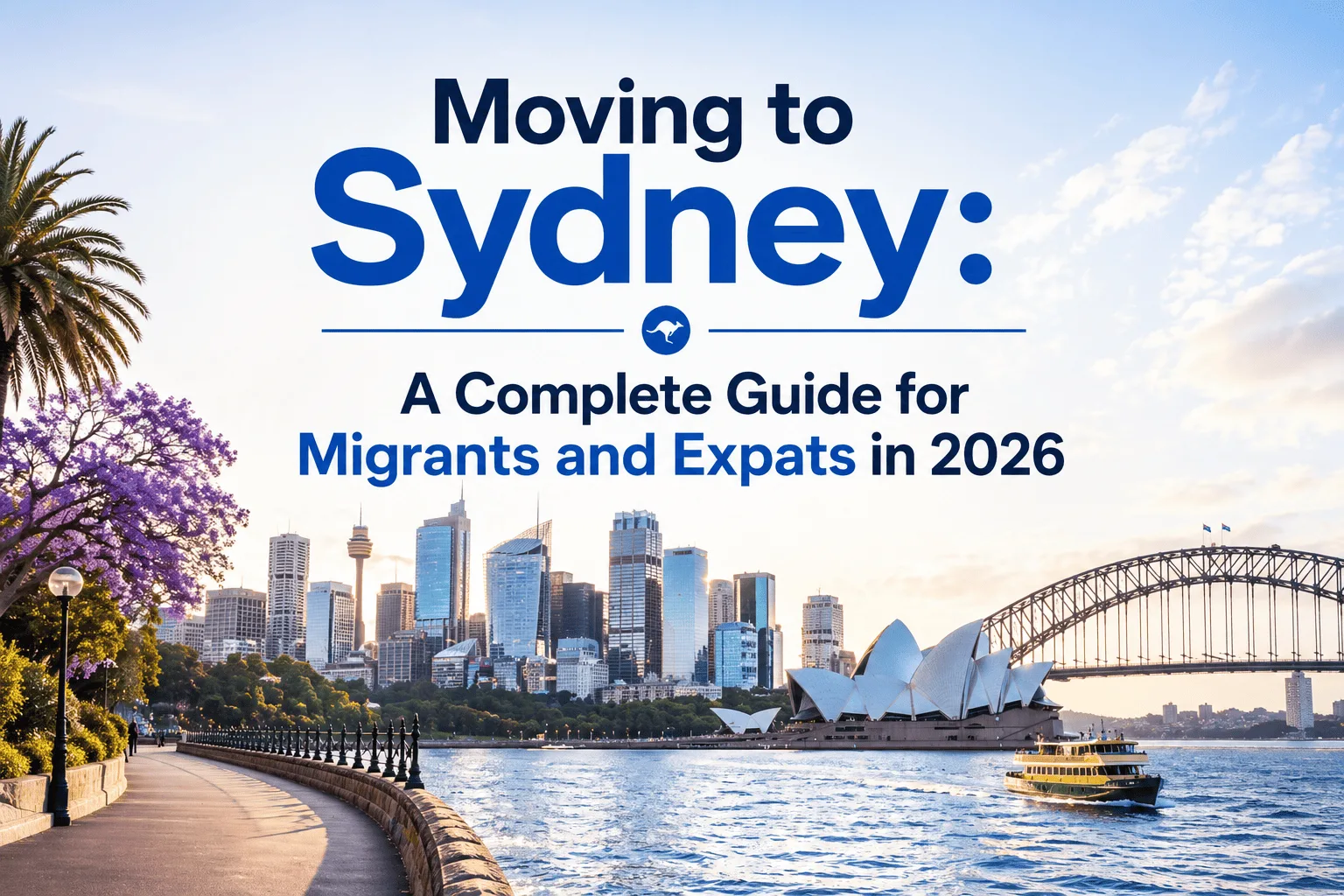
Sydney, the biggest and most famous city in Australia, is a destination of choice for migrants, expats, students, and families. Sydney is renowned for its beautiful harbour, iconic beaches, multicultural community and robust economy, making it a great place to live. However, relocating to Sydney is not without its difficulties - particularly with the high cost of living and complex immigration system.
If you are thinking of moving to Sydney, here's what you need to know: visas, cost of living, lifestyle, jobs and tips for a successful move.
Why Move to Sydney?
Sydney is one of the most liveable cities in the world. Here are just some of the highlights:
- Great Lifestyle: World-famous attractions such as the Sydney Opera House and Harbour Bridge, and fabulous beaches including Bondi, Manly and Coogee.
- Business & Commercial: The financial capital of Australia, home to multinational corporations and a thriving technology, finance, health, education and hospitality sector.
- Multicultural Community: Sydney has over 250 languages spoken, so you can easily find your home.
- Education & Career Growth: World-class universities (University of Sydney, UNSW, UTS) and great jobs after graduation.
- Nature & Outdoors: Great climate, national parks and emphasis on work-life balance.
Immigrants often describe Sydney as a city where you can have it all: both the buzz of the city and the beauty of nature.
Visa Options to Move to Sydney
The first step is to obtain the right visa. Australia has a points-based and ever-evolving immigration system.
The most common visas to relocate to Sydney are:
- Skilled Visas: Subclass 189 (Independent), Subclass 190 (NSW State Nominated), and Subclass 491 (Regional Provisional).
- Work Visas: Subclass 482 (Temporary Skill Shortage) and Subclass 186 (Employer Nomination Scheme).
- Student & Graduate Visas: Subclass 500 (Student) and then Subclass 485 (Temporary Graduate Visa) for work after study.
- Family & Partner Visas: To join family or partners in Australia.
- Business & Investor Visas: Subclass 188 and 888 for entrepreneurs.
NSW State Nomination programs play an active role in fostering skilled workers in in-demand jobs, making Sydney a more viable option for permanent residency.
Living in Sydney 2026 - an estimate on living costs
Sydney is one of the most expensive cities in Australia. The estimated cost of living for a single person is between AUD 2,000 - 3,500 per month.
Here is a typical monthly budget:
- Accommodation: AUD 800 – 1,500 (shared house/room) | AUD 2,000 – 3,300 (private apartment)
- Food & Groceries: AUD 400 – 650
- Public Transport: AUD 150 - 275 (Opal card with caps)
- Utilities & Internet: AUD 150 – 300
Other (telephone, entertainment, personal items): AUD 200 - 400
Total Annual Living Expenses: AUD 24,000 - 42,000 (without students' tuition fees).
International students need to provide at least AUD $29,710 per year for living expenses as part of their visa application. Housing costs are the major living expense - sharing a property in well-connected suburbs (such as Parramatta, Strathfield or Bankstown) will save you money.
Although wages in Sydney are higher (average full-time salary is AUD 93,000-100,000+), you need to manage your finances to save money, particularly in the first year.
Job Market and Employment Opportunities
Sydney has great job opportunities in finance, IT, engineering, healthcare, education, and creative sectors. Sydney has a low unemployment rate, and skills shortages in many industries.
Overseas migrants can work part-time (maximum 48 hours per fortnight) while studying, or full-time on most work visas. Working in Australia will earn you many points towards skilled migration and permanent residency.
Moving to Sydney: Some Quick Tips
- Budget for Initial Expenses - Consider visa, travel, rental bond (typically 4 weeks' rent), and furniture.
- Accommodation Options - Temporary (Airbnb, hostels) then shared rentals (Flatmates.com.au, Domain).
- Health & Insurance - If a student, organize Overseas Student Health Cover (OSHC); otherwise, private health insurance.
- Transport - Public transport (trains, buses, ferries) in Sydney is good. Get an Opal card immediately.
- Finances - Set up a bank account and obtain a Tax File Number (TFN) as soon as possible.
Cultural Adaptation - Australians are direct communicators, on time and "no worries".
Challenges to Consider
- Expensive property and cost of living
- Competitive rental market
- Heavy traffic at peak times
- Competitive job market for some occupations
These drawbacks notwithstanding, most people say the benefits of living in Sydney outweigh the drawbacks.
Conclusion
Relocating to Sydney can be a life-changing move, and a chance to benefit from the best that Sydney has to offer: opportunity, beauty and diversity. However, a successful move requires planning and in particular, an appreciation of the visa and financial implications.
To ensure you do not make a mistake and increase your chances of a successful move and long-term success in Australia, it is best to consult with a professional and registered migration consultant in Sydney. A professional migration consultant will evaluate your viability, determine the best visa pathway, prepare your applications and advice you along the way, helping you achieve your dream of moving to Sydney and beyond.
Dream of Australia the right way - enlist the help of a migration consultant in Sydney.