Mold is one of the most misunderstood and underestimated threats to home health in Missouri. It hides in crawl spaces, grows behind drywall, spreads through insulation, and can colonize an entire room's worth of materials within days of a water event. By the time it is visible, it has often been growing for weeks.
This guide covers everything Branson homeowners and business owners need to know about mold remediation — from identifying early warning signs to understanding what a full professional remediation actually involves.
What Is Mold and Why Does It Grow in Missouri Homes?
Mold is a fungus that reproduces through microscopic spores. Those spores are present in virtually all indoor and outdoor environments. Under normal conditions, they are harmless. But when they land on a surface with moisture, organic material (like wood, drywall, or carpet), and limited airflow — they colonize rapidly.
Missouri's climate creates ideal conditions for mold growth. Hot, humid summers combined with Branson's frequent storm activity mean that moisture intrusion events are common. And when water enters a structure — whether from a burst pipe, a roof leak, flooding, or a backed-up drain — the clock starts immediately.
Early Warning Signs of Mold in Your Home
Mold does not always announce itself visually. Many of the most dangerous mold infestations grow behind walls and under floors before they are ever seen. Watch for these early indicators:
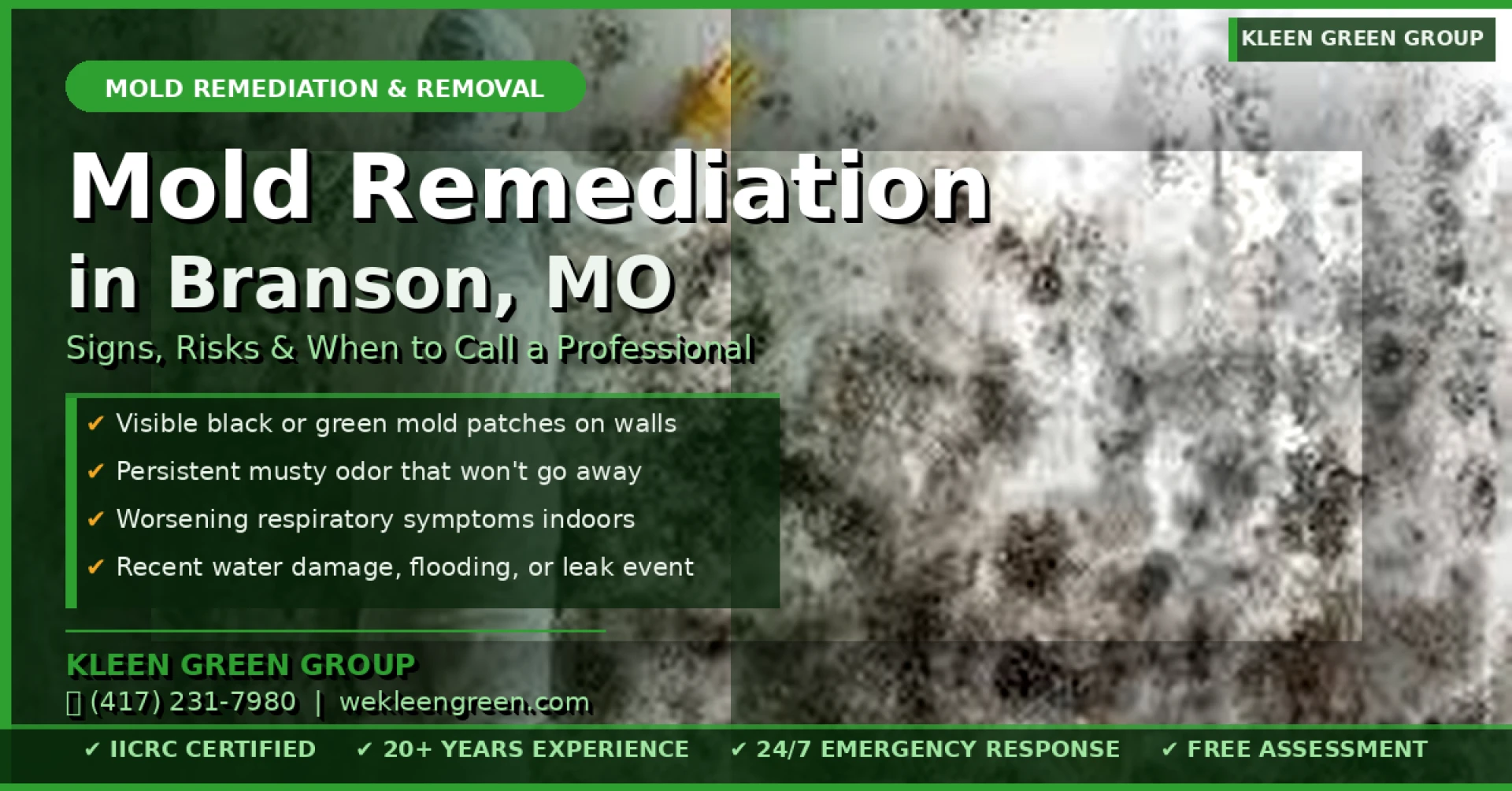
✔ Persistent musty odor: A damp, earthy smell that does not go away — especially in basements, crawl spaces, bathrooms, or near HVAC vents — is one of the earliest signs of hidden mold.
✔ Visible discoloration: Black, green, white, or grey patches on walls, ceilings, grout lines, or window sills are direct visual evidence of mold colonization.
✔ Chronic respiratory symptoms: Unexplained coughing, sneezing, itchy eyes, or worsening asthma symptoms that improve when you leave the building are a major red flag.
✔ Recent water event: Any significant water intrusion — including from water damage, flooding, or appliance failure — creates a high mold risk within 24–48 hours if not properly dried.
✔ Peeling paint or wallpaper: Moisture trapped behind surfaces causes paint to bubble, crack, and peel — a sign that the wall cavity may be saturated.
✔ HVAC or duct issues: Mold in ductwork circulates spores through every room in the property. If your air smells stale or musty when the HVAC runs, air duct inspection and cleaning is recommended immediately.
The Health Risks of Untreated Mold
Not all mold is equally dangerous, but all mold should be taken seriously. The primary health concerns associated with indoor mold exposure include:
✔ Respiratory tract irritation — coughing, wheezing, and shortness of breath
✔ Allergic reactions — runny nose, itchy eyes, skin rashes
✔ Aggravation of asthma and other pre-existing respiratory conditions
✔ Fungal infections in immunocompromised individuals
✔ Neurological symptoms from mycotoxin exposure (associated with black mold / Stachybotrys)
Children, the elderly, and anyone with a compromised immune system are at highest risk. Prolonged exposure in a mold-contaminated environment — even without visible mold — can cause lasting health effects.
Mold Remediation vs. Mold Removal — What's the Difference?
Mold Removal suggests eliminating every mold spore from a structure — which is impossible, since spores exist naturally in all environments.
Mold Remediation is the correct term for what professionals do: reducing mold to normal, safe levels; removing contaminated materials; treating affected surfaces; and addressing the moisture source that enabled growth.
Any contractor who promises to completely 'remove all mold forever' is not being accurate. Legitimate remediation companies (like Kleen Green Group) focus on returning mold levels to safe baselines and resolving the root cause.
How Professional Mold Remediation Works
At Kleen Green Group, our mold remediation process is thorough, documented, and follows IICRC S520 standards for mold remediation. Here is what to expect:
Phase 1: Inspection & Assessment
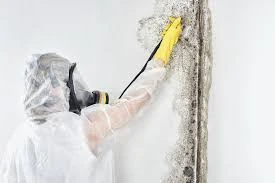
A certified technician inspects the property visually and with moisture meters and thermal imaging to map the extent of mold growth — including hidden areas inside walls and under flooring. Air sampling may be used to assess spore counts in affected vs. unaffected areas.
Phase 2: Containment
Affected areas are contained using polyethylene sheeting and negative air pressure to prevent cross-contamination to unaffected rooms. HVAC systems are shut off during remediation to prevent spore spread through ductwork. If your ducts have been affected, air duct cleaning is performed as part of the remediation.
Phase 3: Air Filtration
HEPA air scrubbers run continuously during remediation to capture airborne mold spores and particulates, protecting both the occupants and the technicians.
Phase 4: Removal of Contaminated Materials
Porous materials that cannot be effectively cleaned — including drywall, insulation, carpet, and certain types of wood — are carefully removed, bagged, and disposed of according to local regulations.
Phase 5: Cleaning & Antimicrobial Treatment
All remaining surfaces in the remediation area are HEPA-vacuumed and then treated with EPA-registered antimicrobial agents. This step kills residual mold and creates a hostile surface environment for re-colonization.
Phase 6: Moisture Source Correction
Remediation without addressing the root moisture source is temporary. Our team identifies and helps coordinate the repair of whatever moisture issue enabled the mold — whether a plumbing leak, drainage problem, or ongoing water damage issue.
Phase 7: Restoration
After mold is remediated and the space is cleared, reconstruction begins. This includes drywall installation, painting, flooring replacement, and any other structural repairs required to return the space to its pre-damage condition.
Does Insurance Cover Mold Remediation?
Coverage depends on the cause. If mold resulted from a sudden, covered water event (such as a burst pipe), most standard homeowner's insurance policies will cover remediation costs. If mold is the result of gradual moisture accumulation or deferred maintenance, it may not be covered.
Kleen Green Group provides complete written documentation of mold extent, cause, and remediation scope — which is essential for insurance claims. We work directly with adjusters to streamline the process.
Mold in Your HVAC System: A Hidden Risk
One of the most dangerous and least-diagnosed mold scenarios is contamination inside your ductwork and HVAC components. When mold colonizes inside an air handling unit or duct system, every time the system runs, it distributes spores throughout your entire property — affecting rooms that never had visible mold. If you have had any moisture event near your HVAC system, or if occupants are experiencing symptoms without visible mold, a professional air duct cleaning and inspection should be part of your remediation plan.
When Is Mold a DIY Job — and When Is It Not?
The EPA recommends that homeowners can handle mold covering less than 10 square feet (roughly a 3x3 foot patch) on non-porous surfaces, using appropriate PPE. However, professional remediation is required when:
✔ Mold covers more than 10 square feet of total area
✔ Mold is present inside walls, under flooring, in ductwork, or in crawl spaces
✔ Black mold (Stachybotrys) is suspected — this requires certified containment procedures and specialized disposal
✔ An occupant has health sensitivities, respiratory conditions, or a compromised immune system
✔ The property has had repeated mold events despite previous cleanup attempts
✔ A water damage event was not properly dried within 48–72 hours
Frequently Asked Questions
How long does mold remediation take?
Typical residential remediations take 1–5 days depending on the size of the affected area and the extent of material removal required. Larger commercial or heavily contaminated properties can take longer.
Do I have to leave my home during mold remediation?
For small, contained remediations, it may not be necessary. For larger projects or situations involving black mold or heavy contamination, temporary relocation is strongly recommended, especially for children, elderly occupants, or anyone with respiratory conditions.
Can mold come back after remediation?
Mold can return if the underlying moisture problem is not resolved. Professional remediation addresses both the mold and the conditions that enabled it — but ongoing moisture management is the homeowner's responsibility after the project is complete.
What is the difference between mold remediation and black mold removal?
Black mold (Stachybotrys chartarum) is a specific, particularly hazardous mold species that requires a more intensive removal protocol due to its mycotoxin production. See our dedicated guide on black mold removal in Branson for more information.