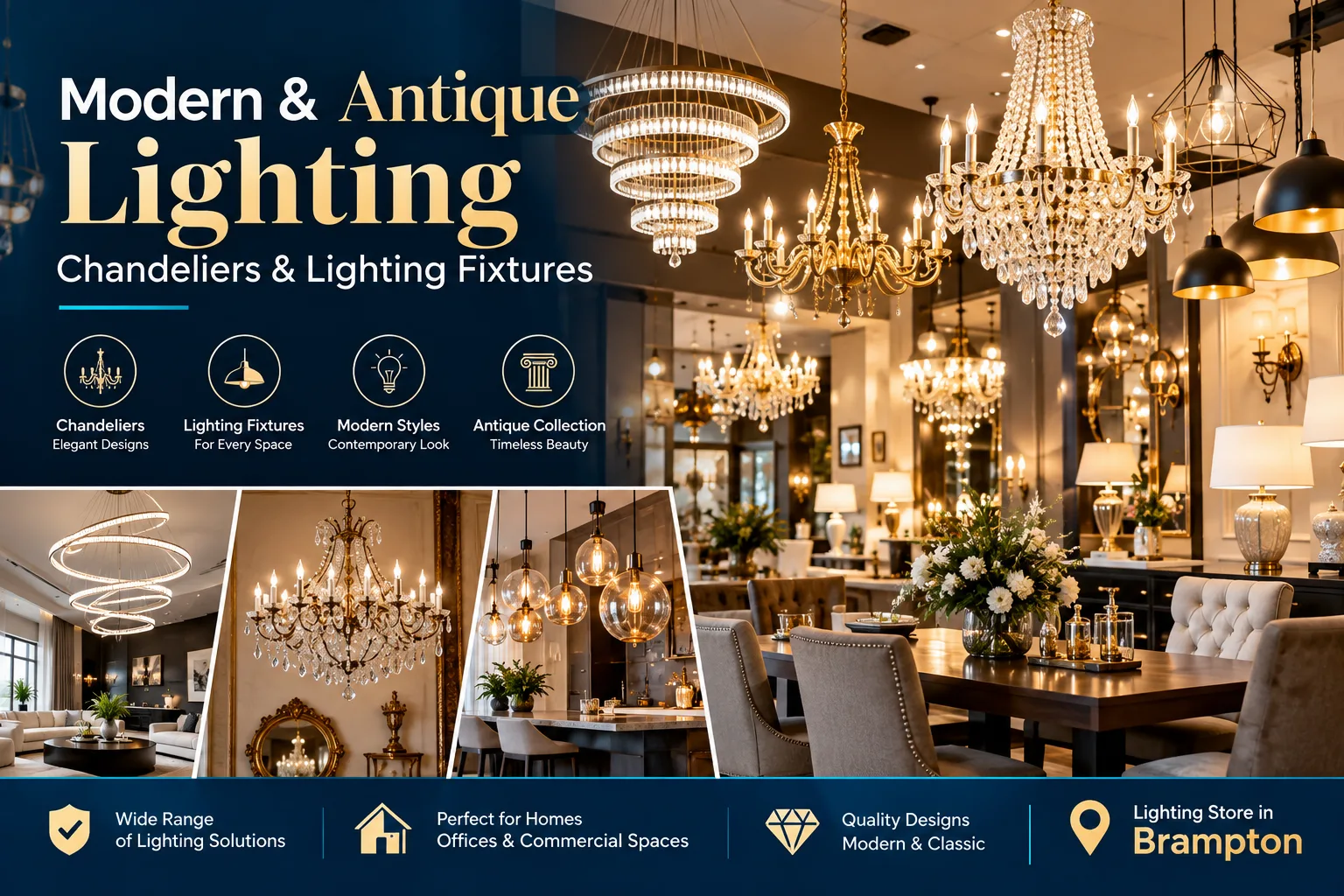
You’re standing in your dining room, looking at an empty ceiling, and two ideas keep competing: a sleek contemporary pendant or a vintage chandelier with real history. It’s a common dilemma, and the answer depends on your space, your habits, and your budget. If you’re searching for a modern and antique lighting store in Brampton, this guide will help you decide before you visit Fehmi Lights.
What Defines Each Style?
Modern Lighting FixturesModern fixtures focus on simplicity: clean geometry, slim profiles, and finishes like matte black, brushed brass, and chrome. Most use integrated LED technology, so there are no bulbs to replace and less heat output.
Why homeowners choose them:
- Fit well in open-concept homes and new builds
- Energy-efficient and often dimmable
- Easy to maintain, with fewer delicate parts
- Widely available in standard sizes and warranties
Antique pieces are valued for craftsmanship: hand-finished metal, cut crystal, glass shades, and ornate detailing. Each fixture tends to be one of a kind, which gives a room instant character.
Why homeowners choose them:
- Distinctive, conversation-starting focal points
- Suit period homes, traditional interiors, and eclectic spaces
- Quality materials that can last for generations when cared for
Key Considerations Before You Decide
Your Home’s ArchitectureA heritage-style home with high ceilings and trim often welcomes an ornate chandelier. A minimalist condo may look better with a linear pendant. That said, contrast can work well when it’s intentional.
Safety and WiringOlder fixtures may need rewiring to meet current Canadian electrical standards. Have a licensed electrician inspect and install them, especially heavier crystal pieces that may need reinforced ceiling support.
MaintenanceCrystal and detailed metalwork need regular dusting and gentle cleaning. Modern LED fixtures generally ask for less upkeep.
Budget and AvailabilityModern lighting spans a wide price range. Antique pieces vary by age, condition, and rarity, so inspect them in person when possible.
Can You Mix Both Styles?
Yes, and designers often do. A few simple rules keep it cohesive:
- Repeat one finish, such as brass, across both styles
- Let one statement piece lead in each room
- Keep scale consistent so no fixture overwhelms the space
- Use modern sconces or lamps to support an antique chandelier
Practical Tips for Choosing
- Measure the room and ceiling height first.
- Decide the fixture’s role: ambient, task, or accent.
- Choose warm white bulbs (around 2700K) for living and dining areas.
- Bring photos of your room to the showroom.
- Ask about bulb compatibility, dimmers, and installation requirements.
Frequently Asked Questions
1. Is modern or antique lighting better for a small home?
Either works. Choose scale carefully; slimmer modern designs often suit tighter spaces.
2. Are antique lighting fixtures safe?
They can be once professionally rewired and inspected.
3. Can I use LED bulbs in vintage fixtures?
Often yes, if the socket type matches. Confirm with the store.
4. Do modern fixtures look cold?
Not necessarily. Warm finishes, textured materials, and warm bulbs add comfort.
5. How do I mix both styles without clashing?
Share a finish or shape across pieces and let one fixture be the focal point.
6. What size chandelier suits a dining table?
Typically about half to two-thirds of the table’s width.
7. Should I see fixtures in person before buying?
Yes. Finish, scale, and glass quality are easier to judge in a showroom.
Conclusion
Neither style is automatically better. Modern lighting offers efficiency and simplicity, while antique pieces bring character and craftsmanship. The right choice is the one that fits your home and how you live in it. Visit Fehmi Lights, a modern and antique lighting store in Brampton, to compare fixtures in person and get practical advice for your space.