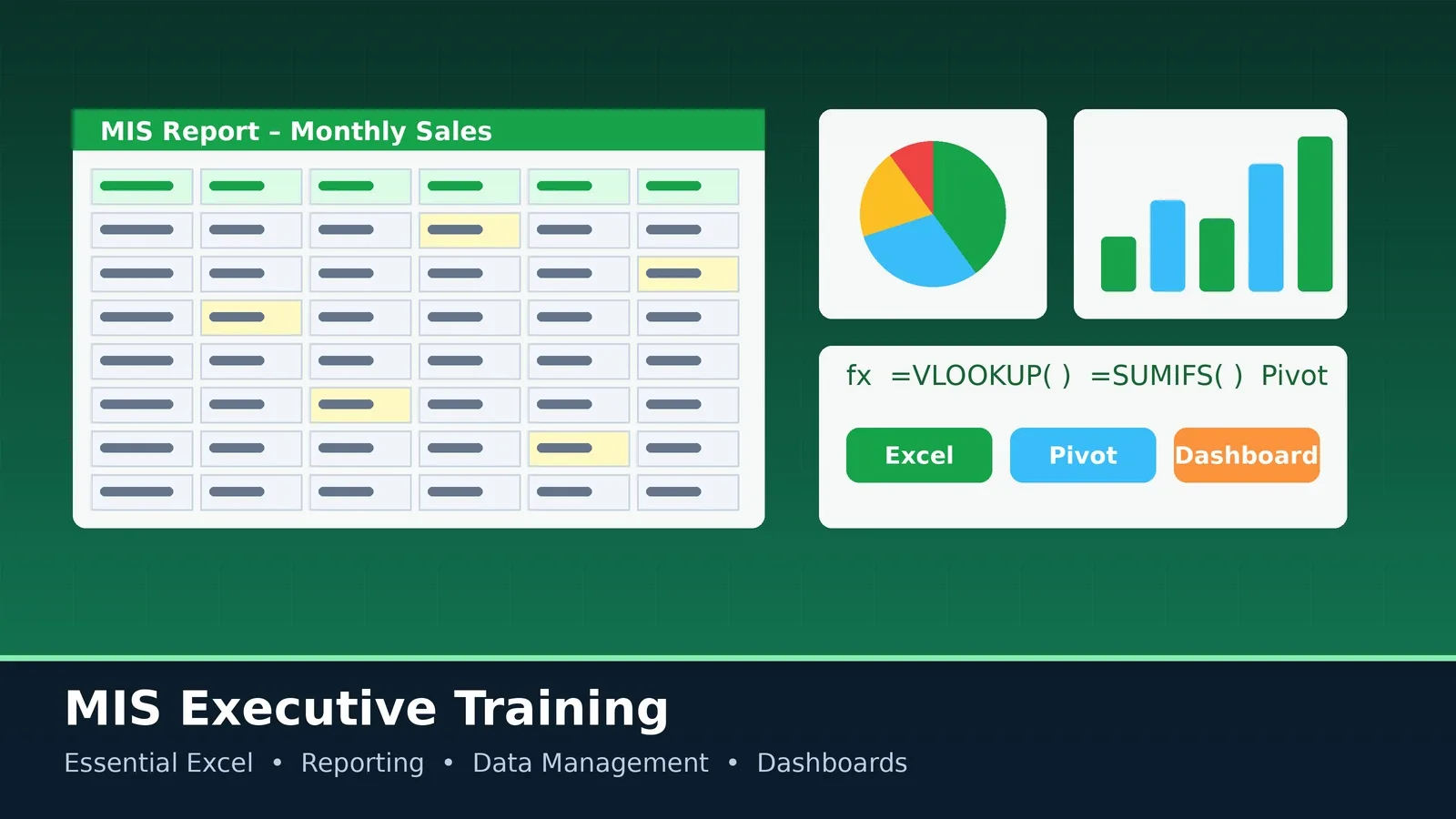
Every organisation depends on accurate data to make decisions, and MIS executives are the people who collect, organise and present that data. MIS Executive Training: Essential Excel, Reporting and Data Management Skills prepares freshers, graduates and office professionals for this important and widely available role. If you enjoy working with numbers, spreadsheets and reports, this could be your ideal entry into the corporate world.
Who Is an MIS Executive?
MIS stands for Management Information System. An MIS executive gathers data from different departments, cleans and organises it, builds reports and dashboards, and shares clear insights with managers so they can track performance and plan ahead. The role appears in sales, finance, HR, operations, logistics, education, banking and many other fields.
Key Responsibilities
- Preparing daily, weekly and monthly MIS reports.
- Maintaining and updating databases and trackers.
- Cleaning and validating data to remove errors and duplicates.
- Creating charts, pivot tables and dashboards.
- Automating repeated reports using formulas and macros.
- Coordinating with teams to collect accurate information.
Essential Excel Skills
- Formulas: SUM, IF, COUNTIFS, SUMIFS, VLOOKUP, XLOOKUP, INDEX-MATCH.
- Text, date and logical functions for cleaning data.
- Pivot tables and pivot charts for quick analysis.
- Conditional formatting and data validation.
- Charts and dashboards for clear presentation.
- Power Query for combining and cleaning data.
- Basics of macros and VBA for automation.
Reporting and Data Management Skills
- Designing clear, consistent report formats.
- Understanding KPIs and business metrics.
- Basic SQL for pulling data from databases.
- Introduction to Power BI or Google Looker Studio for visual dashboards.
- Data security, version control and documentation habits.
Soft Skills That Make a Difference
Accuracy and attention to detail are essential, but so is communication. A good MIS executive explains what the numbers mean, meets deadlines and notices problems early. Time management and professional email writing will help you stand out.
Career Growth Path
Many professionals begin as MIS executives and grow into Senior MIS Executive, Data Analyst, Business Analyst, Reporting Manager or MIS Manager. Adding SQL, Power BI and Python gradually opens doors into data analytics.
How to Prepare for Interviews
- Practise common Excel tasks such as lookups, pivots and dashboards.
- Prepare a small sample report or dashboard to show.
- Be ready to explain how you check data for errors.
- Learn the basic KPIs of the industry you are applying to.
Watch More:- MIS Executive Training
Conclusion
MIS roles reward accuracy, organisation and analytical thinking. With strong Excel skills, a solid grasp of reporting and good data management habits, you can build a stable career and move steadily toward higher analytical roles.