
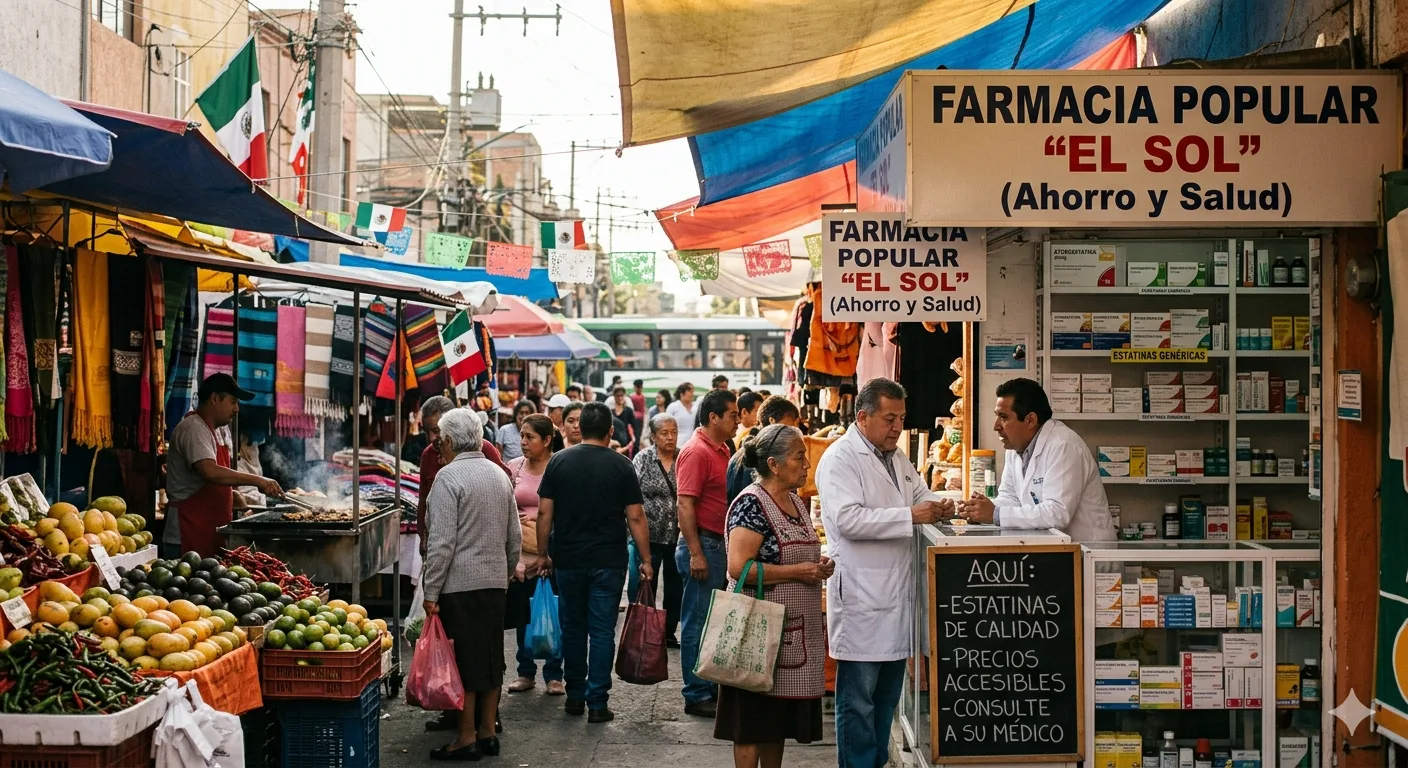
According to IMARC Group, the Mexico statin market was valued at USD 245.1 Million in 2025 and is projected to reach USD 313.0 Million by 2034, growing at a CAGR of 2.67% during 2026–2034. The market is primarily driven by rising prevalence of cardiovascular risk factors, increasing incidence of dyslipidemia, early intervention through clinical guidelines, and government-subsidized healthcare programs supporting preventive care and chronic disease management.
• Market valued at USD 245.1 Mn in 2025; forecast to reach USD 313.0 Mn by 2034
• CAGR of 2.67% across the 2026–2034 forecast period
• Atorvastatin and rosuvastatin remain the most widely prescribed statin drugs
• Government essential medicine programs drive broad institutional access
• Rising dyslipidemia rates fuel demand across public and private healthcare channels
Mexico Statin Market Overview
Mexico’s statin market is experiencing steady growth, driven by an aging population, rising obesity rates, and increasing awareness of cardiovascular disease prevention. Statins are firmly embedded in both public and private formularies, with physicians increasingly prescribing them for primary and secondary prevention of major cardiac events.
• Mexico has one of the highest rates of dyslipidemia in Latin America, with over 20% of adults affected
• IMSS and ISSSTE, Mexico’s major public health institutions, include statins in their essential medicines lists
• Generic statin penetration is high, improving affordability for lower-income patients
• Digital health expansion and telemedicine adoption are expanding chronic disease monitoring and statin adherence
• Multinational pharma companies are actively competing with domestic generics manufacturers for market share
Get Insights on the Mexico Statin Market — Access the IMARC Sample Report: https://www.imarcgroup.com/mexico-statin-market/requestsample
Key Market Trends
Rising Cardiovascular Disease Burden
Cardiovascular disease (CVD) is the leading cause of mortality in Mexico, creating persistent demand for cholesterol-lowering medications like statins. Lifestyle factors including high-fat diets, sedentary behavior, and high diabetes prevalence are compounding cholesterol-related risks.
• Over 17 million Mexicans are estimated to have dyslipidemia, many of whom remain undiagnosed
• Type 2 diabetes—affecting approximately 12 million adults in Mexico—is a major comorbidity driving statin prescriptions
• Government-led health campaigns are raising awareness about cholesterol management and preventive cardiology
• Hospital and outpatient cardiology departments are increasing statin initiation rates among at-risk patients
Expansion of Public Healthcare Coverage
Government healthcare programs such as IMSS Bienestar and the revamped INSABI framework are broadening access to essential medicines including statins for underserved populations across Mexico.
• IMSS Bienestar targets universal health coverage for populations previously excluded from social security benefits
• Statin procurement through public tenders keeps treatment costs low for eligible patients
• Federal subsidy programs make first-line statins accessible in rural and semi-urban areas
• Improved supply chain infrastructure is reducing medication stockouts in public health centers
Generic Drug Penetration and Price Competition
Generic statins have achieved dominant market penetration in Mexico, driven by regulatory approvals, patent expirations, and aggressive pricing by domestic manufacturers.
• Mexico’s COFEPRIS has streamlined approval pathways for bioequivalent generic drugs, accelerating market entry
• Atorvastatin and simvastatin generics account for the majority of statin prescriptions by volume
• Pharmacy chains such as Farmacias del Ahorro and Farmacias Similares offer deep discounts on generic statins
• Price competition between domestic and imported generics is keeping per-unit costs low for end users
Growing Physician Awareness and Clinical Guideline Adoption
Mexican clinical guidelines now recommend earlier and more aggressive statin use for high-risk patients, reflecting alignment with international cardiology standards from ACC/AHA and ESC.
• Continuing medical education programs are expanding cardiologist and GP awareness of statin therapy protocols
• Point-of-care cholesterol testing is enabling faster diagnosis and treatment initiation
• E-prescribing platforms are improving adherence monitoring for long-term statin users
• Collaboration between private insurers and physicians is promoting guideline-concordant prescribing
Mexico Statin Market Segmentation
IMARC Group’s report segments the Mexico statin market across multiple dimensions: Type, Therapeutic Area, Drug Class, Application, Distribution, and Region.
By Type
• Branded Statins — Premium segment supported by multinational pharma companies; positioned around efficacy and tolerability data
• Generic Statins — Dominant by volume; driven by patent expirations, COFEPRIS approvals, and public procurement programs
By Drug Class
• Atorvastatin — Largest segment; widely prescribed for primary and secondary cardiovascular prevention
• Rosuvastatin — Fast-growing; preferred for high-intensity therapy due to favorable side-effect profile
• Simvastatin — Mature segment; significant in public-sector procurement
• Lovastatin, Pravastatin, Fluvastatin — Niche applications with stable demand
By Therapeutic Area
• Cardiovascular Disease — Dominant application; prevention of myocardial infarction and stroke
• Dyslipidemia Management — Growing indication; driven by screening programs and telemedicine
• Diabetes-Associated Dyslipidemia — Emerging segment reflecting Mexico’s high diabetes burden
By Distribution Channel
• Retail Pharmacies — Largest channel; Farmacias del Ahorro, Farmacias Similares, and chain pharmacies dominate
• Hospital Pharmacies — Key channel for inpatient and specialist-prescribed statins
• Online Pharmacies — Fastest-growing; accelerated by digital health adoption post-pandemic
• Public/Government Institutions — IMSS, ISSSTE, INSABI procurement drives high-volume generic distribution
By Region
• Central Mexico (Mexico City, Estado de Mexico) — Largest market; highest patient volume and specialist concentration
• Northern Mexico (Monterrey, Guadalajara region) — Strong industrial economy with high private healthcare utilization
• Southern Mexico — Growing market supported by expanded public health coverage under IMSS Bienestar
• Other Regions — Rural areas increasingly served through government-sponsored pharmacy outreach
Mexico Statin Market Growth Drivers
• Aging population increasing the pool of high cardiovascular risk patients requiring statin therapy
• High obesity and type 2 diabetes prevalence driving comorbid dyslipidemia and statin demand
• Inclusion of statins in government essential medicine lists ensuring broad institutional procurement
• Patent expirations and COFEPRIS regulatory reforms enabling affordable generic market expansion
• Growing cardiology subspecialty infrastructure and referral networks boosting specialist prescribing
• International guideline adoption recommending earlier statin initiation in at-risk populations
• Private health insurance expansion in urban Mexico supporting branded statin use
Mexico Statin Market Challenges
• Low patient awareness and adherence to long-term statin therapy remain persistent barriers
• Fragmented healthcare system creates inconsistencies in treatment access between public and private sectors
• Drug supply chain disruptions periodically affect availability of generic statins in public facilities
• Side-effect concerns (myopathy, elevated liver enzymes) contribute to therapy discontinuation
• Informal healthcare sector and self-medication practices complicate diagnosis and treatment tracking
• Budget pressures on public health institutions may constrain procurement of higher-cost branded statins
Recent News & Developments
• 2025: COFEPRIS approved several new generic rosuvastatin formulations, expanding competitive options for both public procurement and retail pharmacies across Mexico.
• 2025: IMSS Bienestar expanded its essential medicines distribution program to an additional 1,500 rural health centers, increasing statin access for underserved populations in southern states.
• 2024–2025: Digital health platforms in Mexico reported a significant increase in telemedicine consultations resulting in statin prescriptions, reflecting growing remote chronic disease management.
• 2024: A major domestic pharmaceutical manufacturer launched a low-cost atorvastatin+ezetimibe fixed-dose combination, targeting patients requiring more intensive lipid-lowering therapy.
• 2024: The Mexican Society of Cardiology updated its national dyslipidemia guidelines to align more closely with ACC/AHA recommendations, recommending lower LDL-C targets and earlier statin initiation for high-risk groups.
Competitive Landscape
The Mexico statin market is moderately competitive, with multinational pharmaceutical companies competing against domestic generic manufacturers and public-sector procurement bodies. Key players include:
• Pfizer Mexico — Marketer of branded Lipitor (atorvastatin); strong relationships with private hospital networks
• AstraZeneca Mexico — Commercializes Crestor (rosuvastatin); active in physician education and cardiovascular awareness programs
• Merck Sharp & Dohme — Distributes Zocor (simvastatin) branded segment; growing generics portfolio
• Grupo Farmacéutico Somar — Leading domestic generic manufacturer; significant presence in IMSS and ISSSTE tenders
• Laboratorios Pisa — Key Mexican pharma player with statin generics distributed through retail and institutional channels
• Farmacias del Ahorro / Similares Group — Major pharmacy chains with proprietary private-label generic statin products
Frequently Asked Questions (FAQs)
Q1. What is the size of the Mexico statin market?
The Mexico statin market was valued at USD 245.1 Million in 2025. It is projected to reach USD 313.0 Million by 2034, growing at a CAGR of 2.67% from 2026 to 2034, according to IMARC Group research.
Q2. What are the key drivers of Mexico’s statin market?
Key drivers include the high prevalence of cardiovascular risk factors such as dyslipidemia, obesity, and type 2 diabetes; inclusion of statins in essential medicine lists under IMSS and INSABI; strong generic drug penetration following patent expirations; growing physician adoption of international cardiology guidelines; and government healthcare expansion reaching underserved populations.
Q3. What are the main challenges facing the Mexico statin market?
Challenges include low patient adherence to long-term therapy, supply chain fragilities in the public sector, competition between branded and generic products, patient concerns over side effects, and inconsistent healthcare access between urban and rural areas.
Q4. Which drug type dominates the Mexico statin market?
Generic statins dominate the Mexico market by volume, driven by significant patent expirations and COFEPRIS regulatory approvals. Atorvastatin is the most widely prescribed molecule, followed by rosuvastatin, which is the fastest-growing segment due to its high-potency profile.
Q5. Which distribution channel leads the Mexico statin market?
Retail pharmacies represent the largest distribution channel, with major chains like Farmacias del Ahorro and Farmacias Similares accounting for significant prescription volumes. The public/institutional channel remains critical for lower-income populations served by IMSS and ISSSTE.
Q6. What is the growth outlook for Mexico’s statin market through 2034?
The outlook is positive, with a projected CAGR of 2.67% through 2034. Growth will be underpinned by an aging population, expanding government healthcare coverage, continued generic market development, and increasing physician adoption of preventive cardiology guidelines. Rising diabetes and obesity rates will continue to expand the pool of patients eligible for statin therapy.
Author IMARC Group
IMARC Group is a global management consulting firm that helps the world’s most ambitious changemakers create a lasting impact. The company provides a comprehensive suite of market entry and expansion services. IMARC’s offerings include thorough market assessment, feasibility studies, company incorporation assistance, factory setup support, regulatory approvals and licensing navigation, branding, marketing and sales strategies, competitive landscape and benchmarking analyses, pricing and cost research, and procurement research.
Contact Us
IMARC Group,
134 N 4th St. Brooklyn, NY 11249, USA,
Email: [email protected],
United States: +1-201-971-6302