
We spend a huge part of our lives at work. It’s where we often give our energy, time, and sometimes, more of ourselves than we even realize. But what happens when your mind starts to feel out of sync with your routine? When showing up becomes a struggle, and not just because of a busy schedule, but because something deeper is going on?
In this post, we’re going to have a real, human conversation about mental health warning signs at work. Not a lecture. Not a clinical diagnosis list. Just honest signs and reflections that many of us miss or brush aside, especially when life gets overwhelming.
You’re Not Just Tired—You’re Drained
We all have days when we feel wiped out. Maybe you stayed up late. Maybe the week’s been long. But if you wake up every day with a weight on your chest and a foggy brain, dragging yourself to work like you’re running through mud. That’s not just tiredness. It’s emotional exhaustion. One of the clearest mental health warning signs is chronic fatigue that sleep can’t fix.
This doesn’t always come with loud alarms. It sneaks in quietly: skipped breakfasts, zoning out in meetings, short tempers, forgetting things you usually wouldn’t. If this has become your new normal, it’s time to pause and ask yourself: “Am I okay?”
Constantly on Edge? That’s a Signal
Another major mental health warning sign is irritability. Snapping at a coworker over a missed email, feeling like everyone’s against you, or carrying a low-grade anger around all day—it’s often a mask for anxiety or unresolved stress. We internalize a lot at work. When that internal stress hits a boiling point, it spills over into our reactions.
When you’re living in constant fight-or-flight mode, even harmless feedback can feel like an attack. This kind of mental burnout doesn’t just affect your job. It leaks into your relationships, your sleep, and your peace of mind.
Losing Motivation or Interest in Work You Used to Love
Did you once enjoy your work? Did it give you a sense of purpose, even on the hard days? If you’ve lost that spark, that’s another clear mental health warning sign. Apathy and detachment can be symptoms of depression or burnout. It doesn’t mean you’ve failed. It means your emotional well-being needs attention.
If the joy, the curiosity, and the sense of accomplishment are missing, it’s not just about needing a vacation. You might need to talk to someone who can help you dig deeper.
Physical Signs You Might Be Ignoring
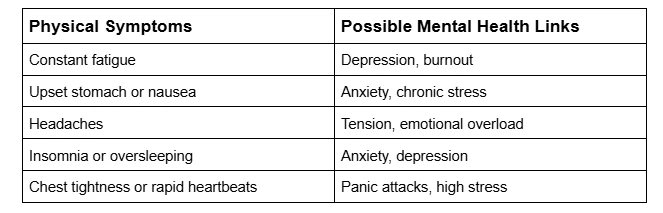
Yes, mental health shows up in the body. Headaches. Stomach issues. Muscle tension. Changes in appetite or sleep. These can all be mental health warning signs, even if they seem like normal wear and tear.
Don’t brush these off. Your body keeps the score. It reacts when your mind is overwhelmed, even if you think you’re handling everything “fine.”
Isolation: Withdrawing Without Realizing It
You might be showing up to work, but you’re not really there. You keep your camera off during meetings. You decline lunch invites. You don’t respond to check-ins from coworkers. You might even avoid social interactions altogether, saying you’re just busy.
But this kind of pulling away is one of the most overlooked warning signs. We stop connecting when we’re hurting. And in today’s hybrid and remote work setups, it’s even easier to hide it.
The Pressure to “Push Through”
Let’s talk about the culture of toughness. The pressure to keep going, even when you’re falling apart. That “grind” mentality often leads people to ignore clear warning signs. You tell yourself it’s just stress. You minimize it. You think you can manage.
But here’s the thing, mental health doesn’t improve through ignoring. It improves through acknowledgment. Through support. Through help.
When Work Anxiety Turns Into Dread
Nervous before a big presentation? Totally normal. But if you feel a heavy sense of dread every Sunday night, or start having panic attacks at the thought of logging in, it’s time to pay close attention.
This is not about being weak. This is about being honest. Chronic anxiety tied to your job is a warning sign. You deserve support before it escalates.
Sometimes, when mental health challenges begin to impact your ability to function at work, it might be necessary to explore options like an FMLA evaluation and disability evaluation, not as a last resort, but as a proactive step toward healing and long-term support.
Emotional Outbursts
Crying in the bathroom during a 15-minute break. Yelling at your laptop. Feeling like you’re falling apart over minor setbacks. These are all valid emotional responses, but they’re also mental health warning signs if they become frequent.
Your emotions aren’t wrong. But they may be a signal that something deeper is bubbling up and needs to be unpacked.
Struggling to Concentrate or Stay Productive
You sit at your desk for hours but get nothing done. You reread the same line ten times. You can’t retain information. This “brain fog” is one of the more invisible mental health warning signs, especially with conditions like depression, anxiety, or even ADHD.
Your brain is overwhelmed. When your mind is weighed down emotionally, it can’t perform at its best cognitively.
Feeling Like You’re Failing
Maybe your work is fine. Maybe your manager hasn’t said anything. But you feel like you’re constantly failing. That you’re letting everyone down, this feeling of inadequacy, even in the face of actual success, is a heavy warning sign.
It’s the kind of self-talk that chips away at your confidence. That makes you second-guess every email, every decision. And over time, it can feed into deeper mental health challenges.
When to Seek Help
If any of this resonates with you, even a little, please don’t wait until it gets worse. Seeking help doesn’t mean you’re broken. It means you’re brave enough to care for yourself.
At Reynolds Psych NP, we believe in compassionate care that honors the individual behind the symptoms. Whether it’s anxiety, depression, trauma, or work-related stress, you deserve support that meets you where you are.
Final Thoughts
Your mind deserves the same care as your body. If you had a broken arm, you wouldn’t try to “tough it out.” The same goes for mental health. Pay attention to the mental health warning signs. Trust yourself. And when things feel off, reach out.
You don’t have to wait for a breakdown to take care of your mental health. Sometimes, just having a safe space to talk, to be heard, can change everything.
Reynolds Psych NP supports you with care, compassion, and respect, no judgment, just real help.
Start small. Start today. Your well-being is worth it.
Frequently Asked Questions (FAQs)
1. How do I know if my stress is just temporary or a mental health issue?
If the stress doesn’t go away with rest or keeps interfering with your daily life, it could be a sign of a deeper issue.
2. Can mental health warning signs go away on their own?
Sometimes, yes. But most often, they improve faster and more effectively with professional support.
3. Is it okay to talk to a therapist even if things aren’t ‘that bad’?
Absolutely. You don’t need to wait for a crisis. Early support can prevent bigger struggles down the road.
4. What if I’m afraid my job will find out I’m getting help?
Mental health care is confidential. You have rights and privacy protections, including under the FMLA.
5. What kind of therapy helps with work stress?
Cognitive Behavioral Therapy (CBT), Interpersonal Therapy, and Mindfulness-based therapy are often helpful.