
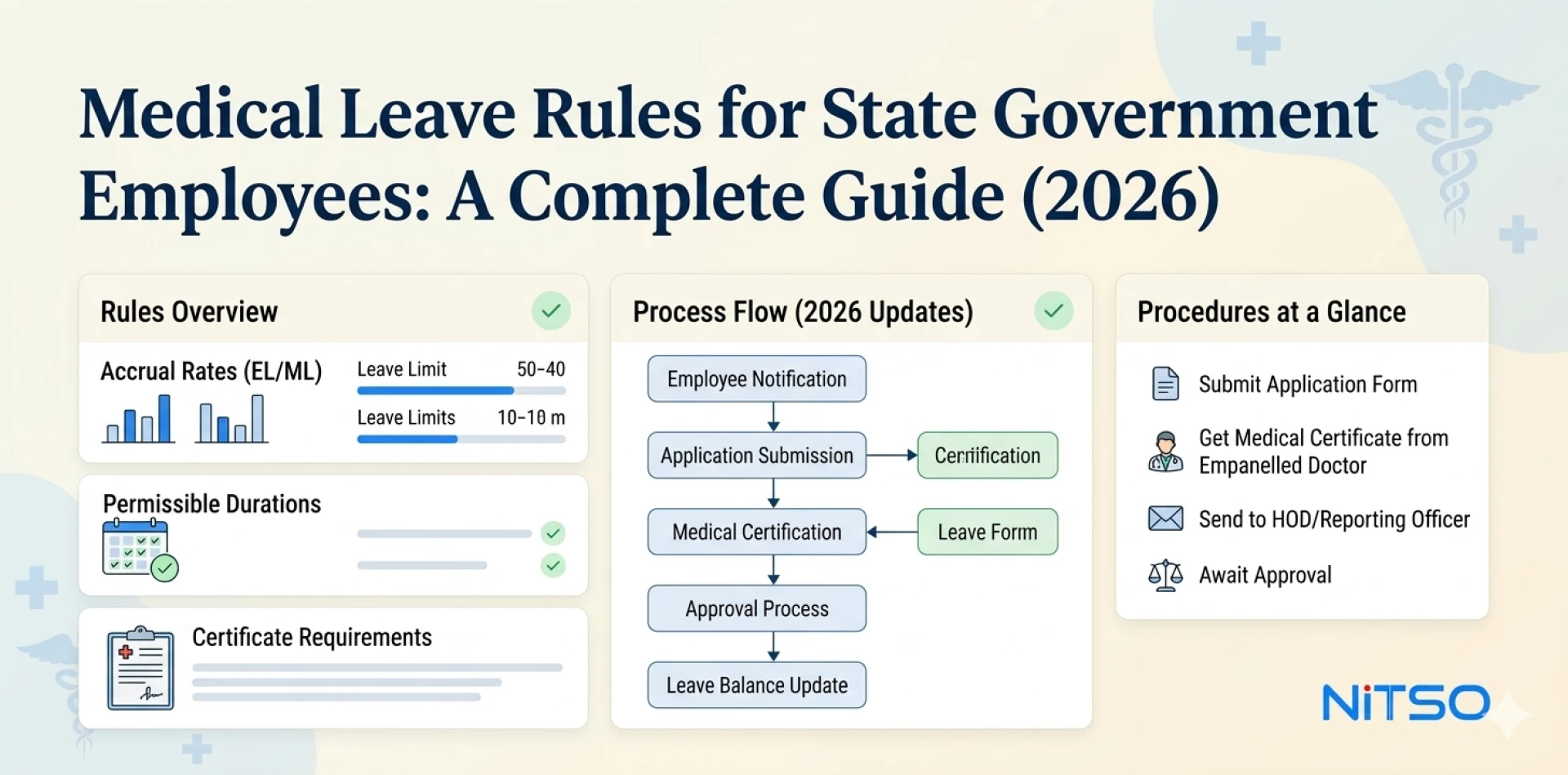
When it comes to employee welfare, it is important to understand medical leave policies, particularly for employees of state governments. This ensures that employees get enough time to rest when they are sick without having to worry about their jobs or income. If you are working in a state government department or are about to join a department, this guide will assist you in understanding medical leaves.
What Are Medical Leave Rules?
Medical leave rules are policies that allow employees to take leave when they are unwell or unable to perform their duties due to health issues. For state government employees, these rules are structured and governed by official service regulations, ensuring fairness and consistency across departments.
Medical leave generally includes:
- Sick leave for minor illnesses
- Leave for major health conditions or surgeries
- Leave for recovery and post-treatment care
Types of Medical Leave for State Government Employees
State government employees are entitled to different types of leave depending on their condition and service rules. Here are the most common ones:
1. Earned Leave (EL) Used for Medical Reasons
Although primarily meant for personal use, earned leave can also be used during medical emergencies. Employees accumulate this leave over time.
2. Half Pay Leave (HPL)
This is one of the most commonly used options under medical leave rules. Employees receive half of their salary while on leave. It is often used for longer illnesses.
3. Commuted Leave
Commuted leave allows employees to convert half pay leave into full pay leave, subject to medical certification. However, this is usually granted only when there is a valid medical reason.
4. Medical Leave on Certificate
This type of leave requires a valid medical certificate from a registered doctor. It is used for serious health conditions and extended recovery periods.
5. Extraordinary Leave (EOL)
If no other leave is available, employees can opt for extraordinary leave. This is unpaid but helps retain job continuity.
Eligibility Criteria for Medical Leave
To benefit from medical leave rules, employees must meet certain conditions:
- Must be a confirmed or regular state government employee
- Should provide medical proof if required
- Leave approval depends on department authority
- In some cases, prior intimation is required unless it’s an emergency
Temporary employees may have limited access depending on state policies.
Medical Certificate Requirements
For extended leave or serious illness, a medical certificate is mandatory. It should include:
- Diagnosis of the illness
- Duration of rest required
- Doctor’s signature and registration number
Some departments may require certification from a government hospital, especially for long-term leave.
Leave Approval Process
Understanding the process helps avoid delays or rejection:
- Inform your reporting authority immediately
- Submit a leave application with details
- Attach medical certificate (if needed)
- Wait for approval from the competent authority
In emergency cases, employees can apply after taking leave but must justify the absence properly.
Salary and Benefits During Medical Leave
One of the biggest concerns employees have is salary during leave. Here’s how it generally works:
- Full Pay: During commuted leave or earned leave
- Half Pay: During half pay leave
- No Pay: During extraordinary leave
In addition to salary, employees may still receive:
- Medical reimbursements
- Job security
- Service continuity (in most cases)
Common Mistakes to Avoid
Many employees face issues due to simple mistakes. Here are some you should avoid:
- Not submitting a medical certificate on time
- Taking leave without approval
- Misunderstanding leave balance
- Providing incomplete information
Following the correct procedure ensures smooth approval and avoids complications.
Why Understanding Medical Leave Rules Matters?
Knowing your rights under medical leave rules is not just about compliance, it’s about protecting your well-being. These rules are designed to support employees during difficult times, ensuring they can focus on recovery without worrying about their job.
For HR departments and organizations, clear leave policies also improve employee satisfaction and trust.
Conclusion
Medical emergencies are unpredictable, but your leave management shouldn’t be. By understanding the medical leave rules for state government employees, you can take the right steps when needed. Whether it’s a short illness or long-term treatment, these policies are there to support you.
Make sure to stay informed, follow the proper process, and always keep your documentation ready. A little awareness can save you from unnecessary stress and ensure you get the benefits you deserve. For more information visit Nitso Technologies now!