Becoming a doctor is one of the most ambitious career goals for many students. In India, thousands of students prepare every year for medical entrance examinations with the hope of joining a medical college. The dedication required to study medicine is immense, and students often spend years preparing for this goal. However, because the number of medical seats is limited and competition is intense, many students begin exploring international medical education opportunities.
While researching global medical programs, many students come across MBBS in Russia. Russian medical universities have been teaching medicine for many years and several institutions welcome international students from different countries. Because of this long academic tradition, Russia often becomes one of the destinations students consider while researching medical education abroad.
Students who want to explore universities, eligibility requirements, and admission guidance can visit:
https://mbbsfromabroad.com/mbbs-in-russia
Why Students Research Medical Education Abroad
The path toward a medical degree requires years of dedication, academic effort, and clinical exposure. In India, the number of students aspiring to become doctors is much higher than the number of available seats in medical colleges. Because of this situation, students often research international universities as part of their career planning.
Studying medicine abroad can provide exposure to new academic systems, healthcare practices, and cultural environments. Students may also interact with classmates from different countries, which creates a diverse learning experience.
However, selecting an international medical university should always involve careful research, reliable guidance, and a clear understanding of future career plans.
Academic Foundation of Medical Education
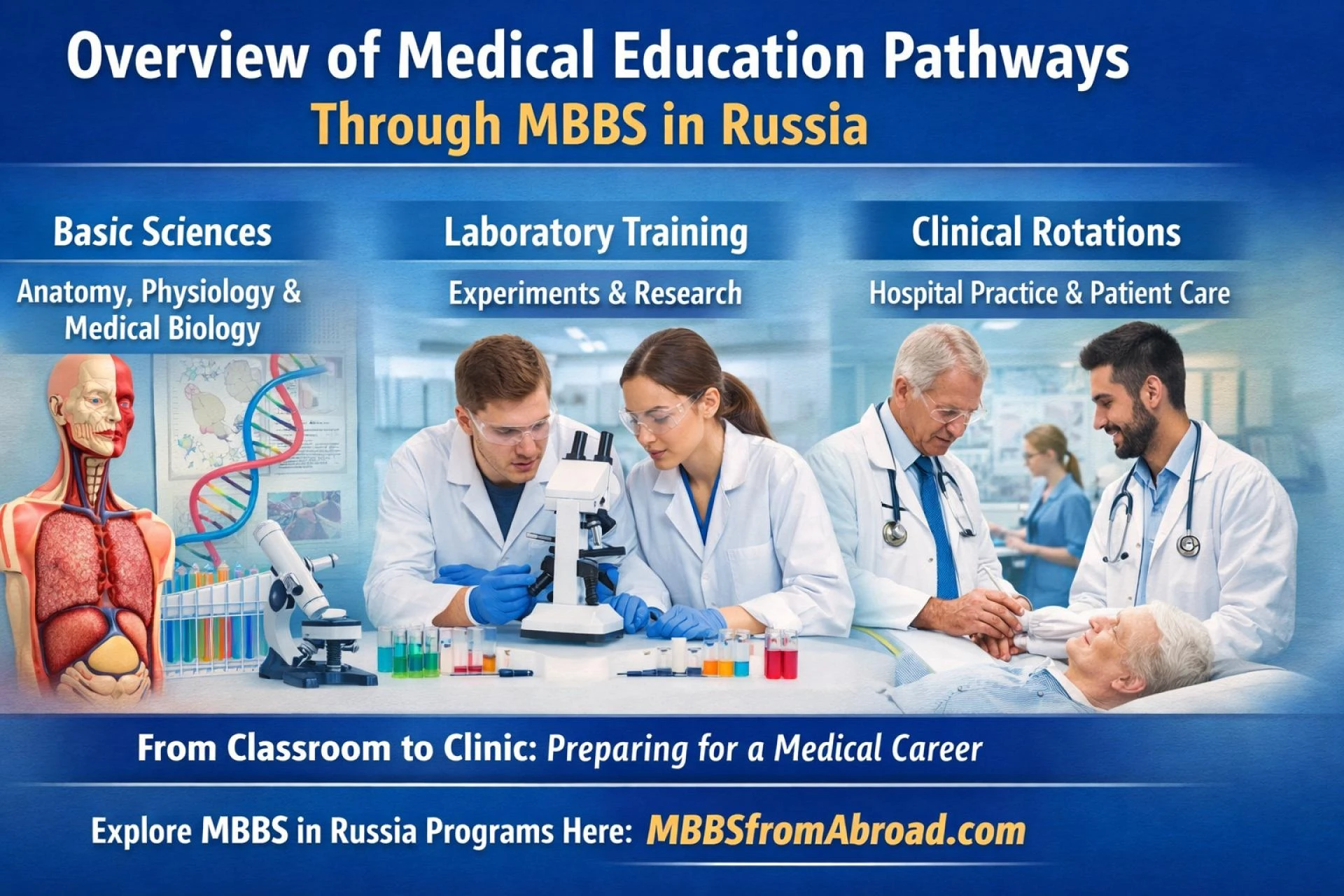
Medical education begins with understanding the scientific principles that govern human health and disease. Students first study the structure and functioning of the human body before moving toward advanced medical topics.
Some of the foundational subjects commonly studied during early medical education include:
- Anatomy
- Physiology
- Biochemistry
- Histology
- Medical Biology
These subjects help students understand how different organs and biological systems function together.
Students attend lectures, study textbooks, and participate in academic discussions that help them build a strong scientific foundation.
Importance of Laboratory Learning
Laboratory training plays a vital role in helping students understand biological systems. Medical students spend time in laboratories observing tissues, cells, and anatomical structures.
During laboratory sessions students may:
- Study tissue samples under microscopes
- Examine anatomical models
- Observe biological reactions
- Conduct scientific experiments
These activities allow students to connect theoretical learning with practical observation. Seeing biological structures directly helps students understand complex medical concepts more effectively.
Laboratory training also helps students develop observation skills and analytical thinking.
Clinical Exposure in Medical Studies
After completing foundational academic subjects, students gradually gain exposure to clinical environments. Teaching hospitals associated with universities provide opportunities for students to observe healthcare practices.
During clinical exposure students may observe:
- Patient consultations
- Physical examinations
- Diagnostic discussions
- Healthcare teamwork
Observing these activities helps students understand how doctors apply theoretical medical knowledge in real-life situations.
Clinical exposure also introduces students to the responsibilities and professional environment of healthcare professionals.
Understanding Healthcare Systems
Medical education also involves understanding how healthcare systems operate. Hospitals are complex institutions where different healthcare professionals collaborate to provide patient care.
Doctors work alongside nurses, technicians, pharmacists, and administrative staff. Observing these interactions helps students understand the teamwork required in healthcare services.
Learning about hospital operations helps students develop a broader understanding of medical practice beyond classroom learning.
Cultural and Academic Experiences Abroad
Studying medicine in another country introduces students to new cultures, languages, and lifestyles. Universities that host international students often create multicultural academic environments where students from different countries study together.
This cultural diversity allows students to exchange ideas and experiences with peers from different backgrounds. It also helps students develop communication skills and global awareness.
Living abroad can also encourage independence and responsibility. Students learn to manage their daily routines while focusing on academic studies.
However, adjusting to a new country requires discipline, preparation, and openness to learning.
Continuous Learning in the Medical Field
Medicine is a dynamic field that evolves continuously. New discoveries, technologies, and treatment methods are regularly introduced in healthcare systems around the world.
Because of this, medical students must develop habits of lifelong learning. Reading scientific journals, attending academic seminars, and participating in discussions help students stay informed about advancements in medicine.
Many universities also encourage students to explore research topics and develop critical thinking skills. These experiences help students understand how medical science progresses.
Planning a Medical Career Carefully
Choosing the right medical university is an important decision that can influence a student’s future career. Before enrolling in any medical program, students should carefully research several factors.
These factors may include:
- Recognition and accreditation of the university
- Curriculum structure
- Clinical training opportunities
- Licensing requirements for future practice
Students who plan to practice medicine in a particular country should also stay informed about regulatory guidelines and licensing examinations.
Medical regulations may change over time, so verifying official information is essential.
Conclusion
The journey toward becoming a doctor requires dedication, patience, and years of academic study. Students exploring global medical education opportunities often research multiple countries and universities before making their final decision.
For many students researching international medical education, MBBS in Russia becomes one of the options they explore due to its established universities and structured academic programs.
Students who want to explore universities, admission details, and eligibility requirements can visit:
https://mbbsfromabroad.com/mbbs-in-russia
Careful research, reliable guidance, and proper planning can help students choose the right path toward a successful medical career.