Choosing a medical career is one of the most important decisions in a student’s life. Medicine is a field that requires dedication, patience, and a strong commitment to learning. Every year, thousands of students prepare for medical entrance examinations hoping to secure admission to medical colleges. However, because medical seats are limited and competition continues to increase, many students start exploring options to study medicine abroad.
Among the destinations that frequently appear during this research process, Russia has become one of the well-known countries offering medical education programs for international students. Over the years, Russian medical universities have developed structured academic programs designed to train future doctors with both theoretical knowledge and practical exposure.
Why Students Explore MBBS in Russia
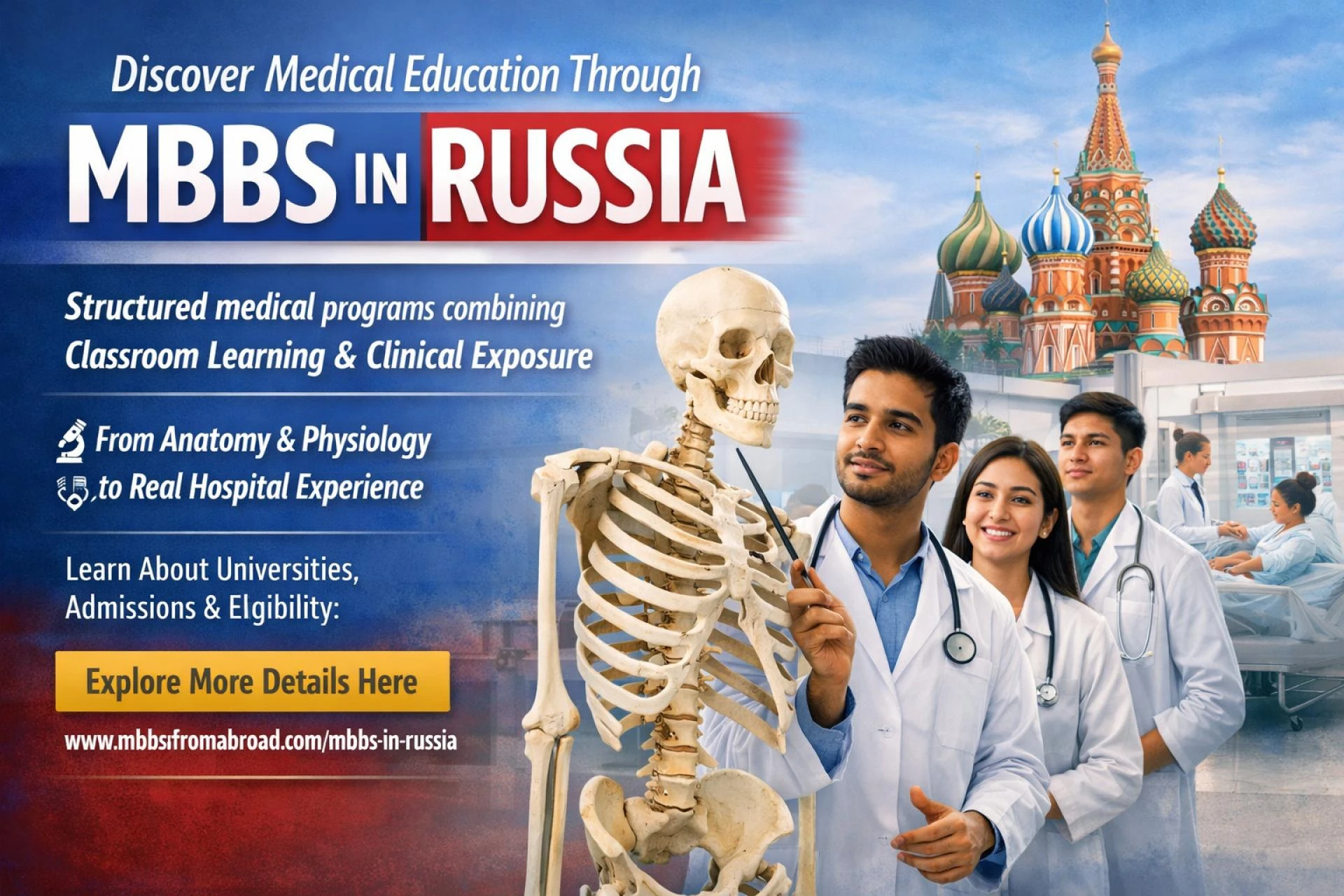
One of the main reasons students explore MBBS in Russia is the availability of structured medical programs that focus on building strong academic foundations. Medical universities in Russia generally follow a clear curriculum that begins with basic medical sciences and gradually progresses toward clinical training.
During the early years of the program, students study subjects that are essential for understanding the human body and biological systems. These subjects include anatomy, physiology, and biochemistry. Together, they create the scientific base that supports further medical learning.
Anatomy helps students understand the physical structure of the human body, including organs, tissues, and systems. Physiology explains how these organs and systems function together to maintain health and balance in the body. Biochemistry introduces students to the chemical reactions that occur inside living organisms.
Learning these subjects thoroughly is important because they provide the knowledge required to understand diseases, diagnosis, and treatment methods later in the medical program.
Practical Learning Through Laboratory Training
Medical education is not limited to classroom learning. Laboratory training is a key component that helps students apply theoretical concepts in a practical environment.
In laboratory sessions, students study anatomical models, examine biological samples, and conduct experiments related to human biology. These activities help students visualize scientific concepts and develop analytical thinking skills.
Observation skills developed during laboratory training become very useful when students later begin clinical practice.
Clinical Exposure in Teaching Hospitals
As students progress through the MBBS program, they gradually move from theoretical learning to clinical exposure. Russian medical universities often collaborate with teaching hospitals where students can observe real healthcare environments.
Clinical training usually begins with observation. Students watch doctors interact with patients, conduct medical examinations, and discuss treatment plans. This exposure helps students understand how medical knowledge is applied in real-life healthcare situations.
Over time, students become more involved in clinical learning under supervision, which helps them build confidence and develop professional skills.
Clinical exposure also allows students to observe patient communication, hospital workflow, and medical ethics in practice.
Multicultural Academic Environment
Another unique aspect of studying MBBS in Russia is the international academic environment. Russian medical universities often host students from many different countries. This creates multicultural campuses where students interact with peers from various cultural and educational backgrounds.
Such environments encourage discussions about healthcare systems in different parts of the world. Students exchange experiences and perspectives, which helps broaden their understanding of global medical practices.
Learning in a diverse environment also improves communication skills and teamwork abilities, which are important for healthcare professionals working in hospitals and clinics.
Personal Development While Studying Abroad
Studying abroad also contributes to personal growth. Students who move to another country for education often learn to adapt to new cultures, languages, and lifestyles.
While adjusting to a new environment may initially feel challenging, these experiences often help students become more independent and confident individuals.
Medical students studying abroad must manage their academic schedules along with daily responsibilities. This requires strong discipline, time management, and self-motivation.
Research and Planning Before Choosing Universities
Students who plan to pursue medical education abroad usually conduct detailed research before selecting universities and programs. They explore academic structures, admission procedures, and student support systems.
Reliable information helps students understand their options and prepare for their educational journey.
Students interested in exploring detailed information about universities, admission guidance, and opportunities related to studying MBBS in Russia can visit:
https://mbbsfromabroad.com/mbbs-in-russia
This page provides useful insights that help students understand how medical education programs work.
Understanding Licensing Requirements
Another important factor students must consider when studying medicine abroad is licensing requirements after graduation. Many students intend to practice medicine in their home countries once they complete their medical degree.
Therefore, it is important to stay informed about licensing examinations and certification procedures required in different countries. Understanding these requirements helps students plan their careers effectively.
Conclusion
Medical education is a long and demanding journey that requires commitment and continuous learning. Students spend several years studying complex medical subjects and gaining practical experience before entering the healthcare profession.
MBBS in Russia continues to be one of the options international students explore while researching medical education abroad. Russian universities offer structured academic programs that combine theoretical learning with clinical exposure, helping students build strong foundations in medicine.
Students who wish to explore medical universities, admission guidance, and educational opportunities related to MBBS in Russia can learn more by visiting:
https://mbbsfromabroad.com/mbbs-in-russia
Access to reliable information allows students to make informed decisions and begin their journey toward becoming healthcare professionals.