It might sound cheesy, but a city is more than just its streets and buildings. Together, humans, machines, and materials form living systems that are constantly evolving to meet the needs of their users and provide them with durable, practical spaces. Both the foresight of architects and the development of new, more efficient building materials and tools will shape the character of urban infrastructure in the future.
Although it has undergone significant changes over the years, concrete remains a vital building material.
Now more than ever, high-performance mixtures provide increased strength with improved resistance to cracking and water damage. Concrete that is capable of self-healing can automatically repair minor cracks, reducing the need for maintenance and extending the lifespan of roads and structures. By ensuring accurate dimensions and quicker on-site assembly, precast pieces made in controlled settings reduce delays caused by adverse weather conditions or human error.
In addition to this, construction elements such as composites, steel, and aluminium are transforming the way buildings are framed. Thanks to alloys that are both lighter and stronger, architects can now design daring spans without compromising stability. The use of carbon fibre and reinforced composites increases efficiency while decreasing material needs. With these innovations, we can construct higher structures, larger bridges, and more environmentally friendly public areas.
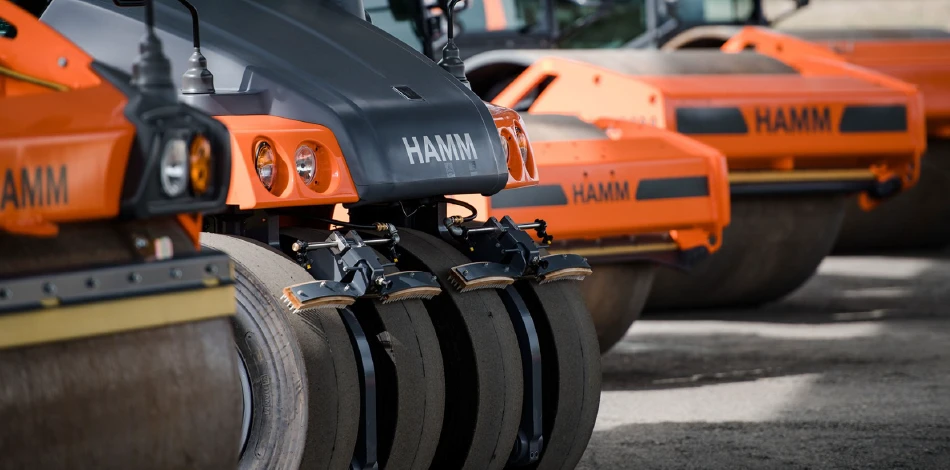
Equipment brings the vision to life, while materials set the scene. To this day, laying solid, level foundations requires the use of the road roller. When compacted, its vibrations and weight make gravel, asphalt, or soil weather-resistant for years. The versatile partner for tasks in tight urban spaces is the skid steer loader. In tight spaces where larger machines can't go, this nimble machine transports materials, grades surfaces, and prepares subgrades with precision. It can easily handle multiple attachments.
Moreover, plate compactors come in handy for a finishing touch needed when every corner, edge, and trench is essential. These tiny machines consolidate materials in locations that are inaccessible to larger equipment. This ensures that the density is uniform and prevents future settlement or uneven surfaces.
Pavements and urban surfaces are also a target of innovation. By allowing for selective replacement rather than complete renovation, modular road slabs reduce costs and minimise traffic delays. In densely populated regions, permeable surfaces mitigate the heat island effect and aid in the natural management of rainwater. Tests are being conducted on electrically conductive pavements to directly power traffic signals or street lighting, thereby integrating energy and infrastructural solutions.
The integration of innovative equipment and sophisticated materials is transforming project planning and execution. Paving roads, pouring foundations, and erecting structures are not simple tasks. The city becomes more efficient and long-lasting with every layer of material, pass of a road roller, movement of a skid steer loader, and compaction of the edge with plate compactors.