It’s hard to imagine Africa without the unique wilderness of this continent. The Masai Mara grasslands and Serengeti savanna are both part of an immense ecosystem that provides a habitat for an enormous variety of wildlife. Although similar in essence, these two landscapes have their own attractions and peculiarities.
They both attract tourists who want to witness the magnificence of the Great Migration, but the terrain, animal behaviour, and even the appearance of each place vary significantly. It is also worth noting that both areas have their own wildlife that lives there throughout the year.
Two Landscapes, One Wildlife
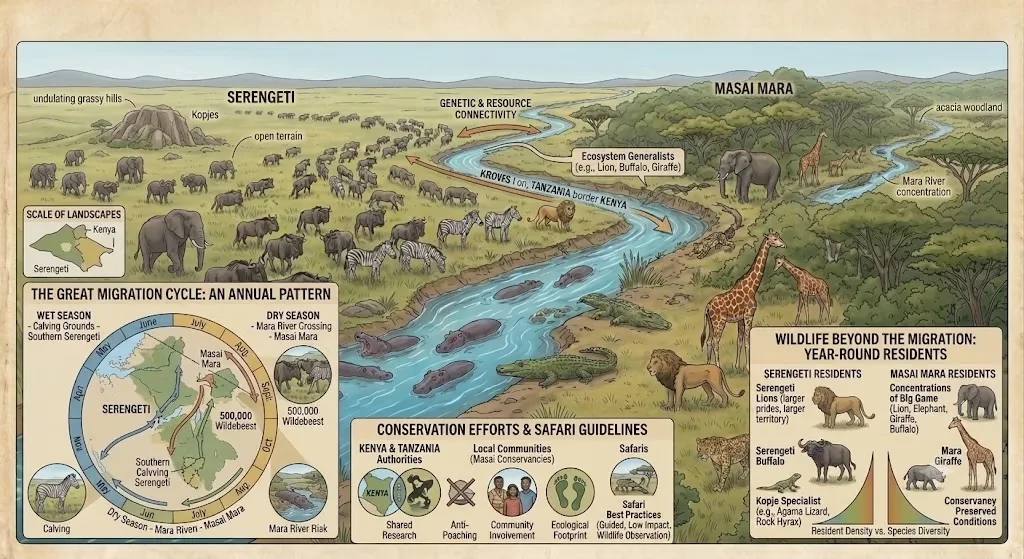
The Serengeti is a vast plain with undulating grassy hills and rocky outcrops called kopjes. Together, they create a unique ecosystem where numerous species of herbivores and carnivores live. The availability of water and grass determines where animals can be found during different seasons of the year.
The Serengeti is most famous for supporting the Great Migration, an annual event when hundreds of thousands of wildebeest and zebras move between Tanzania and Kenya. During the wet season, which usually lasts from November to June, the southern Serengeti becomes a calving ground where large numbers of wildebeest give birth to their calves.
The western corridor of the Serengeti is an important hunting ground for predators. It also features vast grasslands, woodland areas, waterholes, and rivers. The terrain is relatively open, making it easier to spot animals, although their presence depends on the season.
The Masai Mara is located in southwestern Kenya, bordering Tanzania to the south as part of the larger Serengeti-Mara ecosystem. It features a mosaic of savanna, acacia woodland, and seasonal rivers that provide habitats for various mammals and birds. Large herds of wildebeest, zebras, and gazelles constantly move in search of fresh grazing grounds and water.
The Mara River is home to numerous animals, and witnessing a river crossing can be an unforgettable experience. However, crossing the river is a gamble for wildebeest, as crocodiles pose a serious threat. The exact timing and location of these crossings cannot be predicted.
The Masai Mara is particularly famous for its impressive concentrations of wildlife, including lions, elephants, giraffes, and buffaloes. Local community conservancies have also helped create better conditions for wildlife conservation in the area.
One Great Migration, Two Countries
The Great Migration is a natural phenomenon involving hundreds of thousands of wildebeest, zebras, and other grazing animals across the Serengeti and Masai Mara. These animals travel great distances in search of vegetation and water, although migration patterns differ between species.
Seasonal rainfall influences the movement of herds as animals search for fresh grass and water. Wildebeest gather in the southern Serengeti during the calving season before moving west and north towards new grazing grounds.
Depending on the time of year, visitors can see animals on either side of the Tanzania-Kenya border. Many herds enter the Masai Mara during the migration season and may remain there for several months. However, the timing and location of the migration change each year depending on rainfall and other environmental conditions.
Wildlife migration across the Serengeti-Mara ecosystem is an unforgettable spectacle. It is not only important for tourists but also essential to the local ecosystem. Grazing animals provide food for predators, while their remains support scavengers and other species.
Wildlife Beyond the Great Migration
Although the Great Migration draws considerable attention, there is much more wildlife to discover in both regions. Visitors can admire elephants, giraffes, buffaloes, warthogs, and various species of antelope. The ecosystem also supports predators such as lions, leopards, cheetahs, and hyenas, alongside birds like vultures, eagles, and ostriches.
The variety of wildlife in the Masai Mara and Serengeti reflects their diverse habitats. Game drives are a popular way to explore these landscapes, offering opportunities to spot animals across open plains. Riverine habitats also support numerous birds and mammals that visit the water to drink.
While the Great Migration attracts large numbers of visitors, many animals remain in these regions throughout the year. Different parts of the Serengeti and Masai Mara provide habitats for different wildlife species, making each safari experience unique.
Preservation of the Serengeti and Masai Mara
Protecting these national parks requires cooperation between government authorities, private conservation organisations, local communities, and visitors. Preserving the Serengeti-Mara ecosystem is a complex task that depends on coordinated efforts across Tanzania and Kenya.
Wildlife reserves, conservancies, and community-managed lands help support the ecosystem and protect animals from poaching. Responsible tourists can also contribute by supporting local conservation initiatives and choosing operators that follow sustainable tourism practices.
The Serengeti and Masai Mara form part of a connected ecosystem. Animals move between these regions in response to changing weather, food availability, and water sources.
Maintaining the integrity of this ecosystem is vital for wildlife survival. Local communities and visitors can help by respecting wildlife, following park regulations, and supporting long-term conservation efforts.
Masai Mara and Serengeti: Unique Safaris in Africa
Comparing these two remarkable destinations reveals the different experiences they offer. A Masai Mara and Serengeti safari provides an opportunity to explore two extraordinary wildlife regions. Their similarities and differences can be seen in their landscapes, wildlife encounters, and travel experiences.
Both destinations are part of the Great Migration, one of Africa’s most fascinating natural events. The migration takes place throughout the year, although its location changes with seasonal rainfall. River crossings can be dramatic, but not every herd crosses a river, and sightings are never guaranteed. The Great Migration is only one part of the wildlife experience these regions offer.
Both the Serengeti and Masai Mara support numerous wildlife species, including elephants, giraffes, zebras, and buffaloes. However, animal numbers, visibility, and encounters vary according to habitat, location, and season. Local weather conditions also influence animal activity, making it important to plan a safari around the experiences you hope to enjoy.
Travel arrangements depend on transportation, travel dates, and personal preferences. Allowing enough time to explore both destinations can provide a broader understanding of the Serengeti-Mara ecosystem and its wildlife.
An experienced guide is essential for a rewarding wildlife safari. Guides understand animal behaviour, recognise tracks and signs, and help visitors spot wildlife while maintaining safe distances. They also encourage responsible viewing and explain the importance of following park rules.
Finally, remember that the Great Migration is a continuous process rather than a single event. Herds move throughout the year in response to changing environmental conditions. Choosing the right travel period can improve your chances of witnessing particular stages of the migration in the Serengeti or Masai Mara, although nature always remains unpredictable.