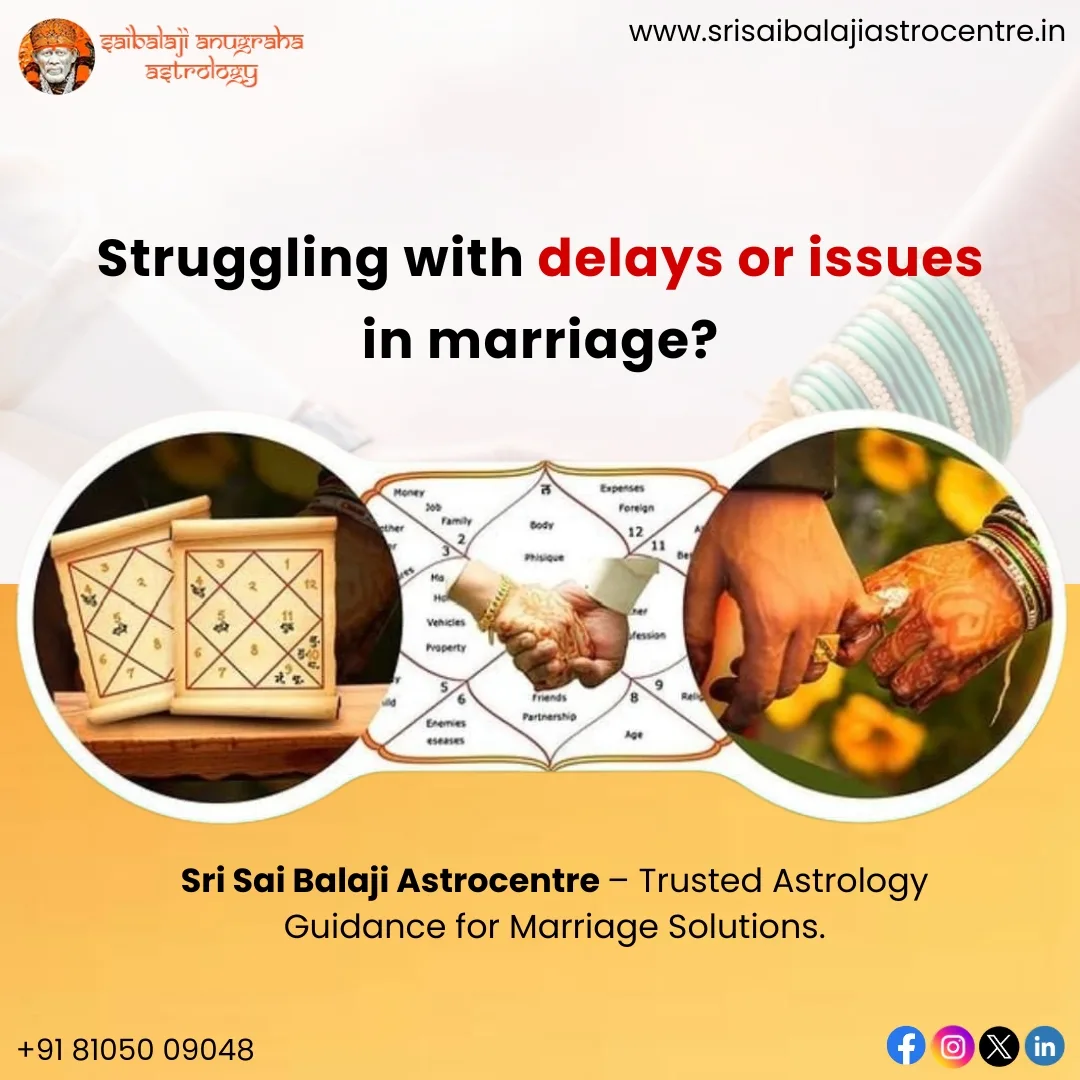
Most people, when they hear "marriage compatibility," think of one thing: matching two horoscopes before a wedding, getting a score or a green light, and moving forward. And yes, that's part of it. But after more than 35 years of practicing astrology in Bangalore and going through compatibility readings for hundreds of couples, I can tell you that real compatibility is a far bigger, more layered thing than a single matching score on paper. If you're relying only on that number to tell you whether a marriage will work, you're missing most of the picture.
Let me walk through what marriage compatibility actually involves, and why it matters just as much after the wedding as it does before.
A High Match Score Doesn't Guarantee an Easy Marriage
I've seen couples with excellent horoscope matches who still struggle constantly, and couples with average scores who've built genuinely strong, lasting marriages. That's not because the matching process is wrong — it's because a compatibility score measures specific planetary alignments, not the full emotional and practical reality of two people sharing a life.
What a good match typically indicates is that certain friction points are less likely, and certain natural strengths exist between the couple. What it doesn't tell you is how each person handles stress, communicates when upset, manages money, or reacts to family pressure. Those things live in the details of each individual chart, not just in the comparison between two charts.
Compatibility Is About More Than Romance
When people ask me about compatibility, they're usually thinking about whether they'll love each other, whether the relationship will feel easy. But marriage isn't only a romantic partnership — it's also a practical one. You're combining finances, decisions about where to live, how to raise children, how to handle extended family, and dozens of everyday choices neither person thinks about during the excitement of a new relationship.
Real compatibility looks at how two people are likely to handle these practical realities together. Does one partner's chart show a tendency toward financial caution while the other leans toward risk? Does one show a need for independence while the other craves closeness? Neither pattern is wrong on its own, but understanding the difference in advance means a couple can plan for it instead of being blindsided by it three years into the marriage.
Emotional Compatibility Matters as Much as Planetary Matching
Some of the couples I've worked with had strong horoscope compatibility but still felt disconnected emotionally, because neither partner had really learned how the other processes feelings. One partner might withdraw when upset, needing space to think things through. The other might want to talk immediately, needing reassurance in the moment. Without understanding this difference, both people can end up feeling unheard, even in a marriage that's astrologically well matched.
This is why, in my consultations, I spend as much time discussing each person's emotional tendencies — drawn from their individual chart — as I do comparing the two charts together. A couple who understands how the other actually processes emotion is far better equipped to handle conflict than a couple who simply knows their horoscopes are "compatible" without understanding what that compatibility actually means in daily life.
Family and Social Compatibility
In Bangalore, and across much of India, marriage rarely involves just two people — it involves two families, and often extended relatives who stay closely connected after the wedding. Compatibility readings that ignore this miss something important. A couple can be personally well-matched but still face significant strain if their families have very different expectations, values, or levels of involvement in the marriage.
Part of a thorough compatibility reading looks at how each person is likely to navigate family dynamics — how much independence they need from their own family, how they're likely to handle disagreements between their spouse and their parents, and where potential friction points with in-laws might show up. Couples who go into a marriage aware of these tendencies tend to handle family pressure with far more patience than those who are caught off guard by it.
Compatibility Isn't Just for Before the Wedding
One thing I tell couples often: compatibility isn't a one-time check you do before marriage and then forget about. Understanding your compatibility — the real, layered version, not just the matching score — is useful throughout a marriage, especially during difficult periods. When a couple hits a rough patch, going back to understand the underlying compatibility patterns between them often reveals why a particular kind of conflict keeps recurring, and what approach is more likely to actually resolve it rather than just pause it temporarily.
I've had couples come to me years into their marriage, not for a pre-wedding match, but because they wanted to understand each other better after a period of repeated conflict. In almost every case, going back to a proper compatibility reading — looking at both charts honestly, not just the summary score from years earlier — gave them language and understanding they hadn't had before.
What Real Compatibility Guidance Should Include
If you're seeking a compatibility reading, whether before marriage or during one, it should go beyond a simple pass/fail score. A thorough reading looks at emotional tendencies in each partner, financial attitudes and risk tolerance, communication styles, family dynamics and independence needs, and the specific planetary influences that shape how each person handles stress and conflict. Only with this fuller picture can a couple actually understand what they're working with — not just whether they're "compatible," but how their particular version of compatibility actually functions in daily life.
A More Honest Way to Think About Compatibility
Marriage compatibility isn't a single number that tells you whether things will work out. It's a layered understanding of how two people are likely to move through life together — emotionally, practically, and within the context of their families. A high match score is a helpful starting point, but it's not the whole story, and treating it as the whole story is where a lot of couples get an incomplete picture before making one of the biggest decisions of their lives.
At Sri Sai Balaji Astrocentre in Bangalore, we've spent over 35 years helping couples understand compatibility in this fuller sense — not just matching charts on paper, but genuinely understanding what two people are bringing into a marriage together. If you're considering marriage, or trying to understand recurring friction in one you're already in, call +91 81050 09048 for a proper compatibility reading.