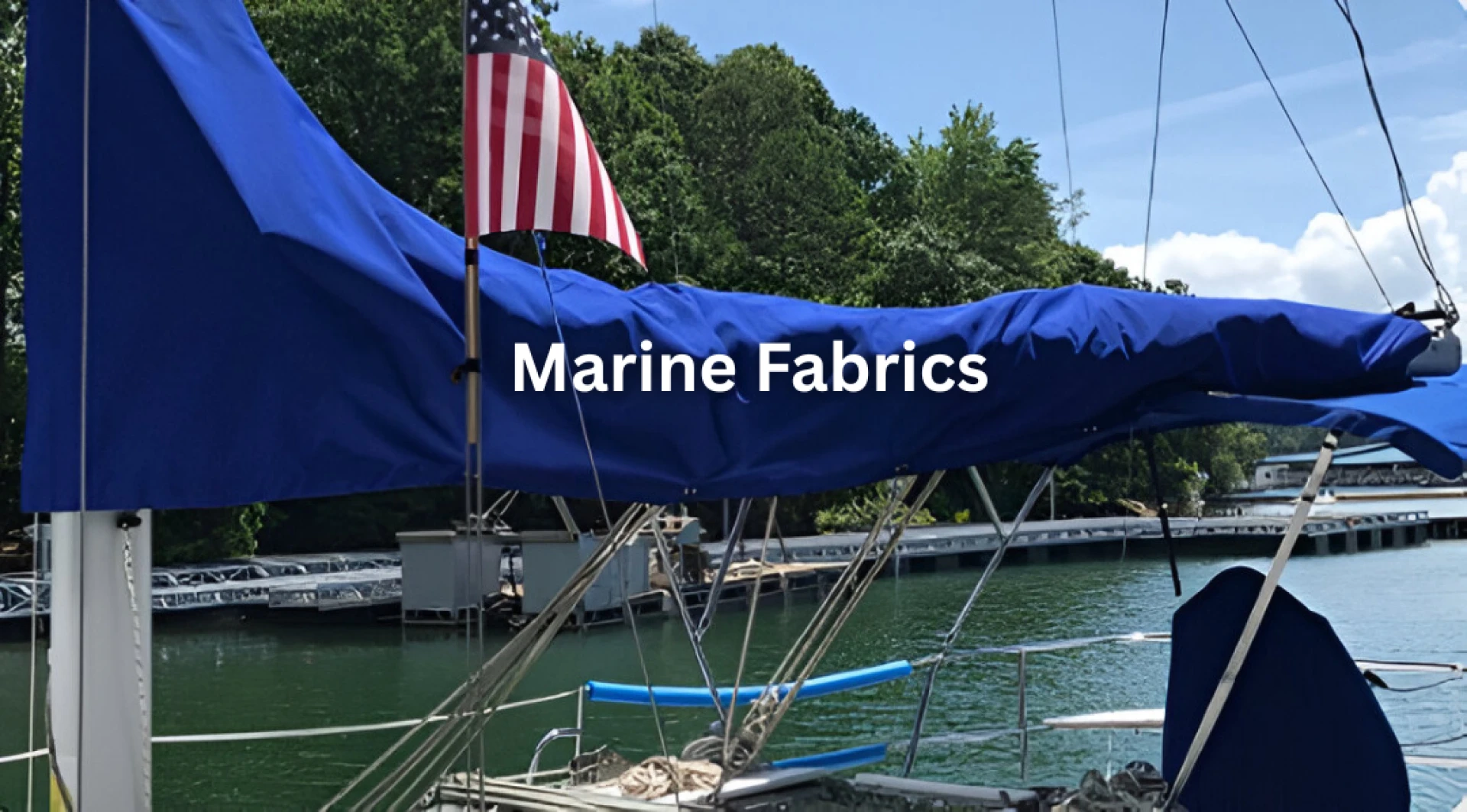
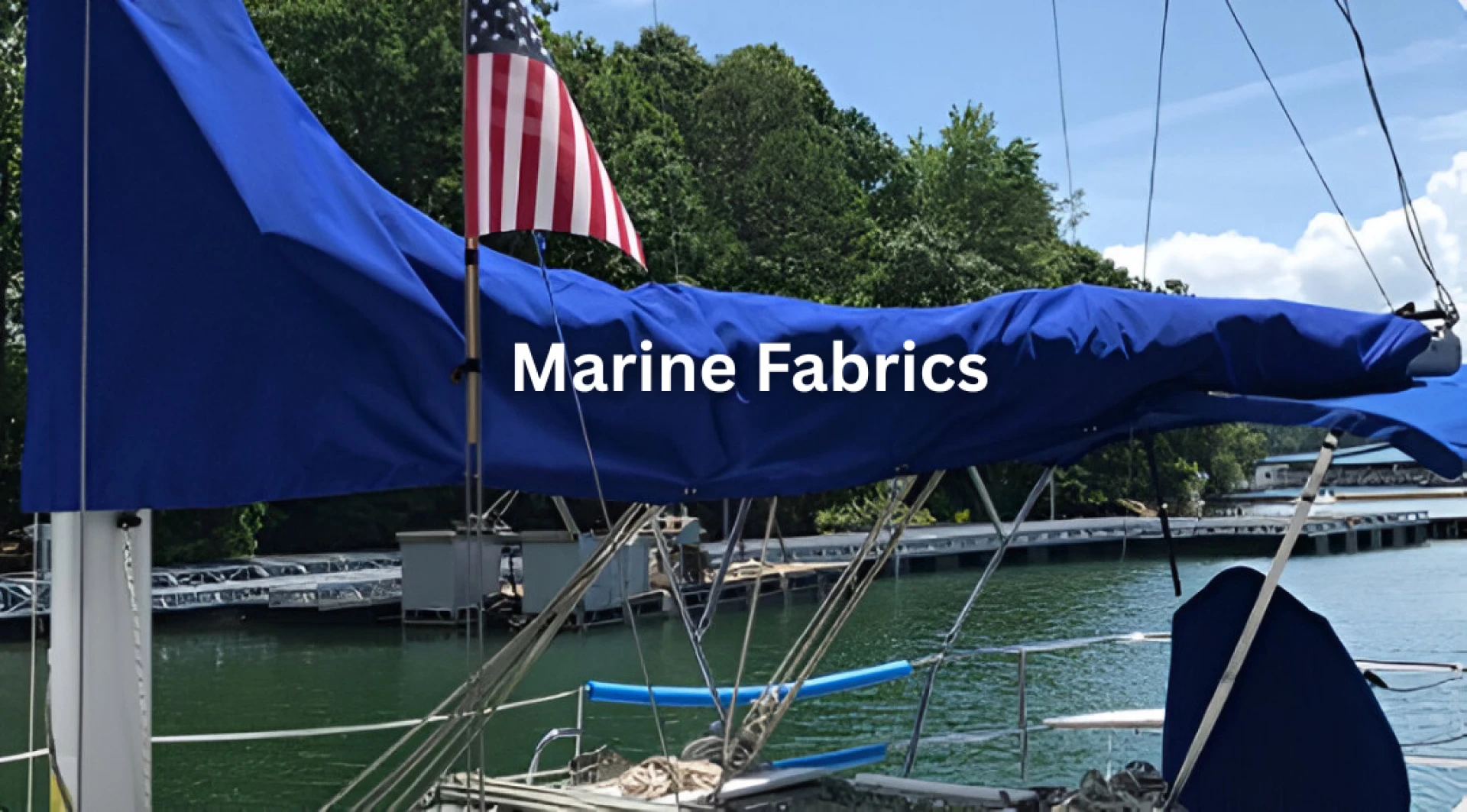
Marine fabrics are heavy-duty, marine-grade textiles sold by the yard and engineered to withstand harsh conditions (strong sun, salt spray, wind and rain). In practice, the right boat-cover material will be water-repellent, UV-stable and long-lasting. Classic boat canvas (originally cotton duck, now usually synthetic) is woven tightly so it’s essentially water-resistant and even windproof. Industry experts report that quality canvas is “water-repellent if not waterproof” and highly durable under stress. Its dense weave also helps hold dye so colors stay rich in sunlight, yet it breathes enough to let moisture escape (which keeps mold and mildew from growing). In short, Marine Fabrics are purpose-built to survive UV, salt, spray and heavy use.
Types of Marine Fabrics
Acrylic (Solution-Dyed) Fabrics
Lightweight woven acrylic is extremely popular for boat covers, biminis and upholstery. Because the color pigment is infused into the fiber, these fabrics resist fading even under intense sun. They are also breathable by design – the weave allows airflow so heat and moisture don’t get trapped, greatly reducing mildew growth. For instance, Sunbrella fabrics even carry the Skin Cancer Foundation’s seal of recommendation for their proven UV protection. In practice, a solution-dyed acrylic canvas stays vibrant and mildew-free season after season.
Vinyl (PVC)-Coated Fabrics
These are heavier, multi-layer textiles where polyester (or cotton) base cloth is laminated with vinyl. The result is a strong, waterproof fabric that holds tight even when wet. High-end marine vinyl/polyester composites are made with UV-resistant finishes. Herculite notes that vinyl can be specially coated to provide UV-ray protection and dirt resistance. In fact, Herculite’s marine vinyl fabrics are described as “waterproof” and fully “mildew and Ultra Violet light resistant.” Expanded vinyl (uncoated PVC) is also used for cushions: it resists mold and mildew on its own and can be treated with antimicrobial additives for extra durability.
Polyester & Blends
Many marine fabrics use solution-dyed polyester yarns (or polyester/cotton blends) as a core. Polyester is inherently strong, UV-stable and dimensionally stable. Often, a heavy-duty canvas will have a polyester base with a waterproof coating (for example, a fluorocarbon or vinyl finish). These composites marry the strength of polyester with a protective finish. Using synthetic fibers like acrylic and vinyl greatly increases the textile’s longevity, since natural canvas would rot, fade or shrink much faster.
Clear Vinyl (Marine-Grade PVC)
Flexible clear vinyl sheets are used for see-through windows and enclosures. These high-quality PVC films are specially formulated to resist yellowing, clouding, scratching and UV damage. That makes them tough enough for heavy marine use: in practice you’ll find crystal-clear clear-vinyl panels used in cockpit enclosures, dodgers and camper windows, providing visibility while blocking wind and rain.
Mesh (Screen) Fabrics
Open-weave meshes like Textilene or “no-see-um” screen cloth are used for insect screens, vent panels, trampoline nets and shade panels. These woven screens allow air to pass and keep bugs out. As Sailrite notes, marine mesh fabrics are made for “bug protection, windshield covers, trampolines, awnings” and more. Dark-colored, tightly knit meshes are common on coastal boats to add privacy and UV-blocking shade without killing airflow.
Vinyl Laminates & Specialty Composites
For extra heavy-duty covers, multi-layer laminates and heavy vinyl coatings are used. These fabrics (often 18–20 oz per yard or more) have multiple treatments for abrasion resistance, UV stability and waterproofing. Examples include vinyl-laminated polyester sails or coated acrylic laminates. Such specialty marine fabrics can even resist fire and often come with very long warranties. For instance, Herculite points out that their Regatta yacht fabric is treated with a special finish that “helps prolong the life of the textile and offers superior color retention.” In short, these premium coated fabrics make exceptionally durable covers that stand up to wind, rain and sun year after year.
Marine Upholstery Vinyls
Heavy PVC-coated vinyls are used on boat seats and cushions. These upholstery vinyls are engineered to resist salt, oils, sunlight and abrasion. They typically have UV inhibitors and mildew-fighting topcoats. For example, Trivantage’s Seaquest marine vinyl “protects against UV rays, water, mildew, stains, and abrasion,” and Nautolex Capitano vinyl is water-repellent and resists mildew and fading. In practice, cushions built from these vinyls stay waterproof and rot-free even in wet, salty conditions.
Binding, Trim and Hardware
Finally, boat covers use specialized nylon or polyester tapes (often treated) for binding, piping, corner patches and so on. These finishing components reinforce edges and attachment points. They are also made for the outdoors: UV-stabilized and mildew-resistant. Though small, this trim ensures that sewn seams and edges remain neat and durable over time.
Benefits and Performance
Investing in true marine-grade textiles pays off in performance. Top-quality marine fabrics are built to shrug off sun and water:
UV & Fade Resistance
Many marine fabrics are solution-dyed or have UV-blocking finishes. For example, acrylic canvas like Sunbrella is dye-fast and won’t fade easily even under intense sunlight. A boat cover made of high-grade marine fabric “effectively shields your boat from harmful UV rays, preventing the fading and deterioration of surfaces and upholstery.”
Water & Mildew Protection
Quality marine textiles shed water and discourage mold. Top acrylic fabrics and coatings are produced to be water-repellent and mildew-resistant. One manufacturer notes that its solution-dyed acrylic is explicitly “water repellent, fade resistant, mold & mildew resistant.” In practice, rain beads right off a treated canvas and dirt can often be hosed or brushed off. With normal drying and cleaning, stains and microbial growth are greatly minimized.
Durability & Strength
Synthetic marine fabrics far outlast older cotton canvases. As one industry source explains, using acrylic and vinyl fibers “increases the longevity of the textile.” These fabrics are tough enough to resist tears, abrasion and constant use. Many marine fabrics come with multi-year warranties, giving confidence in their lifespan. In fact, manufacturers emphasize that premium vinyl-laminated or coated fabrics will “prolong the life” of the boat cover while keeping colors vibrant.
Easy Care
Marine fabrics are designed for low maintenance. They can be rinsed or gently scrubbed with mild soap when dirty. Most will air dry quickly without holding odors. (For example, Sunbrella and acrylic fabrics resist stains and are machine-washable if needed.) Routine care usually just means brushing off debris and spot-cleaning spills. And because these fabrics breathe, you should always let a damp cover dry fully before storing it to prevent mold.
In sum, high-quality marine fabrics deliver UV protection, water repellency and longevity far beyond ordinary outdoor cloth. Products like Sunbrella, Herculite and others are typically engineered and even manufactured in the USA to meet the toughest boating standards.
Choosing and Caring for Marine Fabrics
Selecting the best fabric depends on your boat’s use and environment. For sunny, hot climates, solution-dyed acrylics or coated polyesters are top picks thanks to their exceptional colorfastness. For boats facing heavy rain, salt spray or offshore use, vinyl-coated laminates offer near-waterproof performance. Consider cost versus lifespan: an investment in a premium marine canvas now can save on replacement costs later. Once installed, care is key to longevity. Keep covers clean and dry whenever possible. Regularly brush off dirt and rinse the fabric with mild soap and water. Before storing or at season’s end, inspect seams and hardware, and repair any small tears promptly. Many owners also reapply a marine-safe waterproofer annually to maintain repellency. Always let the cover fully dry before folding it away; this simple step will prevent mold from taking hold. With the right material and maintenance, a marine-grade canvas will continue to keep water out, colors bright, and mildew at bay. By choosing fabrics designed for boats – and caring for them properly – you ensure your vessel is shielded from the elements and looks great for many seasons to come.
For more information on marine canvas and accessories, visit the Canvas Boat Cover And Repair Advisor.