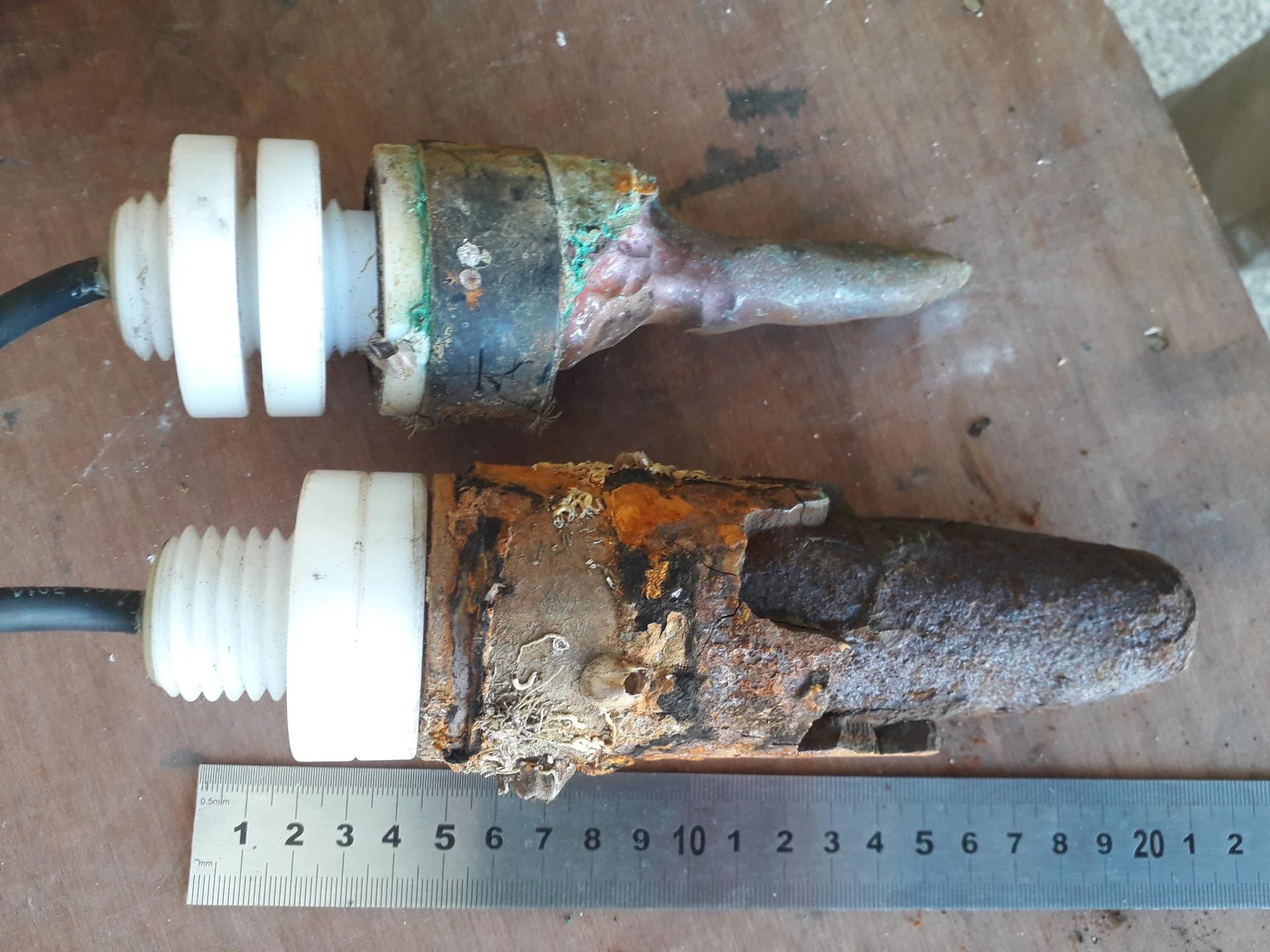
Cathodic protection anodes for boats are sacrificial metal components designed to prevent galvanic corrosion on hulls, propellers, shafts, rudders, and onboard systems. They work by corroding first, protecting more valuable underwater metals from damage. Without properly selected and installed anodes, boats operating in saltwater or freshwater can suffer rapid deterioration, leading to costly repairs. Choosing the right material—aluminium, zinc, or magnesium—depends on water type and metal compatibility. At Marine Control SL, we regularly help vessel owners select and maintain anode systems as part of a complete marine protection strategy that includes propulsion components, shaft systems, and vibration-control solutions.
What Is Cathodic Protection and Why It Matters?
Cathodic protection is an electrochemical process that reduces corrosion by making the boat’s metal components the cathode of an electrical circuit. In simple terms, the sacrificial anode absorbs corrosion so that critical parts like propeller shafts and trim tabs remain intact.
In our experience, corrosion problems often begin invisibly. A small voltage difference between dissimilar metals—such as bronze propellers and stainless-steel shafts—can start a galvanic reaction. Over time, this leads to pitting, weakening, and eventually mechanical failure.
We’ve seen this work effectively when boat owners treat anode maintenance as a routine system check rather than an afterthought during haul-out. Preventative replacement is significantly less expensive than replacing underwater hardware.
Types of Boat Anodes and When to Use Them
Aluminium Anodes
Aluminium anodes are widely considered the most versatile option for saltwater and brackish environments. They are lightweight, long-lasting, and environmentally safer than traditional zinc. For most Mediterranean and Atlantic marinas, aluminium provides stable and predictable performance.
In our projects, aluminium anodes tend to offer balanced consumption rates, which helps boat owners schedule maintenance more accurately.
Zinc Anodes
Zinc has historically been the standard for saltwater use. While still effective, zinc can become less efficient in low-salinity or polluted waters. It remains a reliable option when matched correctly with the operating environment.
Magnesium Anodes
Magnesium anodes are designed for freshwater conditions. They provide stronger protective current but can overprotect in saltwater, leading to rapid depletion. We’ve encountered cases where magnesium was mistakenly installed in coastal marinas, resulting in excessive wear within weeks.
How to Choose the Right Anode for Your Boat?
Selecting the correct cathodic protection anode involves more than picking a similar size to the old one. Proper selection depends on:
- Primary water environment (salt, brackish, freshwater)
- Type of underwater metals (bronze, aluminium, stainless steel)
- Electrical bonding integrity
- Shore power connection and marina conditions
- Surface area requiring protection
In our experience at Marine Control SL, incorrect bonding is one of the most overlooked factors. Even high-quality anodes cannot function properly if electrical continuity between components is compromised. We’ve seen boats with new anodes still suffering corrosion because bonding wires were loose or damaged.
Integration with Propulsion and Mechanical Systems
Anode performance is closely connected to the mechanical and structural integrity of propulsion components. Corrosion protection cannot be viewed in isolation.
Cutlass bearings
Cutlass bearings stabilize the propeller shaft and allow smooth rotation. When these bearings wear out, shaft alignment changes, creating vibration and uneven electrical contact points. This can alter corrosion patterns and reduce anode efficiency. During maintenance inspections, we often evaluate shaft alignment and bearing condition alongside anode wear.
Rubber Expansion Joints for Boats
Rubber Expansion Joints for Boats are essential for absorbing vibration and accommodating movement in exhaust and piping systems. If these joints degrade or leak, they may influence grounding stability or create stray current pathways. We’ve seen improved long-term corrosion control when vessel owners replace aging expansion joints at the same time as reviewing their cathodic protection system.
Ropestripper Service Palma
Propeller shaft entanglement can strip coatings and expose fresh metal surfaces. Ropestripper Service Palma helps prevent rope and debris from wrapping around shafts, reducing mechanical strain and protecting exposed metals. Combining rope cutter maintenance with anode inspections creates a more comprehensive protection strategy.
Common Mistakes Boat Owners Make
From our hands-on work with leisure and commercial vessels, several patterns emerge:
- Replacing anodes only when fully depleted
- Installing the wrong alloy for the cruising region
- Ignoring stray current from marina shore power
- Overlooking bonding wire integrity
- Failing to document consumption rates between haul-outs
We’ve seen this work when boat owners start recording wear percentage every six months. This simple habit creates predictability and prevents emergency repairs.
Long-Term Corrosion Prevention Strategy
Modern boats often combine multiple metals, advanced electronics, and shore power systems. Each of these introduces potential electrical differences. Cathodic protection anodes for boats are a frontline defense—but not the only one.
In our experience, a comprehensive approach includes:
- Regular voltage testing between bonded components
- Shore power isolation checks
- Inspection of underwater coatings
- Scheduled mechanical system reviews
When corrosion is addressed proactively, the vessel’s lifespan and resale value both improve significantly.
Frequently Asked Questions (FAQs)
What are cathodic protection anodes for boats?
Cathodic protection anodes are sacrificial metal components installed on underwater parts of a boat. They corrode instead of valuable metals, preventing galvanic damage.
How often should boat anodes be replaced?
Anodes should typically be replaced when 50% consumed. In high-salinity environments or marinas with heavy electrical activity, inspections every six months are recommended.
Can shore power affect boat corrosion?
Yes. Improperly grounded shore power connections can introduce stray currents, accelerating corrosion. Regular system testing reduces this risk.
Do cutlass bearings influence corrosion?
Indirectly, yes. Worn cutlass bearings can cause shaft misalignment, leading to uneven electrical contact and altered corrosion patterns.
Are aluminium anodes better than zinc?
In many saltwater conditions, aluminium anodes provide longer service life and more stable protection. However, the correct choice depends on specific water conditions.
Conclusion
Effective cathodic protection is never just about choosing the right anode—it’s about understanding how the entire marine system functions together in real operating conditions. Variations between marinas, water salinity, shore power setups, and onboard components all influence corrosion behavior, making technical insight essential.
By taking a comprehensive, system-based approach, Marine Control SL ensures that anodes, propulsion systems, cutlass bearings, rubber expansion joints, and preventive maintenance services work in harmony rather than isolation. This integrated perspective reduces risk, prevents premature failures, and extends the lifespan of critical components.
For boat owners focused on durability, safety, and long-term value, professional guidance is not an added expense—it is a strategic investment in the vessel’s reliability and performance.
We have more services such as:
Marine Corrosion Protection Supplies
Shaft Protection Systems for Boats