Manufacturing companies depend on equipment to turn raw materials into products people use every day. When a machine needs to be moved from one factory to another, sent to a customer, transported to a repair facility, or relocated during a plant expansion, the journey requires more thought than an ordinary delivery.
That is where manufacturing equipment shipping becomes important.
Large manufacturing machines can be heavy, valuable, awkwardly shaped, and surprisingly delicate. A machine may have exposed controls, moving parts, precision components, electrical systems, or surfaces that can be affected by moisture and rough handling. Simply placing it on a vehicle and hoping for a smooth trip is not a sensible strategy.
A successful shipment starts with understanding the equipment and ends with making sure it arrives ready for its next assignment. Between those two points are several important decisions involving preparation, protection, loading, transportation, and delivery.
Why Moving Factory Machinery Takes Careful Planning
Manufacturing equipment comes in countless forms. A facility might need to move a CNC machine, industrial printer, packaging machine, injection molding equipment, conveyor system, cutting machine, assembly equipment, or another specialized unit.
Each machine presents a different challenge.
Consider the difference between shipping a stack of office supplies and moving a large production machine. Office supplies can usually be placed in a standard carton with some cushioning. A production machine might weigh several tons and have a shape that makes it difficult to lift or position.
Its weight is only one consideration. The machine's dimensions, balance, fragile areas, lifting points, and construction all affect how it should travel.
Planning helps identify those details before they become problems.
Start With a Detailed Equipment Assessment
Before packaging begins, the equipment should be examined carefully. The shipping team needs enough information to understand what they are working with.
Useful information includes the machine's:
- Length, width, and height
- Total weight
- Shape and unusual extensions
- Center of weight
- Approved lifting locations
- Removable components
- Electrical or control components
- Manufacturer handling instructions
- Environmental sensitivities
Accurate measurements are particularly important.
A machine that is only slightly wider than expected might not pass through a loading entrance. A piece of equipment that weighs more than originally reported could require different lifting equipment or transportation arrangements.
Taking photographs before preparation can also be useful. They provide a visual record of the machine's condition and can help workers identify where particular components belong after the shipment reaches its destination.
Prepare the Machine Before It Leaves the Facility
The shipping process should not begin when the truck arrives. Equipment needs to be made ready beforehand.
Any loose parts should be secured. Components that could swing, slide, or break should not be left exposed. Depending on the machine, certain attachments may need to be removed.
Some equipment can also benefit from being cleaned before packing. Removing excess dirt, debris, or production residue makes it easier to inspect the machine and identify any existing damage.
Manufacturers' instructions should always be considered when preparing specialized equipment. Some machines have specific requirements for moving, draining, disconnecting, or securing components.
The goal is simple: make the equipment stable and manageable before it is placed into its protective packaging.
Why Ordinary Packaging May Not Be Enough
One of the biggest mistakes businesses can make is assuming that any sturdy box or container will protect industrial machinery.
Manufacturing equipment is usually too large, heavy, or irregularly shaped for ordinary packaging.
Imagine placing a delicate electronic device inside a box that is far too large. Even if the box itself is strong, the device can move around inside it. During transportation, that movement can lead to impact and damage.
The same principle applies to industrial machinery. Protection must account for the actual equipment rather than simply surrounding it with material.
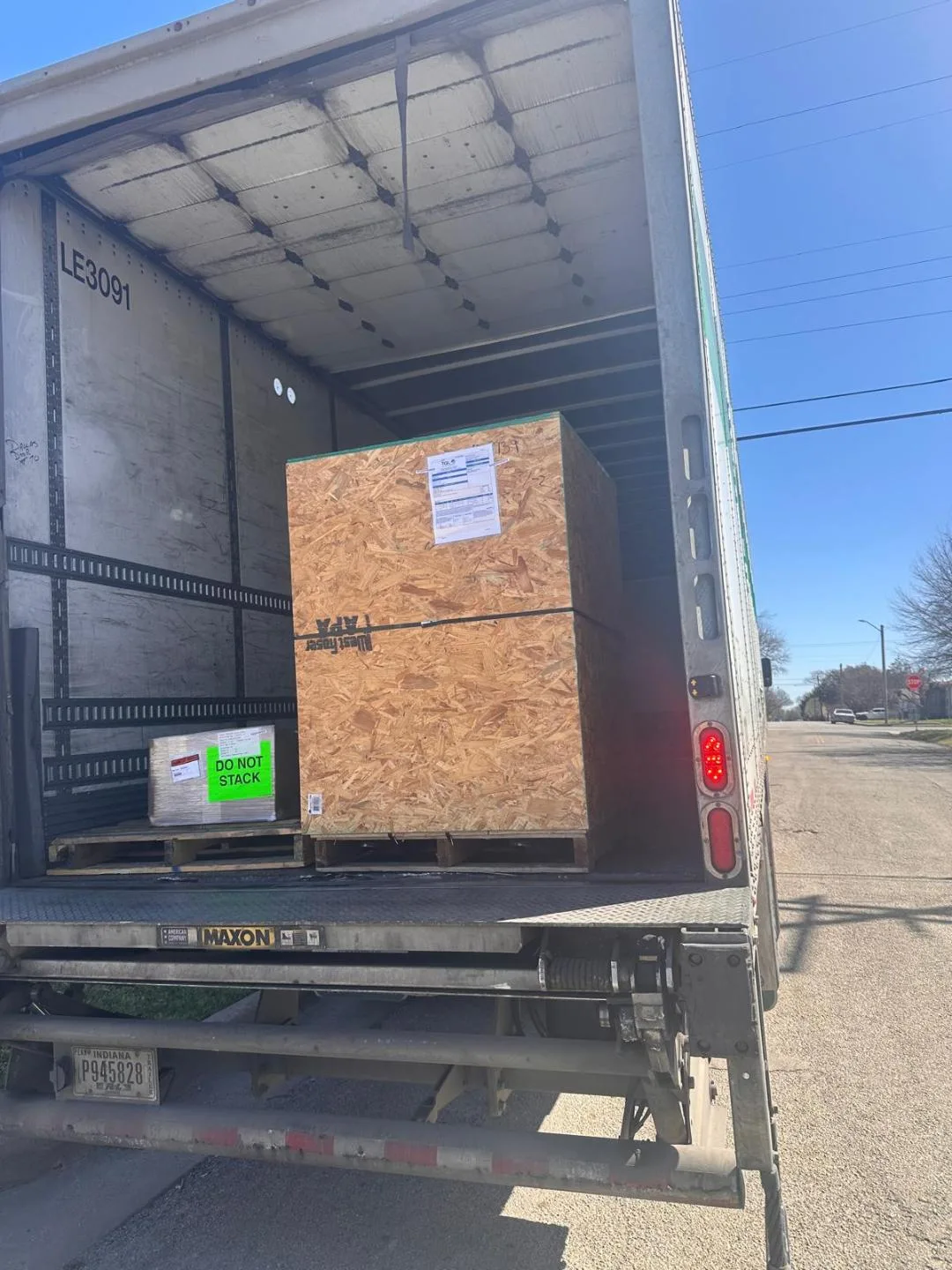
This is why custom packaging and shipping services can be useful for specialized manufacturing shipments. Instead of forcing a machine into a standard container, packaging can be designed around its particular dimensions and handling requirements.
Custom Crating Creates a More Stable Journey
A properly designed crate does several jobs at once.
It creates a physical barrier around the machine, helps keep the equipment in position, and can provide designated areas for handling. The internal structure can also be arranged to support the equipment where necessary.
The objective is not to build the biggest possible crate. It is to create protection that makes sense for the machine and the journey.
A machine with sensitive control equipment may require additional protection in those areas. A large machine with an uneven shape may need carefully positioned supports. A shipment traveling through humid conditions may require additional measures against moisture.
AA&D Crating can be incorporated into the shipping process when a business needs specialized crating and preparation for valuable manufacturing equipment.
Think About What Happens Inside the Truck
Once machinery is loaded, the journey itself introduces several potential challenges.
Road transportation naturally involves movement. Trucks encounter uneven pavement, turns, braking, acceleration, and changes in speed. Equipment that is not properly supported or restrained can shift.
Even a machine that seems immovable inside a facility can behave differently on a moving vehicle.
That is why transportation planning should consider the equipment's weight and shape, the vehicle being used, and how the load will be positioned.
The machine should be secured using appropriate methods for its size and transportation circumstances. Weight should also be distributed properly so the vehicle remains stable.
The exact requirements depend on the shipment, vehicle, and applicable transportation rules.
Selecting Transportation That Fits the Job
There is no universal vehicle for every manufacturing shipment.
A relatively compact machine may be suitable for conventional freight transportation. Larger equipment might require a specialized trailer. Oversized machinery may involve additional planning because of its dimensions and the route it needs to travel.
Enclosed transportation can provide greater protection from outdoor conditions. Other equipment may be transported using open configurations when loading access or machine dimensions make that option more practical.
The distance also matters. A shipment traveling across a city has different considerations from one crossing several states or national borders.
For international shipments, businesses may also need to coordinate customs paperwork and other import or export requirements.
Choosing transportation should therefore involve more than comparing quoted prices. The selected method needs to accommodate the machine safely and realistically.
Loading Is a Critical Part of the Process
Getting manufacturing equipment onto a vehicle can be one of the most challenging stages.
Heavy machinery may require a forklift, crane, ramp, hoist, or other suitable lifting equipment. The appropriate method depends on the machine and its weight, dimensions, and construction.
The loading area should be checked beforehand. Workers need enough room to maneuver, and the path from the equipment's current position to the vehicle should be considered.
Lifting should take place at suitable points identified for the equipment. Attaching lifting equipment to an unsuitable component can cause serious damage or create a safety hazard.
A little preparation before lifting can make a major difference. Knowing where the equipment is going, what equipment will move it, and where it will be positioned reduces unnecessary handling.
Protect Sensitive Components During Transit
Not every part of a manufacturing machine has the same level of vulnerability.
A solid metal frame may tolerate conditions that could harm an exposed electronic control panel. A glass viewing section may require different protection from a heavy structural component.
Packaging should therefore focus on the machine's weaker areas rather than treating every surface identically.
Sensitive controls, screens, cables, connectors, gauges, and other exposed components may need individual protection. Loose doors or access panels may need to be secured.
The principle is similar to packing a household item for a move: you would not protect a cast-iron base and a glass panel in exactly the same way.
Moisture Can Be a Hidden Shipping Problem
Water damage is not always caused by direct exposure to rain.
Temperature changes can create condensation, and equipment may encounter humid environments during storage or transportation. Metal components can be vulnerable to corrosion, while electrical systems can be affected by moisture.
The appropriate protective approach depends on the equipment and expected shipping conditions.
For long-distance shipments or equipment particularly sensitive to environmental exposure, moisture protection may deserve special attention during packaging.
This is another area where customized preparation can be more useful than a one-size-fits-all solution.
Make the Destination Part of the Shipping Plan
A shipment is not complete simply because the equipment reaches the customer's property.
The receiving location needs to be prepared to accept it.
Before transportation begins, businesses should consider questions such as:
- Is the entrance wide enough?
- Is there sufficient clearance?
- Can the vehicle access the unloading area?
- What equipment will be used to remove the machine?
- Is the floor suitable for the equipment's weight?
- Where will the machine be placed?
- Who will supervise receiving?
These questions may sound basic, but overlooking them can create expensive delays.
For example, a machine might arrive on schedule only to discover that the receiving door is too narrow. The equipment then has to remain on the vehicle while another solution is arranged.
Good delivery planning avoids this type of last-minute problem.
Keep Components and Accessories Organized
Manufacturing equipment often travels with more than the main machine.
There may be tooling, cables, guards, attachments, manuals, spare parts, control units, or other accessories.
If these items are removed during preparation, they should be clearly identified and packaged appropriately. Labels can help the receiving team determine which components belong together.
This becomes especially important when multiple machines are being shipped at the same time.
Organization at the beginning saves time at the destination. Instead of searching through several containers for a particular component, workers can quickly identify what they need.
Document the Shipment Before Departure
A clear record can be extremely helpful when expensive equipment changes hands or locations.
Businesses may document:
- Equipment condition
- Serial numbers
- Dimensions
- Weight
- Photographs
- Packaging details
- Accessories included
- Pickup information
- Delivery instructions
The exact documentation required will depend on the shipment.
Photographs are particularly useful because they show the equipment's condition before transportation. If an issue is discovered later, those records can help establish what the machine looked like before it left the facility.
Inspect the Equipment at Delivery
When manufacturing equipment arrives, the receiving team should inspect it rather than immediately assuming everything is fine.
Look over the exterior and packaging first. Signs of crushed packaging, unusual movement, broken supports, or other visible problems may deserve attention.
After unpacking, the machine should be checked for apparent damage. Accessories and components should also be accounted for.
If damage is discovered, it is generally better to document it promptly with photographs and relevant shipping records rather than waiting until much later.
The equipment should also be handled according to appropriate manufacturer instructions before being returned to production.
Common Shipping Mistakes Worth Avoiding
Manufacturing companies can reduce many problems simply by recognizing common planning errors.
Underestimating machine dimensions
A few incorrect measurements can affect vehicle selection, packaging, loading, and delivery.
Ignoring unusual shapes
A machine with a wide base, tall attachment, or protruding component may require a different approach than its basic measurements suggest.
Using insufficient protection
Heavy machinery can damage weak packaging from the inside out.
Forgetting the unloading plan
Getting the equipment to a facility is only half the job if nobody has considered how it will be removed from the vehicle.
Treating all machines the same
Different equipment has different vulnerabilities. Packaging and handling should reflect those differences.
Waiting until shipping day
Last-minute decisions can reduce available transportation and labor options and may increase expenses.
Avoiding these mistakes starts with treating transportation as part of the equipment relocation process rather than as an afterthought.
When Professional Support Can Be Worthwhile
Businesses often have skilled employees who understand their machinery extremely well. However, knowing how a machine operates does not necessarily mean knowing how to prepare it for a long-distance shipment.
Packaging specialists focus on the physical challenges of moving large and valuable equipment. They can help businesses think through crate design, internal support, handling access, and transportation preparation.
For companies moving expensive manufacturing equipment, professional assistance can provide another layer of planning and reduce the likelihood of avoidable problems.
Providers offering custom packaging and shipping services may be especially useful when a machine has unusual dimensions, sensitive components, or demanding transportation requirements.
How Better Preparation Can Save Time and Money
Shipping expenses are not limited to the freight invoice.
A damaged machine can result in repair bills. A delayed delivery can interrupt installation schedules. Incorrect packaging can require repacking. An unsuitable vehicle can create additional handling costs.
In contrast, preparation gives the shipment a clearer path from the factory floor to its final destination.
It is similar to planning a long road trip. Spending time checking the route, fuel, vehicle condition, and destination before leaving may seem slower at first, but it can prevent much bigger problems halfway through the journey.
The same logic applies to manufacturing equipment.
Bringing Everything Together
Effective manufacturing equipment shipping depends on coordination.
The machine needs to be assessed before it moves. Components need to be prepared and protected. Packaging must support the equipment without creating unnecessary bulk. Transportation needs to match the shipment. Loading and securing require careful attention. Finally, the destination must be ready for unloading and inspection.
No single step guarantees a successful delivery. Instead, each stage contributes to the result.
That is why businesses should think about the entire journey rather than focusing only on the transportation portion.
Conclusion
Moving manufacturing machinery is a significant undertaking, but careful preparation can make the process much more manageable. Understanding the equipment, measuring it accurately, protecting vulnerable components, choosing suitable transportation, and planning both loading and delivery can help prevent many avoidable complications.
For specialized or valuable machinery, custom packaging and shipping services can provide protection tailored to the equipment rather than relying on generic solutions. Working with experienced professionals such as AA&D Crating can also help businesses address the packaging and preparation challenges that come with unusual or heavy equipment.
Ultimately, successful machinery transportation is about more than getting a piece of equipment from Point A to Point B. The real goal is to have it arrive safely, remain in usable condition, and be ready for the work it was designed to perform.