Key Takeaways
- Start with Coriander: For a Bengali-style meal with fresh cooking and a neighbourhood feel, Coriander in Chorlton is a great first stop.
- Use the Curry Mile for late nights: Rusholme has the most late-night choice and the lowest prices.
- Know the difference: Indian food has many regional styles. Bangladeshi food is Bengali, with more rice, fish, mustard, and chilli.
- Ask about heat: Naga dishes are very hot. Ask staff and add cooling sides.
- Check before you go: Menus, prices, and hours change.
Picture Wilmslow Road after dark. Neon signs glow. Tandoors sizzle. The smell of garlic, cumin, chilli, and fresh naan drifts down the street and pulls you in.
That is Manchester on a good night.
Manchester is one of the best cities in the UK for Indian and Bangladeshi food. For a modern Bengali-style meal in a neighbourhood setting, start with Coriander Restaurant in Chorlton. For old-school curry houses and late-night food, head to the Curry Mile in Rusholme. For polished, modern dining, try the city centre.
This guide shows you where to eat, what to order, and how to pick the right place for your budget and your taste buds. You will also learn how Indian and Bangladeshi food are different, and how Manchester became such a big name in South Asian cooking.
Where to Start: Coriander Restaurant in Chorlton
If you only try one place from this guide, make it Coriander.
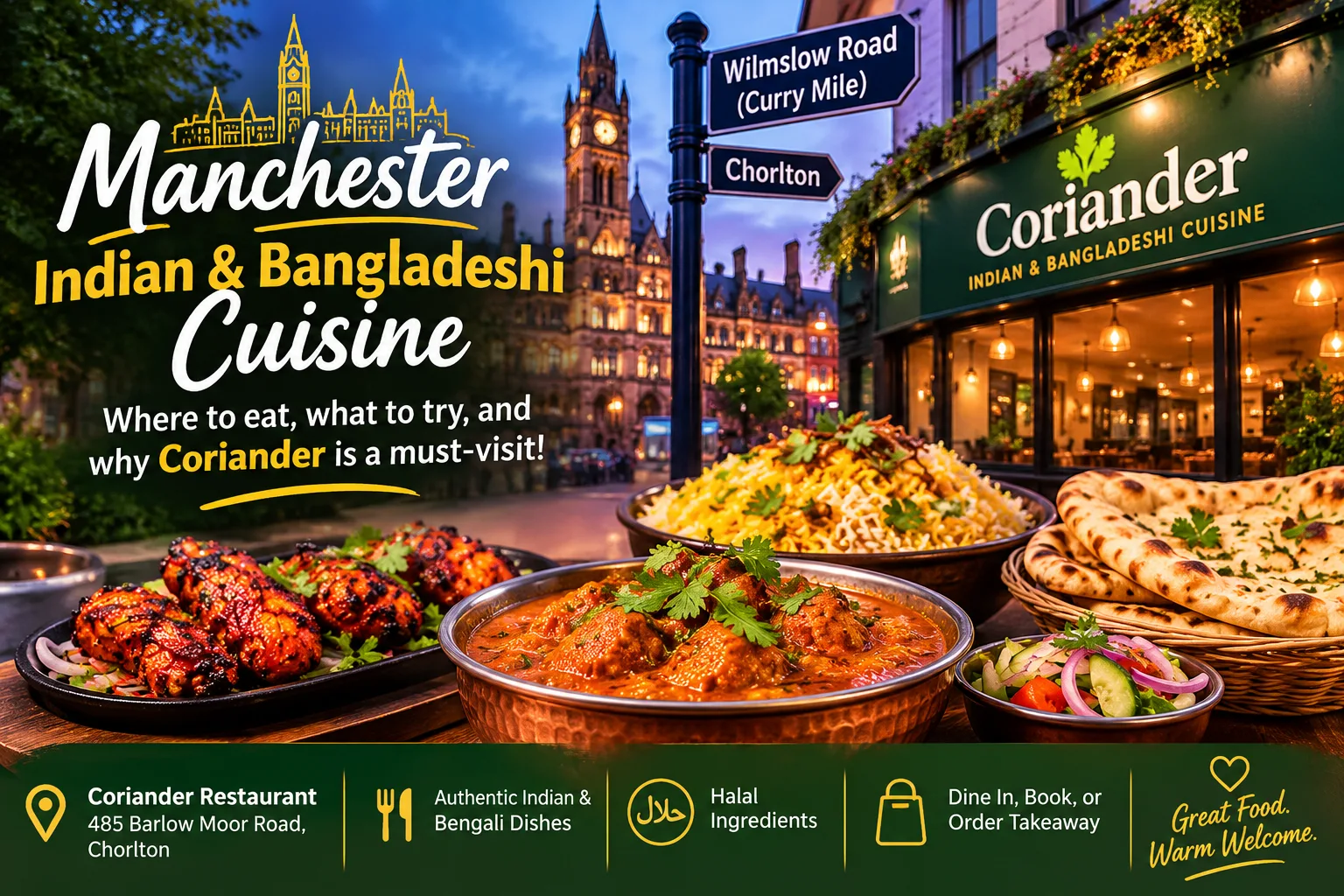
Coriander is a Bengali-style Indian restaurant at 485 Barlow Moor Road in Chorlton, in South Manchester. It is a short walk from the busy bars and shops of Beech Road, so it fits easily into a night out.
What makes Coriander stand out
- Bengali roots: The menu celebrates the food of Bengal, with bold flavours and spice blends that go beyond the usual curry house list.
- Fresh cooking: Local reviews over the years have praised the restaurant for cooking with fresh ingredients and avoiding artificial colours and added MSG.
- Plenty for vegetarians: Reviewers have often pointed to the vegetarian and vegan dishes, including okra and chickpeas, as a highlight.
- A neighbourhood feel: It is a place where locals come back again and again, not a tourist trap.
What to look for on the menu
Menus change, so check the latest one on the Coriander website before you go. Past menus and reviews have mentioned:
- A signature keema curry
- Chicken with fresh coriander
- Hot naga king prawns
- Chennai-style coconut fish curry
- Special paneer dishes
- House specials, such as duck
Good to know: Coriander is a dinner spot. If you want a meal at midnight, the Curry Mile is a better bet. If you want a relaxed, flavour-packed dinner with friends or family, Coriander is hard to beat.
Why Manchester Is a South Asian Food Capital
A food culture built by people on the move
Manchester's South Asian food scene grew because people came here to study, work, and build a life. Many arrived in the 1950s and 1960s, when the city's textile mills and factories needed workers.
South Asian people lived in Manchester long before that. Some accounts point to students from Punjab living in areas like Fallowfield and Withington more than a century ago. The story goes back further than most people think.
Restaurants became more than places to eat. For new arrivals, they were:
- Workplaces: A first job and a steady wage
- Meeting points: A place to see friends and hear news from home
- Community spaces: Somewhere that felt familiar in a new country
Bangladeshi restaurant owners played a huge part in this story. Across Britain, they helped shape what we now call curry-house culture, and Manchester is no exception.
The Curry Mile: Manchester's most famous food street
The Curry Mile is Wilmslow Road in Rusholme, just south of the city centre. Here is what to know:
- It is under a mile long. The name is a bit of a joke, but it holds one of the highest numbers of South Asian restaurants and takeaways in the country.
- It is full of variety. You will find Indian, Pakistani, Bangladeshi, Sri Lankan, Middle Eastern, and Turkish food.
- It comes alive at night. Many places stay open late, which is why students, visitors, and night owls love it.
Indian Cuisine in Manchester
Why "Indian food" is not just one thing
When people say "Indian food," they usually mean one style. In real life, India has many food traditions, and each region cooks differently.
- Punjabi: Rich, hearty, and often cooked in a tandoor (a clay oven)
- Gujarati: Often vegetarian, with a touch of sweetness
- South Indian: Rice, lentils, coconut, and crispy dosas
- Mughlai: Creamy, rich dishes with a royal history
- Kashmiri: Warm spices and slow-cooked meats
- Indo-Chinese: A tasty mix of Chinese cooking and Indian spice
Most of these meals share a few things: layered spices, rice and breads, lentils, yoghurt-based sauces, and lots of choices for vegetarians.
British Indian vs. regional Indian: The curry you get at many UK restaurants is "British Indian." It was built for local tastes, with smooth sauces and set heat levels. Regional Indian home cooking is often simpler, lighter, and more varied. Both are worth trying.
Must-try Indian dishes
- Butter chicken: A creamy tomato curry. A great first pick if you are new to Indian food.
- Chicken tikka masala: A British-Asian classic with a rich, mild sauce.
- Lamb biryani: Fragrant layered rice, often served with raita (cool yoghurt).
- Tandoori mixed grill: Chicken, tikka, seekh kebab, and lamb chops from the clay oven.
- Dosas and pav bhaji: Street food from South India and Mumbai.
- Vegetarian favourites: Daal, paneer dishes, chana masala, vegetable curries, and thalis (a plate with a bit of everything).
Where to find Indian food in Manchester
Think of these as types of places to explore. Menus, prices, and openings change, so always check before you go.
- Curry Mile (Rusholme): Best for variety, casual meals, late-night food, and low prices.
- City centre and Spinningfields: Good for polished, modern Indian dining. Places like Dishoom and Delhi House Café are popular examples.
- Northern Quarter: A good area for casual, creative restaurants and street-food-style menus.
- South Manchester: Didsbury and Chorlton have strong neighbourhood restaurants, including Coriander.
Bangladeshi Cuisine in Manchester
The Bengali roots of Manchester's curry culture
Many of Manchester's long-running curry houses have Bangladeshi roots, especially on the Curry Mile.
Bangladeshi food is part of the wider Bengali food tradition. It comes from a land of rivers, farms, and old spice routes. Here is what sets it apart:
- Rice is the star. Most meals are built around it.
- Fish is a big deal. Freshwater fish is a Bengali favourite.
- Mustard oil adds a sharp, bold kick.
- The spice list is aromatic. Think garlic, ginger, chilli, turmeric, cumin, and coriander.
Signature Bangladeshi dishes to look for
- Bhuna: A thick, deeply spiced curry. The spices are fried until the sauce turns rich and concentrated. Often made with chicken, lamb, or beef.
- Bengali fish curry: Built around fish, turmeric, mustard, and warm spices.
- Naga dishes: Very hot curries made with naga chilli. Order with care.
- Biryani and tehari: Fragrant rice dishes with meat, spices, and sometimes potatoes.
- Shorshe dishes: Cooked in a mustard-based sauce. A true Bengali classic.
- Kebabs and grills: Usually served with naan, rice, salad, and a spicy sauce.
- Mishti (sweets): Look for roshogolla, sandesh, and other Bengali sweets where available.
How Bangladeshi and Indian food are different
FeatureIndian cuisineBangladeshi cuisineBig pictureMany regional styles across IndiaOne Bengali tradition from Bangladesh and the wider Bengal regionStaple foodsRice, wheat breads, lentils, regional grainsRice is central, with lots of fish and lentilsCommon flavoursChanges by region: tandoori, creamy, dry-spiced, coconut-based, and moreBold, aromatic, mustard-forward, chilli-rich, often turmeric-basedSignature dishesButter chicken, dosa, biryani, paneer dishes, vindalooBhuna, fish curry, naga curry, tehari, shorshe dishesManchester linkFound across the city, from street food to fine diningTry it first at Coriander Restaurant in Chorlton, then see how it ties into the history of the Curry Mile and British curry housesBest Areas to Eat Indian and Bangladeshi Food
Chorlton and South Manchester
Best for: relaxed dinners, family meals, and a less touristy night out.
Chorlton, Didsbury, Fallowfield, and Withington all have strong local restaurant scenes. This is where you will find Coriander, plus many other neighbourhood favourites. South Manchester also has long links to the city's South Asian communities.
Rusholme and the Curry Mile
Best for: groups, students, late dinners, low prices, and the classic curry-house feel.
This is the main spot for traditional curry houses, Bangladeshi-owned restaurants, grills, kebabs, biryanis, and late-night food. The mood is loud, busy, and fun.
Manchester city centre
Best for: date nights, pre-theatre meals, and modern, design-led dining.
Look around Spinningfields, Deansgate, the Northern Quarter, and Corn Exchange. Prices are often higher, but you get polished plates and cocktail menus.
Choosing the Right Restaurant
By occasion
- Quick, cheap meal: A Curry Mile takeaway or casual curry house.
- Late-night food: Rusholme, where many places stay open late.
- Family dinner: Pick somewhere with thalis, sharing platters, and mild curries.
- Date night: A city-centre modern Indian restaurant, or a cosy neighbourhood spot like Coriander.
- Vegetarian or vegan: Look for clear vegetarian menus. Bundobust is well known for vegetarian and vegan Indian street food.
By spice level
- Ask first. Say mild, medium, hot, or "Bangladeshi hot" before you order.
- Be careful with naga. Naga dishes can be extremely hot.
- Cool things down. Raita, lassi, yoghurt sauces, and plain rice all help.
- Know the menu words. Madras, vindaloo, and phall are not always true regional dish names. On British menus, they mostly tell you how hot the dish is.
By dietary need
- Halal: Common across many South Asian restaurants in Manchester, especially on the Curry Mile. Ask the restaurant to be sure.
- Vegetarian and vegan: Easy to find, but check for ghee, yoghurt, cream, and paneer.
- Gluten-free: Ask about naan, roti, sauces, and cross-contamination.
- Always check: Look at recent reviews, menus, and opening hours before you travel.
What to Order: A Simple First-Timer's Guide
If you love mild, creamy food
- Butter chicken, korma, tikka masala, paneer makhani, or a mild lamb curry
- Pair with naan, pilau rice, and a mango lassi
If you enjoy bold, spicy food
- Naga chicken or lamb, a Bengali-style bhuna, vindaloo, or hot lamb chops
- Add cooling sides, and do not order several very hot dishes at once
If you want a traditional meal
- Start with papadums, samosas, or onion bhaji
- Pick a chicken, lamb, or fish curry with rice and naan
- Try a Bangladeshi-style bhuna or a tandoori mixed grill for a wider taste
If you want street food
- Look for chaat, dosa, pav bhaji, momos, kebabs, and Indo-Chinese dishes
- Share plates so you can try more
Practical Visitor Information
- Location: The Curry Mile in Rusholme is about two miles south of the city centre. Coriander is further south in Chorlton.
- Best time to visit: Evenings and late nights for the buzz. Lunchtime for a quieter, often cheaper meal.
- Getting there: Buses run along Wilmslow Road. A taxi or a walk from the city centre also works.
- Budget: The Curry Mile suits tight budgets. City-centre restaurants usually cost more.
- Booking: Not always needed at casual curry houses. Book for weekend evenings, groups, and upscale places.
- Etiquette: Sharing dishes is normal. Ask staff what they recommend and how hot a dish is.
Conclusion
Manchester's Indian and Bangladeshi food scene is about much more than curry. It tells the story of families who moved here, built businesses, and shared their recipes with the city.
Try something new. Skip the usual tikka masala once and go for a bhuna, a naga curry, or a Bengali fish curry. Begin with a relaxed dinner at Coriander, then explore the Curry Mile for the buzz and the city centre for something dressier.
Whether you want a late-night lamb bhuna, a fiery naga curry, or a refined Indian tasting menu, Manchester has a table waiting for you.
Frequently Asked Questions
Is Indian food the same as Bangladeshi food?
No. They share some ingredients and history, but Bangladeshi food is Bengali. It leans toward rice, fish, mustard, and chilli. Indian food covers many regional styles.
Where is the best place for curry in Manchester?
It depends on what you want. The Curry Mile is the most famous spot for classic curry houses and late-night food. For a Bengali-style dinner in a neighbourhood setting, try Coriander in Chorlton. For a modern, upscale meal, look in the city centre.
Are Manchester curry houses halal?
Many are, especially Pakistani and Bangladeshi restaurants. Always confirm with the restaurant.
What is the difference between a bhuna and a balti?
A bhuna is a cooking style. The spices are fried until the sauce is thick and strong. A balti is linked to Birmingham-style British-Asian cooking and is often served in a small, thin steel bowl.
Is Coriander Restaurant a good choice for vegetarians?
Yes. Reviewers have long praised its vegetarian and vegan dishes. Check the current menu on the Coriander website for what is on offer now.