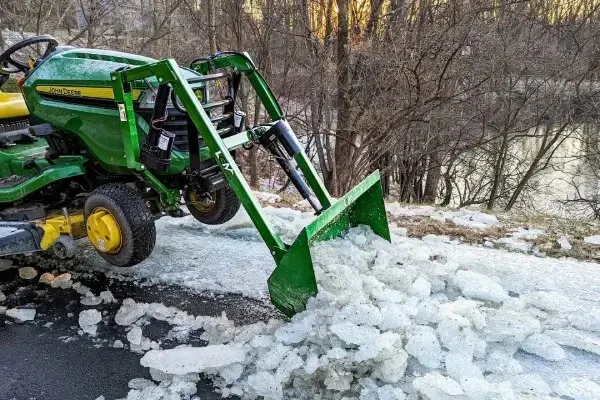
Directing the maintenance of a medium-sized estate—ranging from five to fifteen acres—presents a unique logistical puzzle. The property is vastly too large to manage efficiently with basic residential push mowers and manual hand tools, yet it often lacks the sheer acreage and massive agricultural demands required to justify the astronomical expense of purchasing and maintaining full-scale, commercial heavy machinery. Striking the perfect balance between capability and cost-efficiency is the hallmark of a successful estate management strategy. The most elegant solution often lies in heavily modifying high-end residential machinery. By equipping a top-tier riding machine with a commercial-grade GARDEN TRACTOR FRONT END LOADER, estate managers can perfectly bridge this gap, creating a highly agile, remarkably powerful equipment fleet capable of handling demanding daily tasks without inflating the operational budget.
The Strategic Advantage of Agile Machinery
One of the primary difficulties in maintaining a highly manicured estate is navigating heavy equipment through intricately designed, delicate spaces without causing catastrophic collateral damage. Massive commercial backhoes or full-sized skid steers are incredibly powerful, but their immense weight severely crushes delicate turf, and their wide footprint makes it impossible to maneuver through formal garden paths, narrow orchard rows, or tight stable courtyards. A scaled-down, heavily modified residential machine provides a massive strategic advantage here. It possesses the essential hydraulic lifting power to transport heavy loads of topsoil or thick root balls, but its lighter footprint and superior turning radius allow the operator to surgically intervene in delicate areas. You can repair a washed-out path in the center of a prized rose garden or extract a dead tree stump from a tight courtyard without leaving deep, muddy ruts across the pristine front lawn.
Streamlining Disparate Maintenance Workflows
Estate management is defined by the sheer diversity of daily tasks. A single morning might involve spreading crushed stone on a long winding driveway, mucking out equestrian stalls, turning massive municipal-scale compost piles, and transporting heavy rounds of firewood to the main house. Relying on dedicated, single-use machinery for each of these disparate workflows is a logistical and financial nightmare. A versatile, scaled-down utility tractor acts as the ultimate multi-tool, seamlessly transitioning between these radically different environments. By utilizing a highly durable front scoop, a single operator can rapidly switch from heavy material handling to delicate landscaping work. This massive reduction in equipment swapping and transit time dramatically increases the daily productivity of the estate's maintenance staff, allowing a small team to accomplish the work of a much larger crew.
Cost Control and Fleet Standardisation
From a strict financial management perspective, relying on modified, high-end residential equipment offers profound advantages for the estate's annual budget. The initial capital expenditure required to purchase a premium riding machine and outfit it with top-tier hydraulic implements is a mere fraction of the cost of acquiring a single piece of heavy industrial machinery. Furthermore, the ongoing maintenance costs—including replacement parts, specialized heavy-duty tires, and industrial fluid capacities—are significantly lower. By standardizing the estate's fleet around versatile, mid-sized platforms, the maintenance staff can easily stock common consumable parts, like belts, filters, and hydraulic lines, reducing costly downtime. This strategic approach ensures the estate has the mechanical muscle required to remain pristine while keeping long-term operational and capital expenses strictly under control.
Implementing Rigorous Operator Training Programs
While scaled-down machinery is highly approachable, it is an absolute necessity to implement rigorous, uncompromising training programs for the estate's maintenance staff. Operating a lightweight machine equipped with a heavy hydraulic lifting implement requires a deep understanding of dynamic physics and shifting centers of gravity. Operators must be explicitly trained on the critical importance of rear ballasting and the severe dangers of lifting heavy, unbalanced loads on the estate's uneven terrain or steep embankments. They must learn to meticulously manage the machine's hydraulic capabilities, ensuring smooth, controlled movements to prevent sudden load shifting. A highly trained staff utilizing these versatile machines not only maximizes the daily efficiency of the estate but ensures that all heavy landscaping and maintenance tasks are executed with zero safety incidents or damage to the property.
Conclusion
Managing a medium-sized estate requires a highly tactical approach to equipment procurement. By avoiding the massive expense of heavy commercial machinery and instead investing deeply in the versatility of heavily modified, mid-sized platforms, estate managers can achieve perfect operational balance. This strategy provides the essential heavy-lifting power required to maintain the grounds, the agility to protect delicate manicured spaces, and the financial efficiency necessary to keep the estate's overall operational budget strictly under control.
Call to Action
Optimize your estate's maintenance operations with our premium line of rugged, highly versatile hydraulic implements engineered specifically for the demands of expansive properties.
Visit: https://lgmusa.com/front-end-loader/