What if the biggest barrier to sailing wasn’t skill, but the assumption that it costs a fortune?
For many aspiring sailors, catamarans represent freedom, mobility, and a different way to travel. Yet the image most people see online involves six-figure yachts, luxury marinas, and celebrity-level budgets. That disconnect keeps many people from exploring what is actually possible. In reality, Lowest price Catamaran Sailing opportunities often begin with practical training, shared liveaboard experiences, and carefully chosen charter pathways rather than immediate ownership.
The shift happening in modern sailing is subtle but important. More adults, couples, and families are entering the sailing world through immersive educational experiences instead of buying boats first. That approach reduces financial risk while building real confidence on the water.
 The modern sailing dream often starts with education, not ownership.
Why Catamaran Sailing Feels More Accessible Today
A decade ago, entering the sailing world often meant either owning a boat or relying on occasional vacation charters. Today, there are more flexible entry points.
People now explore sailing through:
- Liveaboard certification programs
- Shared charter experiences
- Coastal cruising courses
- Ex-charter boat research
- Skill-based vacation travel
This matters because catamarans are experiential products. Before someone spends thousands—or hundreds of thousands—on ownership, they usually want to know:
- Is the lifestyle actually enjoyable?
- Can beginners realistically learn this?
- What hidden costs exist?
- How much space and comfort do catamarans provide?
- Is sailing practical for families?
These questions explain why educational sailing experiences are becoming part of the affordability conversation.
Ownership Isn’t the Only Entry Point
Many first-time sailors assume ownership is the logical first step. In reality, experienced cruisers often recommend learning before buying.
That sequence tends to look like this:
Entry PathTypical Cost RangeBest ForMain BenefitWeekend Sailing LessonsLower upfront costCurious beginnersBasic exposureLiveaboard Certification CoursesMid-range investmentSerious learnersReal-world experienceShared ChartersVariableFamilies/groupsLifestyle testingUsed Catamaran PurchaseHigher investmentLong-term cruisersOwnership freedomNew Production CatamaranPremium pricingExperienced buyersModern systems and comfortThis layered approach helps people avoid expensive mistakes while gaining practical seamanship.
In many cases, the most economical path is not buying the cheapest boat. It is learning enough to understand what type of sailing actually fits your goals.
What Makes Catamarans Appealing to Beginners?
Catamarans attract new sailors for practical reasons, not just aesthetics.
Compared with many monohulls, catamarans often offer:
- Wider living space
- More stable movement at anchor
- Separate sleeping cabins
- Shallow draft access
- Better outdoor social areas
- Easier family accommodation
For recreational sailors, these features make longer trips feel less intimidating.
That comfort factor explains why many people researching affordability are also searching for realistic learning environments rather than bare-bones adventure experiences.
The Hidden Costs People Often Ignore
One reason affordability research matters so much is that boat ownership rarely ends with the purchase price.
New sailors are often surprised by ongoing expenses such as:
- Marina fees
- Haul-outs and bottom cleaning
- Sail replacement
- Insurance
- Electronics maintenance
- Dinghy and outboard upkeep
- Fuel and provisioning
- Emergency repairs
A used catamaran that appears inexpensive online may still require substantial upgrades.
This is why many experienced sailors encourage newcomers to charter or train first. It provides context before larger financial commitments are made.
 Affordable sailing often depends on understanding long-term ownership costs.
Used Catamarans and the Rise of Budget Cruising
The used market has changed the conversation around accessibility.
Older production catamarans from brands like Lagoon, Leopard, Fountaine Pajot, and Catana continue attracting buyers because they provide relatively approachable entry points into cruising life.
Some buyers prioritize:
- Simpler systems
- Proven reliability
- Easier maintenance
- Ex-charter value pricing
- Coastal cruising capability
Others focus on livability over performance.
The important takeaway is that affordability usually comes from trade-offs rather than shortcuts. A lower-cost catamaran may involve older electronics, cosmetic wear, or reduced speed, but it can still support meaningful cruising experiences.
Why Training Often Costs Less Than Guesswork
One of the most underestimated expenses in sailing is inexperience.
Docking damage, poor anchoring decisions, navigation mistakes, and weather misjudgments can quickly become costly. Structured sailing education helps reduce those risks.
This is where immersive liveaboard instruction becomes relevant to affordability discussions.
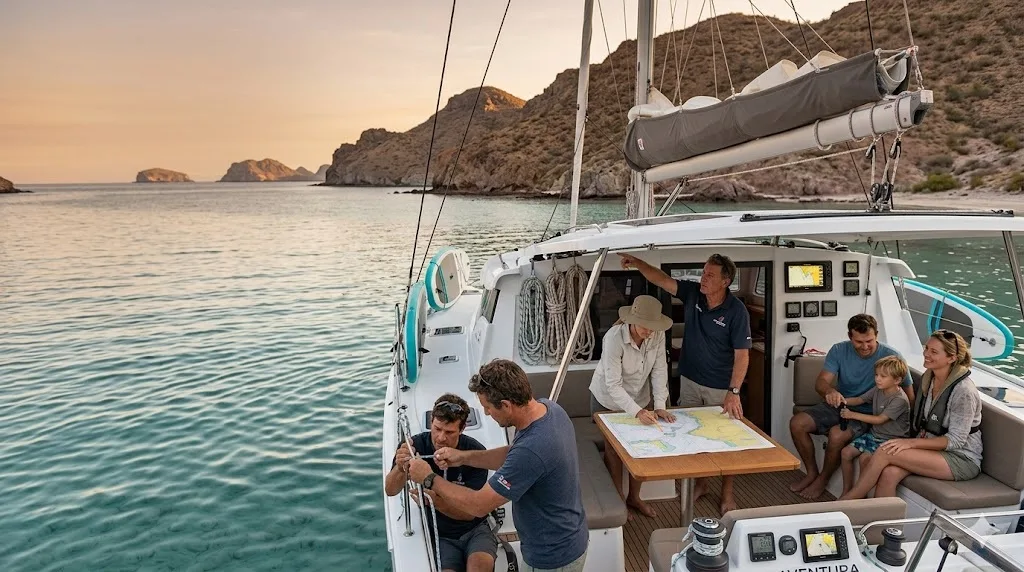
Programs that combine practical sailing, navigation, provisioning, anchoring, and onboard systems training allow students to experience daily cruising routines before committing to ownership or bareboat chartering.
In destinations like La Paz, Mexico, sailors also gain exposure to variable wind conditions, anchoring techniques, and longer coastal passages that simulate real cruising environments.
For many people, that is more valuable than a short introductory lesson near a marina.
The Growing Interest in Mexico as a Sailing Destination
Mexico continues attracting budget-conscious sailors because it combines relatively accessible cruising with strong seasonal sailing conditions.
The Sea of Cortez, in particular, appeals to recreational sailors interested in:
- Protected anchorages
- Wildlife encounters
- Island hopping
- Warm-weather cruising
- Multi-day liveaboard learning
Travel costs can also compare favorably with some Caribbean sailing destinations.
This is partly why searches for Cheap Charter Boats in Baja continue increasing among aspiring sailors who want realistic entry points without sacrificing scenery or sailing quality.
Learning While Living Aboard
Liveaboard instruction changes how people experience sailing.
Instead of returning to shore every evening, students participate in daily onboard routines such as:
- Route planning
- Sail trim adjustments
- Meal preparation
- Weather interpretation
- Docking procedures
- Overnight anchoring
- Safety drills
That immersion helps sailing concepts stick faster because they happen in context.
For beginners, it also answers an important emotional question:
“What does this lifestyle actually feel like day to day?”
That answer matters more than most pricing charts.
A More Realistic Definition of Affordable
Affordable sailing does not necessarily mean “cheap.”
It usually means:
- Fewer unnecessary upgrades
- Better learning decisions
- Shared costs
- Used-market awareness
- Gradual progression
- Smarter charter planning
Many sailors discover that skill-building creates better long-term value than rushing into ownership.
A well-structured certification course can sometimes prevent years of costly trial and error.
That mindset increasingly shapes conversations around Lowest price Catamaran Sailing because affordability is becoming tied to education and preparedness, not just sticker price.
Questions Buyers and Beginners Commonly Ask
Is buying a used catamaran risky?
Not automatically. Many older catamarans remain highly capable coastal cruisers. However, marine surveys, maintenance records, and structural inspections are essential before purchase.
Are catamarans harder to sail than monohulls?
They behave differently rather than being universally harder. Twin engines often improve maneuverability, but sail handling and docking techniques require specific training.
Can complete beginners learn through liveaboard courses?
Yes. Many structured programs are designed specifically for beginners progressing toward coastal cruising competence.
Is chartering cheaper than ownership?
For many recreational sailors, yes. Occasional chartering can cost far less than year-round ownership expenses.
What matters more: boat size or training quality?
Training quality usually has the greater long-term impact on safety and confidence.
Why Families Are Entering Sailing Earlier
Another noticeable trend is the increase in families pursuing sailing education together.
Parents often view sailing as:
- A practical outdoor skill
- A collaborative activity
- A travel alternative
- A confidence-building experience
- A screen-free environment
Catamarans especially appeal to families because multiple cabins and wider living areas create more personal space during extended trips.
That combination of comfort and education has helped sailing feel less niche and more approachable.
Comparing Chartering and Ownership Economics
People researching affordability often compare long-term ownership against periodic charter use.
Here is the reality:
Owning a catamaran provides flexibility and independence, but it also introduces continuous expenses and maintenance obligations.
Chartering, meanwhile, allows sailors to:
- Explore different boat layouts
- Test cruising destinations
- Avoid maintenance overhead
- Sail seasonally instead of full-time
For many intermediate sailors, chartering remains the more economical option for years before ownership becomes practical.
This is also why searches for Cheap Charter Boats in La Paz continue attracting attention from travelers interested in balancing adventure with budget awareness.
The Importance of Certified Instruction
Not all sailing education follows the same structure.
Certification systems such as ASA courses provide progression benchmarks that help sailors move from beginner-level sailing toward independent coastal cruising.
These courses commonly include:
- Navigation fundamentals
- Safety procedures
- Anchoring techniques
- Weather interpretation
- Docking practice
- Crew communication
- Sail handling
That framework helps newer sailors build confidence systematically rather than relying entirely on informal learning.
A Destination That Supports Practical Learning
The Sea of Cortez is often described as one of North America’s most accessible cruising environments for developing sailors.
Protected waters, scenic anchorages, and varied coastal conditions create opportunities to practice multiple sailing skills within a relatively compact region.
At Go Baja Sailing, located at Marina Costa Baja Costa Baja, 23010 La Paz, B.C.S., Mexico. Students can contact us at +52 612 100 5751 to get further details.
students typically experience a blend of instruction, coastal cruising, and liveaboard rhythm that mirrors real recreational sailing rather than isolated classroom exercises.
That practical structure reflects a larger trend in sailing education: people increasingly want experiences that combine learning with realistic lifestyle exposure.
The Emotional Side of Affordability
Affordability conversations are rarely just about numbers.
Many people researching sailing are also trying to answer quieter questions:
- Is this lifestyle realistic for someone like me?
- Can I actually learn this as an adult?
- Will my family enjoy it?
- Is sailing still possible without luxury-level income?
The answer, increasingly, is yes—but usually through gradual entry rather than instant ownership.
That is why modern sailing pathways emphasize experience before investment.
Choosing the Right First Step
There is no universal “correct” path into sailing.
Some people begin with weekend lessons. Others pursue immersive certification programs. Some spend years chartering before considering ownership.
The most practical route is usually the one that balances:
- Budget
- Time availability
- Comfort level
- Family goals
- Long-term cruising interest
In many cases, a structured introduction offers more clarity than endless online research.
 Many sailors discover the lifestyle gradually—one experience at a time.
Where Affordable Sailing Is Heading
The future of recreational sailing appears to be moving toward flexibility.
Instead of treating sailing as an elite hobby, more people now approach it as a learnable outdoor skill connected to travel, exploration, and community.
That shift matters because it reframes affordability.
Rather than asking only how cheaply someone can buy a boat, newer sailors are asking:
- How can I gain real experience?
- How can I avoid expensive mistakes?
- How can I enter the lifestyle gradually?
That broader perspective is reshaping the conversation around Lowest price Catamaran Sailing in practical ways.
Near the end of the process, many aspiring sailors realize that the real value is not simply finding the cheapest boat or charter. It is discovering a sustainable way to participate in Catamaran Sailing with enough confidence to genuinely enjoy it.
For travelers researching realistic pathways into liveaboard instruction and certification-based cruising, Go Baja Sailing remains one example of how sailing education, destination cruising, and affordability-focused exploration increasingly overlap in today’s recreational sailing world.
As more newcomers explore the balance between cost, skill, and lifestyle, Lowest price Catamaran Sailing becomes less about cutting corners and more about making informed, experience-driven decisions that keep the dream accessible.
Explore affordable liveaboard sailing pathways
Go Baja Sailing
Marina Costa Baja Costa Baja, 23010 La Paz, B.C.S., Mexico
+52 612 100 5751