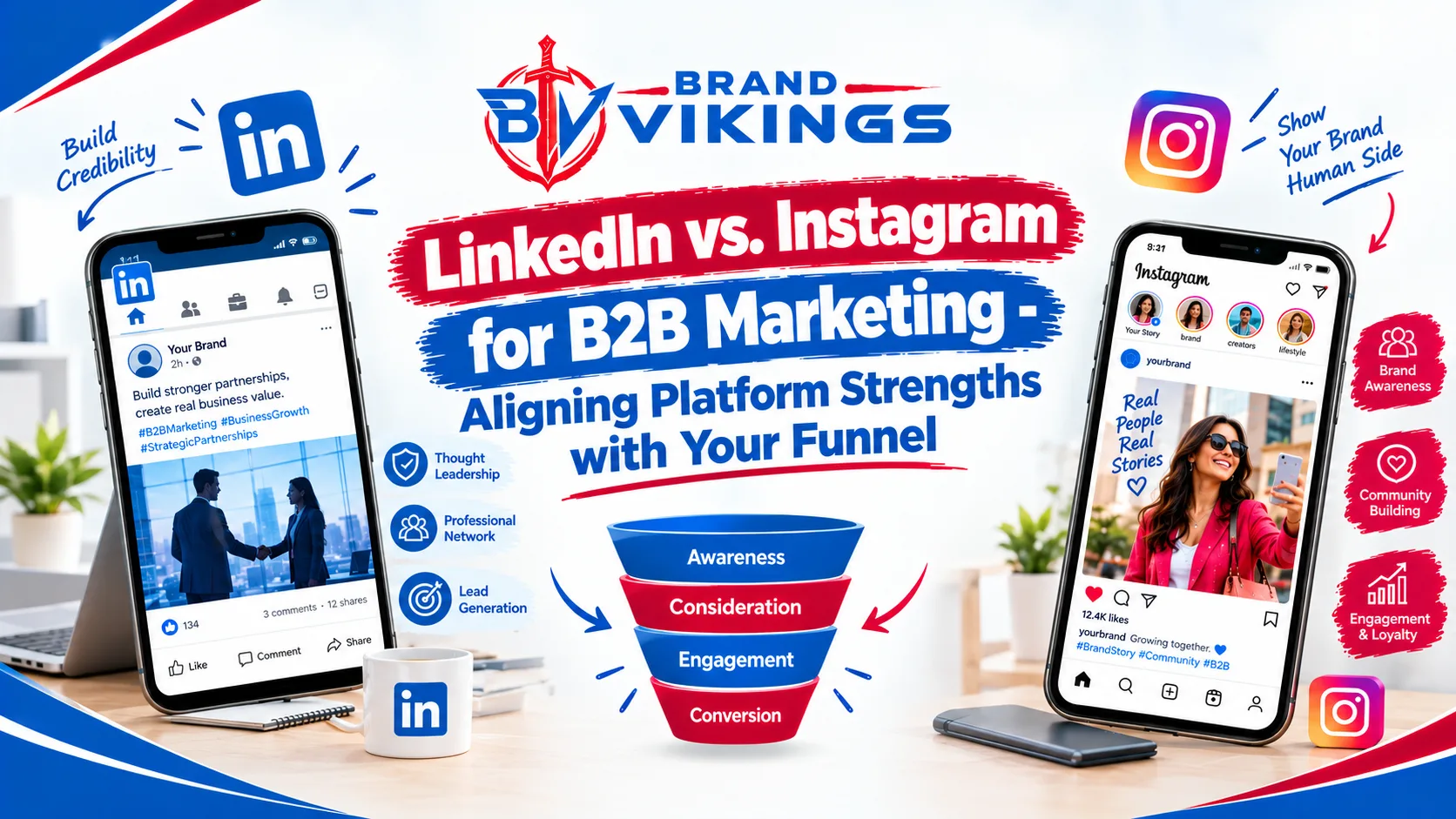
Business-to-Business (B2B) social strategy kept professional outreach strictly on LinkedIn and left Instagram to consumer brands. Shifting buyer demographics and evolving content landscapes have transformed how enterprise decisions are made.
With Millennials and Gen Z stepping into procurement, managerial, and executive roles, B2B purchasing decisions are no longer made purely through formal whitepapers. Today's buyers want clarity, connection, and social proof. Choosing between LinkedIn and Instagram is about knowing where each platform drives value across your growth funnel.
LinkedIn: The Precision Engine for Demand & Conversions
LinkedIn remains the premier channel for targeted B2B lead generation, closing high-ticket deals, and executive thought leadership. Because users maintain active professional credentials, LinkedIn provides precise demographic and firmographic targeting options.
Key Advantages
- Hyper-Targeted Buyer Reach: Search and target users specifically by job title, company size, seniority, industry, and skill set.
- High-Intent Lead Capture: Native Lead Gen Forms capture pre-filled professional data directly inside the feed, yielding higher conversion rates than standard external landing pages.
- Executive & Employee Advocacy: People trust individuals more than corporate pages. Subject-matter experts and C-suite executives sharing industry frameworks, data breakdowns, and contrarian perspectives naturally build trust with decision-makers.
Top Formats & Tactics
- Document Carousels (PDFs): Great for sharing step-by-step frameworks, research summaries, and slide decks.
- Text + Single Image Insights: Concise posts highlighting real-world lessons, industry metrics, or client case studies.
- Native Video: Short 30-to-90-second videos breaking down complex industry challenges.
Instagram: The Humanizing Force for Brand & Culture
While LinkedIn speaks to the ROI-driven mind of a decision-maker, Instagram connects with the human behind the title. B2B companies often struggle to avoid being perceived as distant or transactional; Instagram helps by offering a visual window into company culture, product design, and brand identity.
Key Advantages
- Lower Advertising Costs (CPC): Mid-funnel awareness campaigns and retargeting ads generally cost less per click on Instagram than on LinkedIn, stretching top-of-funnel budgets.
- Employer Branding & Talent Acquisition: Top industry talent evaluates your company culture on Instagram long before reading a job description.
- Visual Storytelling & Product Demos: Short-form video (Reels) allows software-as-a-service (SaaS) platforms and physical B2B brands to showcase product UI, real-life use cases, and behind-the-scenes workflows in an easily digestible way.
Top Formats & Tactics
- Reels: Short-form, educational, or behind-the-scenes video content designed to reach beyond your follower base.
- Carousels: Visual carousels tailored to unpack single concepts visually (e.g., infographics, UI walkthroughs, employee spotlights).
- Interactive Stories: Polling, Q&As, and event highlights that foster two-way engagement.
Comparison: LinkedIn vs. Instagram
Strategic DimensionLinkedInInstagramPrimary Funnel StageMiddle to Bottom (Consideration & Conversion)Top of Funnel (Awareness & Affinity)Targeting PrecisionJob Title, Company Size, Industry, SeniorityInterests, Broad Behaviors, DemographicsPrimary Core AssetProfessional Trust & Industry AuthorityBrand Personality & Visual CultureAd Cost vs. IntentHigher CPC/CPL; High Purchasing IntentLower CPC; Broad Reach & Top-of-Funnel TrafficPrimary Conversion ToolIn-Feed Native Lead Gen Forms & InMailLink-in-Bio, Direct Messages, Site Retargeting.
How to Integrate Both into a Single B2B Engine
Rather than treating LinkedIn and Instagram as competing channels, successful modern B2B organizations deploy them in tandem across a full-funnel strategy:
1. Repurpose Strategic Insights Across Mediums:
- On LinkedIn: Publish a text-heavy case study detailing how your product solved a customer's specific operational bottleneck.
- On Instagram: Turn that exact case study into a 30-second video Reel featuring customer commentary or a visual dashboard preview.
2. Run Cross-Platform Retargeting: Capture affordable attention via top-of-funnel video ads on Instagram to build custom audiences, then retarget those engaged users on LinkedIn with direct lead generation offers or product demos.
3. Divide Your Operational Goals: Use LinkedIn to drive direct conversions, pipeline opportunities, and executive networking. Use Instagram to retain talent, highlight company milestones, humanize your team, and build long-term brand equity.
The Final Note
LinkedIn provides direct access to decision-makers and high-conversion lead channels. Instagram builds recognizable, humanized brand awareness at scale. If resources are constrained, prioritize LinkedIn for immediate pipeline generation. Scaling B2B brands should aim to leverage both, capturing top-of-funnel attention on Instagram and converting that visibility into lasting business value on LinkedIn.