
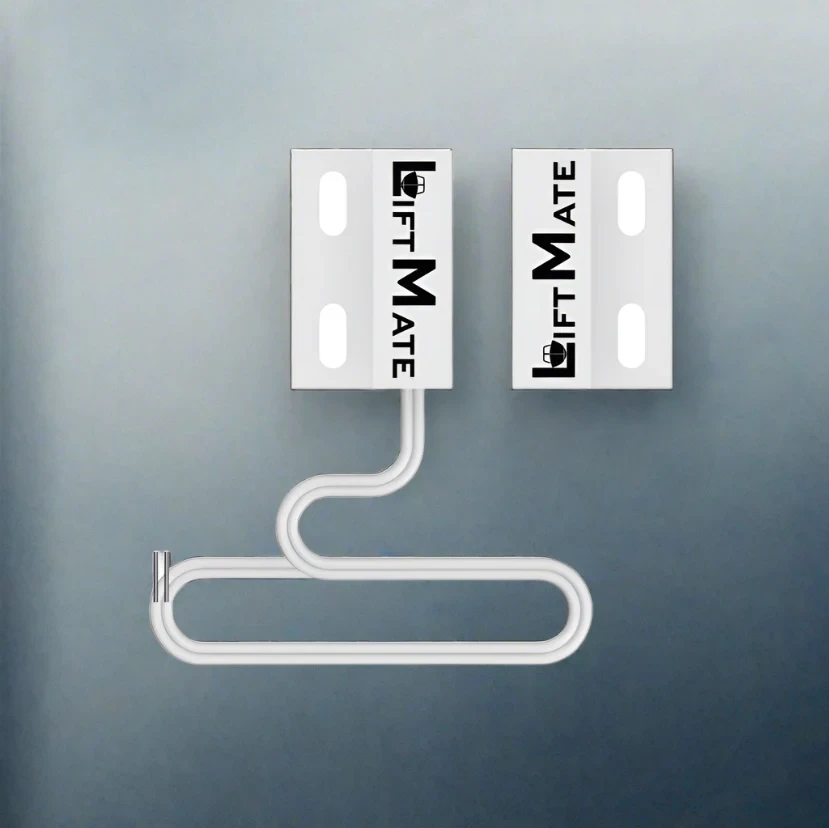
In the world of marine automation, the difference between a "good" dock and a "smart" dock lies in the details of positioning. Most standard lifts are designed with basic functionality in mind—up or down—but they often lack the nuance required for a seamless boarding experience. If you find yourself constantly "feathering" the switch to get your boat deck level with the pier, you are dealing with a manual headache that modern technology has finally solved. By integrating an additional elevator sensor into your LiftMate system, you transition from guesswork to digital precision, ensuring your vessel is exactly where it needs to be, every single time.
This secondary sensor is specifically engineered to handle the "Boarding Position." While your primary sensors handle the critical safety limits—preventing the lift from crashing into the top beams or unspooling the cables at the bottom—the boarding sensor is all about your personal convenience. It creates a mid-point "saved state" that acknowledges the unique height of your dock relative to your boat’s gunwale. This is the ultimate upgrade for the captain who values a smooth departure and an even smoother return.
The Science of the "Perfect Step"
One of the most common frustrations for boaters is the uneven transition between the dock and the boat. Depending on the tide, the load in the boat, or the chop in the water, that six-inch gap can feel like a mountain to climb, especially for children, pets, or guests with limited mobility. An elevator sensor dedicated to the boarding position eliminates this physical barrier.
With a single tap on your smartphone app or remote, the lift moves to your pre-calibrated height and stops automatically. You no longer have to stand at the control box holding a button while watching the hull rise; you can walk down the ramp with your coolers and gear, knowing the boat will be waiting at the perfect "step-in" height. This automation turns a precarious boarding process into a sophisticated, valet-like experience.
Protecting Your Investment with Precision
Beyond the luxury of convenience, a dedicated elevator sensor provides a critical layer of protection for your boat’s hull. When a boat is stopped manually, it is often left at a height that is "close enough." However, "close enough" can lead to trouble if a large wake from a passing vessel or a sudden tidal surge catches the hull. If the boat is too low, it can be battered against the dock; if it’s too high, it can be difficult to access in an emergency.
By using a sensor to lock in a verified boarding position, you ensure the boat is held at a safe, consistent clearance. The LiftMate system uses these sensors to maintain a "digital lock" on your coordinates. If the lift is moved, the sensor provides the feedback loop necessary to return it to the exact millimeter of its programmed home. This prevents the "creep" that often occurs with older mechanical systems, keeping your cables tight and your boat secure.
Seamless Integration for the Modern Waterfront
The beauty of the Additional Sensor for Boarding Position is its plug-and-play simplicity. It integrates directly into the existing LiftMate ecosystem, expanding the "brain" of your dock without requiring complex rewiring or professional contracting. It is a marine-grade, weather-resistant component designed to live in the "splash zone," standing up to UV rays, salt air, and humidity.
In 2026, we expect our technology to be intuitive. We want our homes to know when we arrive, and we should expect the same from our docks. By adding this extra elevator sensor, you are completing the automation loop. You are creating a dock that understands your needs, respects your safety, and enhances the overall value of your waterfront property.