

Life is full of uncertainties, and while we hope for the best, preparing for the unexpected can bring peace of mind to both you and your loved ones. One of the most important yet often overlooked legal tools in comprehensive planning is a State of Utah living will form. This form allows individuals to clearly express their healthcare wishes — particularly regarding life-sustaining treatment — in the event they become unable to communicate those wishes personally. By documenting your preferences in advance, you reduce uncertainty, relieve loved ones from difficult decision-making under stress, and ensure your values are respected even when you can’t speak for yourself.
In this article, we’ll walk through what a living will is, why it matters in Utah, how it works, and best practices for completing and updating your form. We’ll also look at common questions and real-world scenarios that illustrate why having this document ready is a thoughtful act of care for those you leave behind.
What Is a Living Will?
A living will is a type of advance directive — a legal document that describes your choices about medical care if you are incapacitated and unable to communicate. While a traditional will deals with distributing your assets after death, a living will focuses on the period before that, particularly if you are facing a serious illness or end-of-life situation.
Key Purposes of a Living Will
- Express Medical Treatment Preferences: Clearly communicate whether you want resuscitation, ventilation, feeding tubes, or other life-sustaining care.
- Guide Healthcare Providers: Doctors and nurses use your instructions as legal directives for treatment decisions.
- Support Family Members: Loved ones can follow your wishes instead of guessing or disagreeing about what you would want.
- Reduce Emotional Burden: Clear guidance reduces stress and conflict during emotionally charged situations.
A living will has legal weight in Utah when properly executed, meaning it can and should influence medical decisions when you’re not able to articulate them yourself.
Understanding the State of Utah Living Will Form
Each state has its own laws and requirements governing advance directives. In Utah, a living will form must meet specific criteria to be legally valid. The form typically requires:
- Your full legal name and identifying information
- Clear statements about your treatment preferences
- Your signature, dated
- The signature of one or more witnesses (and sometimes a notary)
The State of Utah provides a standardized form, but individuals may also choose custom legal documents drafted to fit their personal circumstances. Whether you use a state-issued form or a personalized version, the key is that the document accurately reflects your values and is executed according to Utah law.
What Decisions Can You Make in a Living Will?
Living wills typically address your preferences about life-sustaining medical treatment when you are unable to make decisions. Common choices include:
Life-Sustaining Treatment
- Whether you want cardiopulmonary resuscitation (CPR) if your heart stops
- Instructions about ventilators or breathing machines
- Preferences on feeding tubes or hydration support
Pain Management
- Your wishes regarding comfort and palliative care
- Whether to prioritize comfort even if it may shorten life
Organ and Tissue Donation
- Some living wills allow you to express preferences about organ donation
These decisions can be as detailed as you wish. The most important thing is that your intentions are clearly and unambiguously stated.
Who Should Consider a Living Will Form?
A living will isn’t just for the elderly or those with serious health conditions. It’s a useful document for adults of all ages because emergencies and unexpected illnesses can happen at any time. You should especially consider a living will if you:
- Are approaching retirement
- Have a family history of serious illness
- Want to ensure your wishes are respected
- Have strong feelings about end-of-life care
- Want to ease the decision-making burden on loved ones
By planning now, you take proactive steps to avoid leaving difficult decisions up to others without guidance.
How to Complete the State of Utah Living Will Form
Completing your living will involves several important steps:
1. Reflect on Your Values
Think about your preferences for treatment, what quality of life means to you, and how you would like to be cared for in serious medical situations.
2. Discuss With Loved Ones
Talk openly with your family, friends, and healthcare proxy (if you have one) about your wishes. Their understanding helps them respect your choices later.
3. Fill Out the Form
Use the official State of Utah living will form or a customized version. Be sure sections are filled out completely and accurately.
4. Sign and Witness
Follow Utah’s legal requirements for signatures and witnesses. Some people choose to have the document notarized for added formality and acceptance.
5. Distribute Copies
Give copies to your healthcare agent, primary care doctor, family members, and keep a copy accessible in your personal files or with your other legal documents.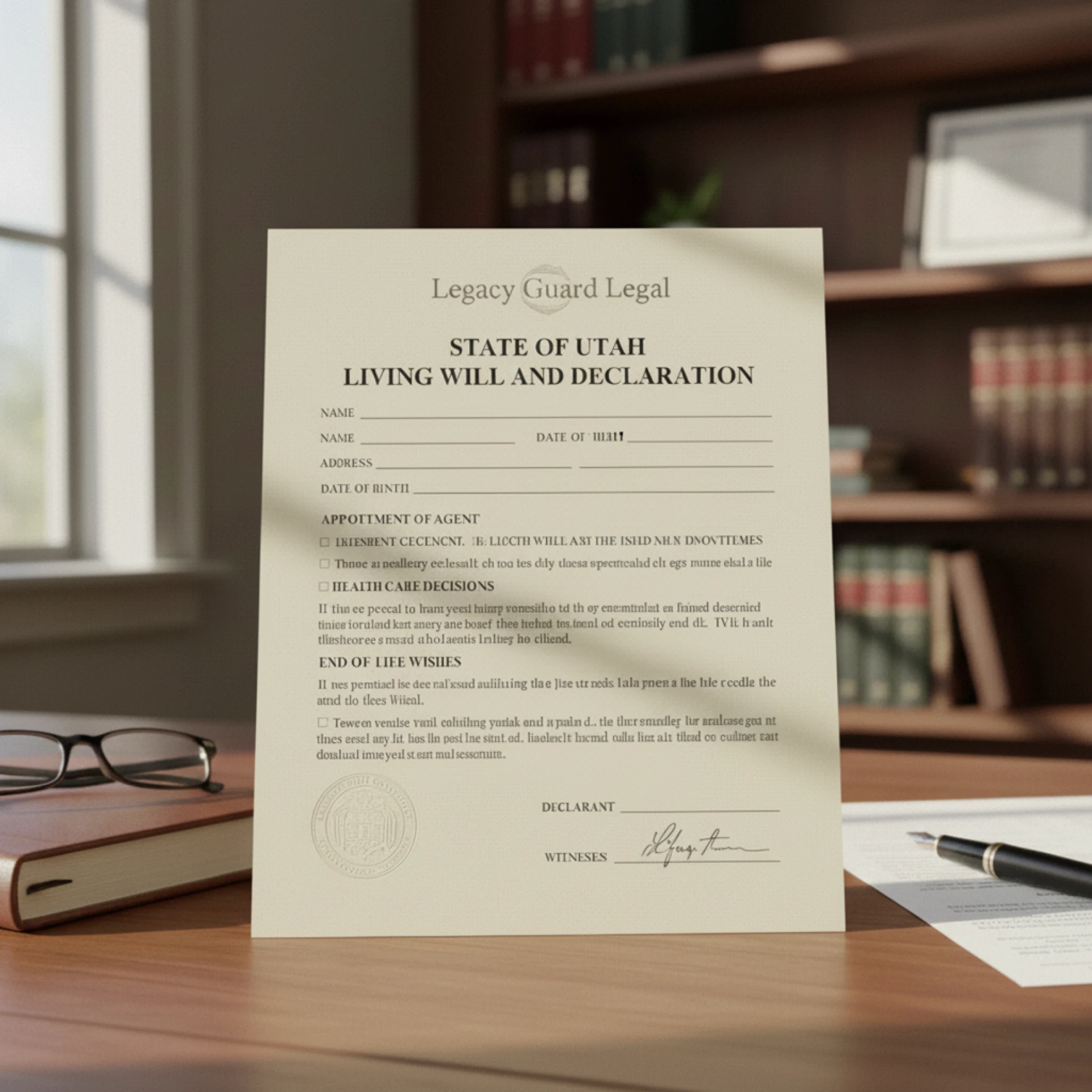
Common Misconceptions About Living Wills
Despite their usefulness, many people delay creating a living will because of common myths:
- “I’m too young to need one.” Emergencies can happen at any age.
- “My family knows what I want.” Without documentation, interpretations can vary.
- “It’s only for the terminally ill.” Living wills apply whenever communication is impossible.
- “A living will takes away control.” It actually clarifies and preserves your control over care.
Understanding the facts dispels fear and empowers proactive planning.
Best Practices for Updating Your Living Will
Your healthcare preferences and life circumstances may change. Review and update your living will after significant events such as:
- Marriage or divorce
- Birth or adoption of children
- Diagnosis of a new health condition
- Changes in personal values or beliefs
Regular reviews help ensure your living will stays current and truly reflects your wishes.
Why Thoughtful Legal Guidance Helps
Preparing a living will is a meaningful act of care, but it can also be complex. Guidance from experienced professionals helps ensure your documents comply with Utah law and accurately reflect your medical preferences. Thoughtful planning minimizes ambiguity, supports family understanding, and integrates your living will with other important documents like powers of attorney and estate plans. LegacyGuard Legal provides clarity, education, and personalized support throughout this process, empowering individuals to make informed choices about their healthcare future.
Take Control of Your Future Care Today
A State of Utah living will form is more than a piece of paper — it’s your voice when you can’t speak for yourself. By creating one now, you provide important direction, reduce stress for those you love, and preserve your dignity and values through life’s most challenging moments.