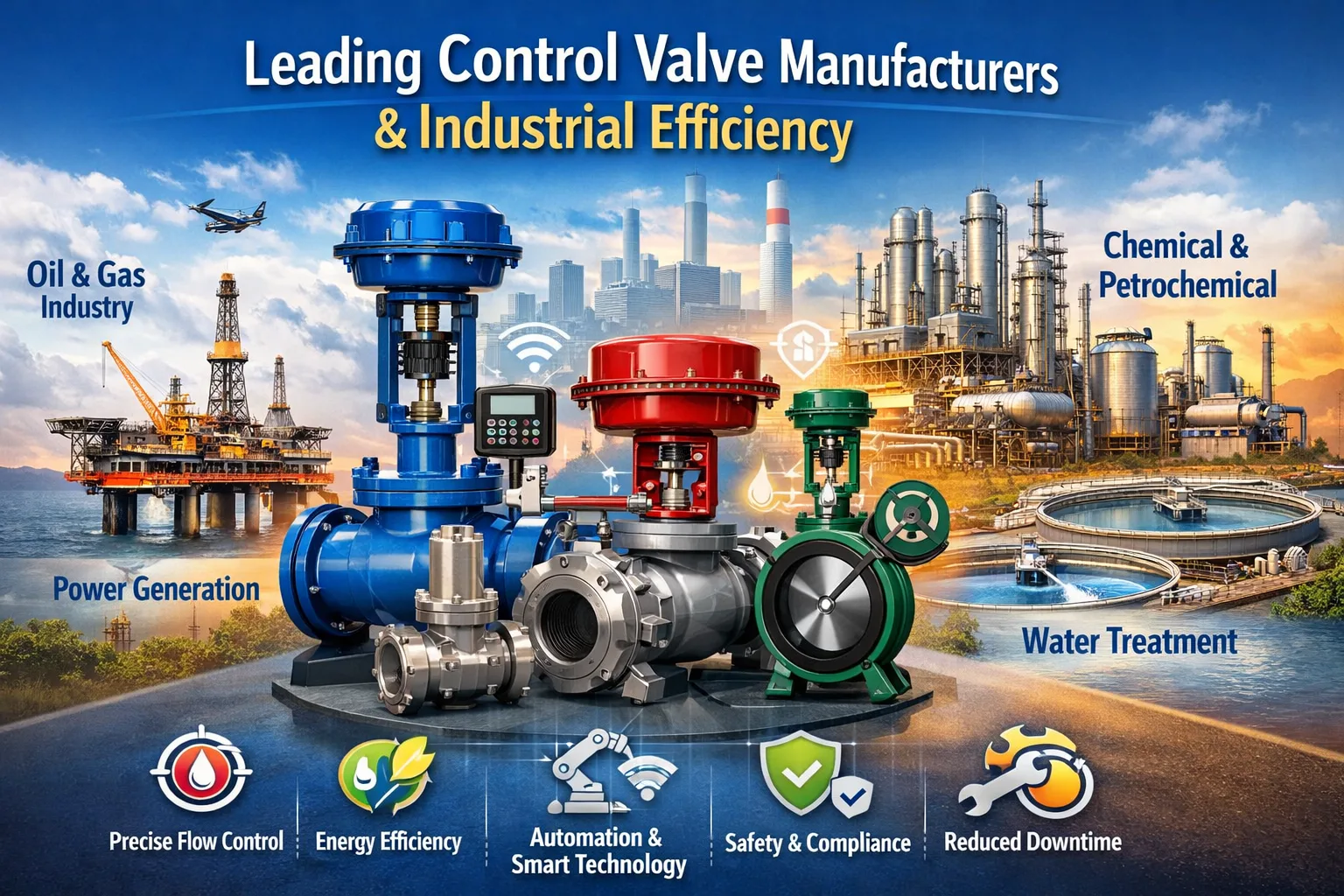
In today’s fast-paced industrial environment, efficiency, precision, and reliability are essential for maintaining a competitive edge. Industries such as oil & gas, power generation, chemicals, and water treatment rely heavily on fluid control systems to operate smoothly. At the heart of these systems are control valves—critical components that regulate flow, pressure, and temperature. Behind their performance stands the expertise of Control Valve Manufacturers, whose innovations and engineering excellence directly influence industrial productivity.
This article explores the importance of control valves, the contribution of manufacturers, and how choosing the right control valve supplier can significantly improve operational efficiency.
Understanding Control Valves in Industrial Systems
Control valves are designed to manage the flow of liquids, gases, or steam within a system. They work by adjusting the valve opening in response to signals from a controller, ensuring that process variables remain within desired limits.
These valves are used in both simple and complex systems, ranging from basic water pipelines to advanced automated plants. A professional control valve supplier ensures that each valve is designed to meet specific process requirements, including pressure ratings, temperature ranges, and fluid characteristics.
Why Control Valve Manufacturers Are Crucial to Industrial Efficiency
Precision in Process Control
One of the primary contributions of Control Valve Manufacturers is delivering products that offer precise control over industrial processes. Accurate flow regulation ensures consistent product quality, especially in industries like pharmaceuticals and food processing, where even minor variations can lead to significant losses.
Energy Optimization
Efficient control valves help reduce energy consumption by maintaining optimal flow conditions. Poorly designed valves can cause pressure drops and energy waste. Leading manufacturers focus on aerodynamic designs and advanced materials that enhance energy efficiency without compromising performance.
Reduced Downtime and Maintenance
Industrial downtime can result in significant financial losses. High-quality valves from a reliable control valve supplier are built to last, with features that resist wear, corrosion, and extreme operating conditions. This durability reduces maintenance frequency and ensures uninterrupted operations.
Support for Automation
With the rise of Industry 4.0, automation has become a key focus for modern industries. Control Valve Manufacturers now integrate smart technologies such as digital positioners, sensors, and remote monitoring systems. These advancements allow operators to control and monitor processes in real time, improving efficiency and decision-making.
Safety and Compliance
Control valves play a critical role in maintaining safe operating conditions. They prevent overpressure, control hazardous flows, and ensure system stability. Manufacturers adhere to international standards to ensure safety and reliability across applications.
Types of Control Valves Offered by Leading Manufacturers
A well-established control valve supplier typically offers a wide range of valve types to suit different industrial needs:
- Globe Valves – Ideal for precise flow control
- Ball Valves – Suitable for quick shut-off applications
- Butterfly Valves – Used for large flow systems with low pressure
- Diaphragm Valves – Preferred in hygienic and corrosive environments
- Pressure Relief Valves – Ensure system safety by releasing excess pressure
Each type serves a specific purpose, and manufacturers often provide customization options to meet unique operational requirements.
Key Industries Benefiting from Control Valve Manufacturers
Oil and Gas Industry
Control valves are essential for upstream, midstream, and downstream operations. They regulate the flow of crude oil, gas, and refined products, ensuring safe and efficient processing.
Power Generation
In power plants, valves control steam and water flow, directly impacting energy output and system efficiency. Advanced solutions from Control Valve Manufacturers help optimize performance and reduce energy loss.
Chemical and Petrochemical Industry
Precise flow control is critical in chemical reactions. A reliable control valve supplier provides valves that can handle aggressive chemicals and extreme conditions while maintaining accuracy.
Water and Wastewater Treatment
Control valves manage water distribution, pressure regulation, and treatment processes. Efficient valves help conserve water and reduce operational costs.
Pharmaceutical and Food Processing
These industries require hygienic and contamination-free operations. Specialized valves ensure cleanliness and precise control, maintaining product quality and safety.
Characteristics of Leading Control Valve Manufacturers
Not all manufacturers deliver the same level of quality and innovation. The best Control Valve Manufacturers stand out due to the following factors:
- Advanced Engineering Capabilities
- Strict Quality Control Processes
- Compliance with Global Standards (ISO, API, ANSI)
- Customization and Application-Specific Solutions
- Strong After-Sales Support
A dependable control valve supplier goes beyond product delivery by offering technical guidance, installation support, and maintenance services.
How to Choose the Right Control Valve Supplier
Selecting the right supplier is a critical decision that can impact your entire operation. Here are some important considerations:
Evaluate Industry Experience
Choose a supplier with proven expertise in your industry. Experienced suppliers understand specific challenges and provide tailored solutions.
Check Product Quality and Certifications
Ensure that the valves meet industry standards and are tested for performance and durability.
Look for Customization Options
Every industrial process is unique. A good control valve supplier should offer customized solutions that match your operational needs.
Assess Technical Support
Reliable technical support ensures smooth installation, operation, and troubleshooting.
Consider Long-Term Value
Instead of focusing only on cost, consider the long-term benefits such as durability, efficiency, and reduced maintenance.
Role in Sustainability and Environmental Efficiency
Sustainability is becoming increasingly important in industrial operations. Control Valve Manufacturers contribute by designing energy-efficient valves that minimize waste and emissions. Efficient flow control reduces resource consumption and helps industries meet environmental regulations.
Additionally, modern valves are designed with materials that are recyclable and resistant to corrosion, further supporting sustainable practices.
Future Trends in Control Valve Manufacturing
The control valve industry is evolving with advancements in technology. Some key trends include:
- Smart Valves with IoT Integration
- Predictive Maintenance Using Data Analytics
- Remote Monitoring and Control Systems
- Improved Materials for Harsh Environments
- Enhanced Energy-Efficient Designs
These innovations are shaping the future of industrial efficiency, making processes smarter, safer, and more cost-effective.
Conclusion
The contribution of Control Valve Manufacturers to industrial efficiency cannot be overstated. From ensuring precise process control to enabling automation and sustainability, their role is central to modern industrial operations. Partnering with a trusted control valve supplier allows businesses to enhance performance, reduce costs, and maintain long-term reliability.
As industries continue to evolve, the demand for high-quality, technologically advanced control valves will only grow. Companies like Vytal Controls are playing a key role in meeting these demands by delivering innovative and dependable solutions tailored to diverse industrial applications.