
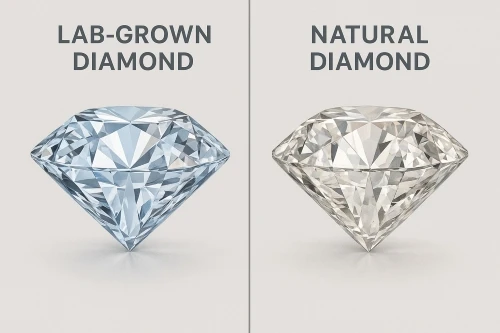
When shopping for engagement rings or fine jewelry in the United States, buyers often face an important decision: Should you choose a lab grown diamond or a natural diamond?
After understanding the basics, many buyers explore high-quality lab grown diamond jewelry to compare it with traditional mined diamonds in terms of price, quality, and overall value.
Both options offer stunning beauty, but they differ in origin, cost, and environmental impact. Understanding these differences can help buyers make a confident and informed decision.
What Are Natural Diamonds?
Natural diamonds are formed deep within the Earth over billions of years under extreme heat and pressure. These diamonds are mined from the Earth and have long been associated with luxury and rarity.
Because of their natural origin, they are often considered traditional and prestigious.
What Are Lab Grown Diamonds?
Lab grown diamonds are created using advanced scientific processes that replicate natural diamond formation.
They have the same:
- Physical structure
- Optical properties
- Durability
This means they look identical to natural diamonds but are produced in a much shorter time frame.
Price Comparison: Lab vs Natural Diamonds
One of the biggest differences between the two options is price.
Natural Diamonds
- Higher cost due to mining and supply chain
- Limited availability
- Premium pricing
Lab Grown Diamonds
- 30%–50% more affordable
- Greater availability
- Better value for larger stones
For example:
- Natural 1-carat diamond: $6,000–$8,000
- Lab-grown 1-carat diamond: $3,000–$4,500
This price difference allows buyers to maximize size and quality.
Quality and Appearance
In terms of appearance, lab grown and natural diamonds are virtually identical.
Both offer:
- Brilliant sparkle
- Excellent durability
- Wide range of cuts and styles
Even trained gemologists require specialized tools to distinguish between them.
Environmental and Ethical Considerations
Sustainability is an important factor for many modern buyers.
Natural Diamonds
- Require mining
- Environmental impact
- Ethical concerns in some regions
Lab Grown Diamonds
- Created in controlled environments
- Reduced environmental impact
- Transparent sourcing
Because of this, many buyers prefer lab-grown diamonds as a more responsible option.
Buying Experience in the USA
Online jewelry shopping has made it easier for buyers to compare both options.
Many customers refer to guides like Online Diamond Jewelry — Why D218 Jewels is Best Choice when choosing trusted retailers for high-quality diamonds.
Reliable online stores provide certifications, detailed product descriptions, and secure transactions.
Long-Term Value and Investment
Natural diamonds have traditionally been viewed as investments due to their rarity. However, resale value is often lower than expected.
Lab grown diamonds focus more on immediate value, allowing buyers to enjoy larger and more beautiful diamonds for their budget.
For most buyers, emotional significance outweighs resale considerations.
Which Option Should You Choose?
The choice between lab-grown and natural diamonds depends on personal priorities.
Choose Natural Diamonds If:
- You value rarity and tradition
- You prefer mined gemstones
Choose Lab Grown Diamonds If:
- You want better value for money
- You prefer sustainable options
- You want a larger diamond within budget
Alternative Options: Moissanite
Some buyers also explore alternatives like moissanite diamond jewellery, which offers excellent brilliance at an even lower price point.
Moissanite is not a diamond but provides a visually stunning and budget-friendly option for jewelry.
Final Thoughts
The comparison between lab grown and natural diamonds is no longer about which one looks better—because both offer exceptional beauty. Instead, it is about value, ethics, and personal preference.
Lab grown diamonds provide a modern solution for buyers who want luxury, affordability, and sustainability in one package.
As consumer awareness continues to grow, lab grown diamonds are becoming one of the most preferred choices for engagement rings and fine jewelry in the United States.