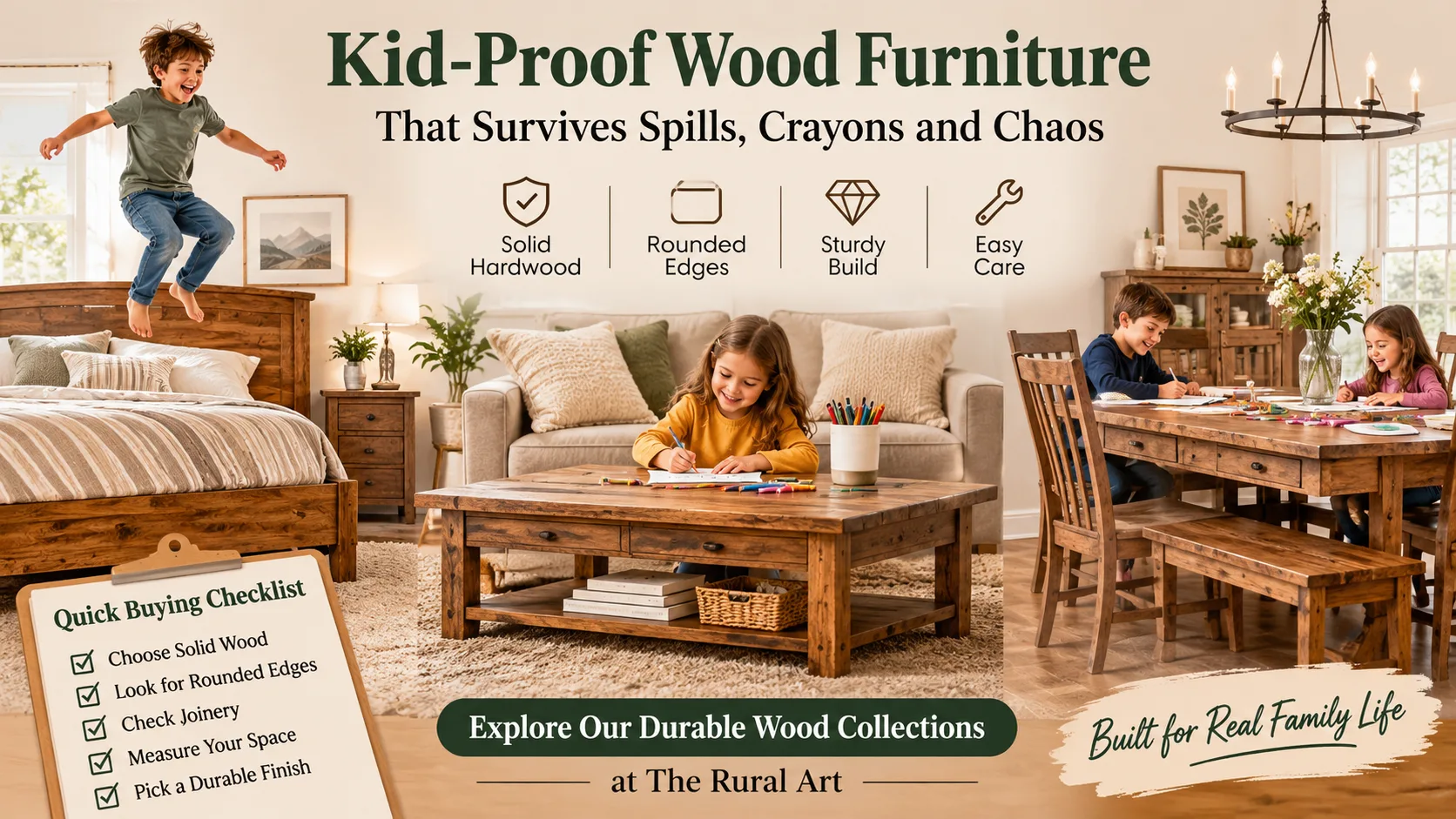
Kids test furniture harder than any lab. They bounce on beds, pull up on coffee tables and turn the dining table into an art studio. So which pieces actually hold up? The short answer: dense solid hardwood, stable bases, rounded edges and finishes that can be repaired later. This guide shows what to look for in a bed, a coffee table and a dining set, plus simple care habits for busy American households.
Why Solid Hardwood Handles Family Life
Solid hardwood is the same material all the way through. A scratch or dent does not reveal a different layer underneath, and there is no thin veneer to peel or chip at the corners. Depending on the piece and finish, solid wood can often be sanded and refinished years later.
Dense species such as teak, acacia and mango resist daily wear well. Still, no wood is scratch-proof, so choose finishes and textures that forgive the occasional mark.
Weight matters too. Heavy solid wood pieces are harder for kids to push, tip or drag across the floor, which makes the whole room feel calmer and safer. Over time, small dings simply become part of the story of your home.
Wooden Beds That Keep Up With Active Kids
Good wooden beds for children and teens share a few traits. They sit low, stay tight under constant bouncing and have no sharp corners at head or toe height.
Check these features first:
- Height: A low-profile frame shortens the fall and makes climbing in easy.
- Joinery: Mortise and tenon or similar joinery stays tighter than staples and glue when kids jump.
- Edges: Rounded corners and posts are gentler on bumps.
- Size: Many families pick a full (54 by 75 inches) or queen (60 by 80 inches) so they do not have to upgrade in a few years.
- Under-bed storage: Drawers keep toys off the floor, but confirm they have stops so they do not slide out completely.
If you live in a compact Northeast apartment, measure the room and the hallway before ordering. Solid wood frames are heavy, and tight stairwells can make delivery tricky. Ask about the frame's weight rating before you buy, especially for older kids and teens.
Support matters as well. Most mattress makers recommend slat gaps of about 3 inches or less, and solid slats keep a mattress from sagging. Pick a headboard with a simple profile if your child likes to read or lean back, since flat, smooth surfaces are more comfortable and easier to dust.
Coffee Tables Traditional Wood Styles Families Can Trust
Coffee tables traditional wood designs often have turned legs, thick tops and a lower shelf. Those details help in a family room, because the coffee table is the first thing a toddler pulls up on and the last place a teenager puts a snack down.
Keep these points in mind:
- Corners: Choose rounded or softly eased edges, or consider a round shape.
- Stability: Look for a wide base or heavy legs so the table does not tip when a child leans on it.
- Height: Most tables stand 16 to 18 inches, within 1 to 2 inches of your sofa seat.
- Lower shelf: Store books and toys on the shelf so the top stays clear.
- Placement: Leave 14 to 18 inches between the sofa and the table for walking room.
In the Midwest and Mountain states, kids spend long winters indoors, so the living room table works overtime. Use coasters and a tray, and keep the table a few feet from heating vents so the wood does not dry out too quickly. A soft rug underneath adds a cushion for little ones and protects the floor from sliding legs.
A Rustic Table and Chairs for Homework, Dinner and Everything Between
A rustic table and chairs set suits family life because textured surfaces, visible grain and distressed finishes hide everyday marks better than a glossy top. The same table handles breakfast, homework, craft projects and holiday dinners.
Size it with these numbers:
- Space per person: Allow about 24 inches of table edge for each seat.
- Chair clearance: Leave at least 36 inches between the table edge and the wall so chairs can slide out.
- Heights: Tables usually stand 29 to 30 inches, with seats around 18 inches.
- Chair build: Choose sturdy chairs with joined legs, since kids tend to lean back and rock.
A trestle or pedestal base can give more legroom for younger children. Many American families also plan around Thanksgiving, but size the table for everyday meals first and add extra seating for the holiday. A bench on one side is a practical choice, since it tucks fully under the table and seats a few small kids snugly.
Cleaning and Care Without the Stress
Solid wood does not need complicated upkeep. It needs a few steady habits:
- Wipe spills quickly with a soft, damp cloth, then dry the surface.
- Use mild soap if needed and avoid harsh chemical cleaners.
- Place a mat under craft projects and use coasters for drinks.
- Add felt pads under chair legs to protect your floors.
- Test any cleaner on a hidden spot first, since finishes vary.
- Keep indoor humidity near 35 to 55 percent to help limit seasonal wood movement.
Crayon or marker marks are easier to handle when you catch them early. Check the finish before using anything stronger than mild soap.
Quick Buying Checklist for Parents
- Confirm the piece is 100% solid wood, not veneer over engineered board.
- Look for rounded edges and a stable, wide base.
- Ask about joinery and weight ratings.
- Measure the room, doorways and stairs before ordering.
- Choose a finish that hides marks and can be touched up.
Take these five steps and your furniture will handle the school year, the holidays and everything in between. Explore the bedroom, living room and dining collections at The Rural Art, and check each product page for current sizes, finishes and delivery details before you place your final order.