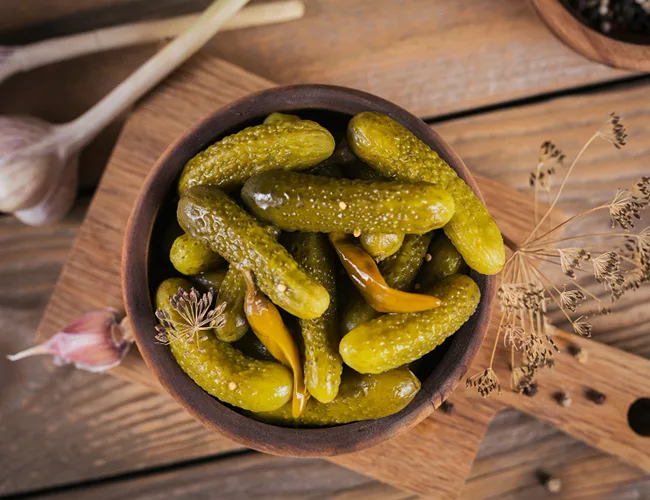
The global demand for pickled cucumbers is rising fast. Today, pickled cucumber manufacturers in India are playing a key role in meeting this demand.
India has become the largest exporter of gherkins, supplying over 15% of global demand and exporting to more than 90 countries.
This strong position is driven by several important trends. These trends are shaping how manufacturers grow, scale, and compete in international markets.
1. Rising Global Demand for Convenient Foods
Busy lifestyles are changing food habits. Consumers now prefer ready-to-eat and easy-to-store products. Pickled cucumbers fit this need well because they:
- Have a long shelf life
- Are easy to use in meals
- Require no preparation
This growing demand is pushing gherkin manufacturers in India to increase production and improve packaging.
2. Strong Export Opportunities
The global markets include countries such as the US, Europe, and Asia, which require large quantities of gherkins.
The key export benefits for gherkins include:
- Competitive pricing
- Farming networks
- Supply chain benefits
India exports bulk as well as ready-to-eat pickled cucumbers. Companies like Indo Western Agro Export (IWAE) are benefiting from the increasing exports.
3. Focus on Quality and Food Safety
There is a need for high-quality standards among international buyers. This has led companies to enhance their quality standards.
The key trends for improving quality include:
- The use of food-grade preservatives such as vinegar
- The use of high-end processing units
- Compliance with global certifications
The government has been able to enhance the overall quality and food safety standards through the support of export bodies. As a result, Indian manufacturers are gaining trust in global markets.
4. Growth in Contract Farming
Contract farming is a significant driver of growth. Manufacturers directly deal with farmers to maintain the supply of goods.
Benefits of the system:
- Better quality of crops
- Stable income for farmers
- Control of production
The gherkin industry employs 90,000 farmers in India. This strong connection with farmers enables companies such as Indo Western Agro Export (IWAE) to maintain stable levels of production.
5. Expansion of Product Variety
Manufacturers are no longer restricted to pickled cucumbers. There has been a shift towards value-added products. Popular varieties of pickles include:
- Flavored gherkins
- Organic pickles
- Low sodium pickles
This diversification enables companies to tap into new markets and boost profits.
6. Improved Processing and Technology
The use of modern technology has improved the industry significantly.
Key technologies are:
- Automated processing equipment
- Storage equipment
- Packaging equipment
This has enabled the industry to fulfill orders from global buyers.
7. Sustainability and Eco-Friendly Practices
Sustainability is becoming a factor for global buyers. Many organizations are adopting eco-friendly practices.
Key practices are:
- Conserving water
- Recyclable packaging
- Supporting local farmers
These practices help organizations build their brand and attract global buyers.
8. Increasing Role of Private Labels
Retail chains worldwide prefer to use private label products. This is creating opportunities for organizations. Indian exporters supply pickled cucumbers under:
- Supermarket brands
- Food service brands
- Bulk packaging for rebranding
This is helping organizations grow quickly without incurring high marketing expenses.
Conclusion
The global pickled cucumber market is growing steadily. Strong exports, better quality standards, and changing consumer preferences are driving this growth.
India remains a leader due to its production capacity and export strength. Companies like Indo Western Agro Export (IWAE) are well-positioned to benefit from these trends by delivering reliable and high-quality products.
As demand continues to rise, gherkin manufacturers in India will play an even bigger role in shaping the future of the global pickled food industry.