
Introduction
Workplace safety management requires structured oversight, clear procedures, and continuous monitoring. ISO 45001 lead auditor certification essential basics help professionals understand how occupational health and safety systems operate within organizations. ISO 45001 Lead Auditor Certification prepares professionals to evaluate occupational health and safety management systems used by organizations worldwide. Lead auditors review workplace practices, identify risks, and verify compliance with safety standards, supporting organizations in maintaining effective occupational health and safety systems.
Understanding the Role of an ISO 45001 Lead Auditor
ISO 45001 Lead Auditors evaluate occupational health and safety management systems to ensure organizations follow established safety standards. Their role includes reviewing safety policies, assessing workplace risks, and verifying that operational procedures align with safety requirements. Lead auditors often conduct internal or external audits that help organizations maintain safety compliance and improve workplace conditions. Understanding these responsibilities is an important part of a professional certification training program that prepares safety professionals for real auditing environments.
Core Responsibilities in Workplace Safety Auditing
Evaluating Safety Management Systems
Lead auditors assess how organizations implement occupational health and safety policies. They review procedures, documentation, and operational practices to determine whether safety systems align with ISO 45001 requirements.
Reviewing Workplace Risk Management Practices
Auditors examine how organizations identify hazards and control risks. This includes reviewing risk registers, safety protocols, and preventive measures implemented to protect employees.
Assessing Compliance with Safety Standards
Organizations seeking certification or maintaining compliance must follow specific safety requirements. Lead auditors verify that these standards are implemented across departments and operational activities.
Supporting Continuous Safety Improvement
Audits often highlight areas where safety practices require improvement. Lead auditors provide structured observations that help organizations refine policies and strengthen workplace safety programs.
Planning and Preparing for an ISO 45001 Audit
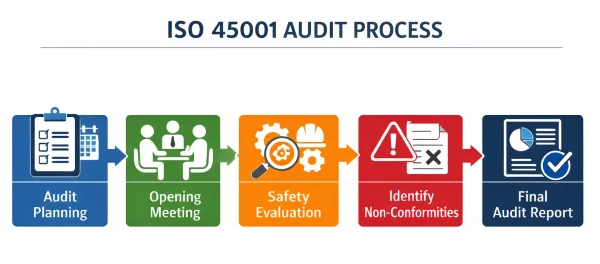
Audit preparation is an essential responsibility for lead auditors. Proper planning ensures audits are organized, objective, and aligned with established auditing guidelines. Preparation also helps auditors identify key operational areas that require evaluation.
Key Planning Activities for Lead Auditors
Defining Audit Scope and Objectives
Lead auditors determine the scope of the audit by identifying departments, processes, and operational activities to be examined. Clear objectives help ensure the audit focuses on relevant safety practices.
Reviewing Organizational Documentation
Before conducting an audit, auditors review safety manuals, policies, incident reports, and risk assessments. This documentation provides insight into how the organization manages workplace safety.
Preparing Audit Checklists
Checklists help auditors maintain consistency during evaluations. These checklists are usually aligned with ISO 45001 clauses and guide auditors when reviewing workplace safety processes.
Scheduling Audit Activities
Lead auditors coordinate audit schedules with organizational teams. This ensures departments are prepared for evaluations and key personnel are available during the audit process.
Conducting Workplace Safety Audits
After completing the planning stage, lead auditors conduct the actual evaluation of workplace safety practices. This stage involves reviewing processes, interacting with employees, and observing workplace operations.
Activities During an ISO 45001 Audit
Interviewing Employees and Management
Lead auditors often speak with employees to understand how safety procedures are implemented in daily operations. These conversations help verify whether documented procedures are followed in practice.
Observing Workplace Operations
Auditors examine work environments to identify potential hazards. Observations may include equipment safety practices, employee protective measures, and operational workflows.
Reviewing Safety Records and Documentation
Safety records such as incident reports, inspection reports, and maintenance logs provide evidence about organizational safety performance.
Collecting Objective Evidence
Lead auditors collect verifiable evidence during audits. This evidence supports audit findings and ensures conclusions are based on observable data rather than assumptions.
Identifying Non-Conformities and Safety Risks
One of the most important responsibilities of a lead auditor is identifying areas where workplace practices do not meet safety standards. These findings help organizations understand risks and implement corrective actions.
Key Tasks in Risk Identification
Documenting Non-Conformities
Non-conformities occur when safety procedures do not align with ISO 45001 requirements. Auditors document these issues clearly and provide evidence to support their findings.
Analyzing Root Causes of Safety Issues
Auditors often review incident reports and operational processes to determine the root cause of safety issues. Understanding causes helps organizations prevent similar incidents.
Recommending Corrective Actions
Lead auditors provide recommendations that help organizations address identified safety gaps. These recommendations focus on improving safety procedures and reducing operational risks.
Ensuring Follow-Up on Safety Improvements
Organizations may implement corrective actions after an audit. Lead auditors sometimes review these actions to confirm that safety improvements have been implemented successfully.
Essential Skills Required for ISO 45001 Lead Auditors
Lead auditors require a combination of technical knowledge, analytical thinking, and communication ability. These skills help auditors conduct objective evaluations and communicate findings clearly to organizations. Understanding these abilities also reflects modern industry skill trends expected from professionals working in occupational health and safety auditing roles.
Important Skills for Effective Safety Auditing
Analytical Thinking
Lead auditors examine operational processes, safety documentation, and risk assessments. Analytical thinking helps them identify inconsistencies or gaps in safety practices.
Communication and Interview Skills
Auditors interact with employees and management teams during audits. Clear communication ensures accurate information gathering and professional interaction.
Attention to Detail
Small deviations in safety procedures can lead to workplace risks. Careful observation helps auditors detect issues that may not be immediately visible.
Report Writing and Documentation
Audit reports must present findings clearly. Structured documentation helps organizations understand safety gaps and implement corrective actions.
ISO 45001 Lead Auditor Certification Path
Professionals who want to perform workplace safety audits usually follow a structured certification path that introduces auditing principles, safety management systems, and practical audit techniques. This learning process helps individuals understand how occupational health and safety frameworks operate within organizations.
Typical Certification Process
Foundation Knowledge
The first stage focuses on learning occupational health and safety management concepts. Professionals study the structure of ISO 45001 standards, key terminology, and the principles used in workplace safety management systems.
Auditor Training
In this stage, professionals study auditing principles and guidelines such as ISO 19011. Training explains how audits are planned, conducted, and documented while maintaining objectivity and accuracy.
Practical Exercises
Training programs often include simulated audit activities and case studies. These exercises help professionals understand real audit scenarios, identify safety gaps, and practice evaluating workplace processes.
Certification Examination
After training, professionals complete an assessment that evaluates their understanding of auditing concepts, safety management principles, and ISO 45001 requirements.
Professional Practice
The final stage involves applying auditing knowledge within organizations. Professionals participate in workplace safety audits, review documentation, and evaluate operational practices.
This structured path helps professionals understand how to evaluate safety management systems and support organizations in maintaining safe workplaces.
Career Opportunities for ISO 45001 Lead Auditors
Professionals who develop auditing expertise often work in industries where workplace safety is essential. Their knowledge helps organizations maintain regulatory compliance and improve operational safety standards.
Common Career Roles
Occupational Health and Safety Auditor
Responsible for evaluating workplace safety management systems within organizations or certification bodies.
EHS Manager
Manages environmental, health, and safety programs to ensure workplace safety practices align with regulations.
Compliance Specialist
Focuses on ensuring organizational operations follow occupational health and safety standards.
Safety Consultant
Advises organizations on improving safety processes and preparing for safety audits.
These roles exist across industries such as manufacturing, construction, logistics, healthcare, and energy.
Industry Importance of Safety Auditing
Workplace safety continues to receive attention as organizations expand operations and follow regulatory requirements. Safety audits help organizations identify risks and maintain safe working conditions. Many professionals prepare for these responsibilities through professional training programs that explain safety standards, audit practices, and workplace risk evaluation.
Factors Increasing Demand for Safety Auditing
Regulatory Compliance Requirements
Governments require organizations to maintain workplace safety standards and conduct regular safety evaluations.
Employee Safety Expectations
Employees expect organizations to provide safe working environments and clear safety policies.
Operational Risk Management
Organizations aim to reduce incidents that may disrupt operations or affect employee well-being.
Global Safety Standards Adoption
Many companies follow internationally recognized safety frameworks to maintain consistent safety practices across locations.
These factors contribute to the continued importance of safety auditing roles within organizations.
Conclusion
ISO 45001 Lead Auditors play a critical role in evaluating workplace safety systems, identifying operational risks, and ensuring organizations follow recognized safety standards. Their responsibilities include planning audits, reviewing safety documentation, evaluating workplace conditions, and reporting non-conformities. These activities help organizations maintain structured occupational health and safety management systems. Professionals interested in safety auditing often develop their expertise through certification training programs offered by sterlingnext, which prepare individuals to perform structured safety audits and support safer workplaces.
Refer to this detailed beginner guide to ISO 45001 Lead Auditor Certification