When you own a boat, the little details often make the biggest difference. A clean hull, polished fiberglass, fresh upholstery, and sparkling stainless steel hardware all contribute to your vessel's overall appearance. But while many boat owners focus on washing the exterior and maintaining the fiberglass, stainless steel components sometimes receive less attention than they deserve.
Look around your boat, and you'll probably notice stainless steel in several places. Railings, cleats, ladders, grab handles, cup holders, rod holders, trim, and other hardware all help make your boat functional, comfortable, and attractive. These components are designed to handle demanding marine conditions, but that doesn't mean they are completely protected from damage.
Saltwater, humidity, sunlight, water spots, and everyday use can gradually affect stainless steel surfaces. Over time, you may notice dull patches, fingerprints, discoloration, or small rust-colored stains. Even a well-maintained boat can start looking neglected when its metal hardware loses its shine.
That's where marine stainless steel polishing becomes important. Proper cleaning and polishing can help restore the appearance of stainless steel, remove surface contaminants, and maintain a cleaner finish. More importantly, regular care helps you spot early signs of staining or corrosion before they become more difficult to address.
Whether you own a fishing boat, pontoon, sailboat, center console, or luxury yacht, understanding how to care for stainless steel can make a noticeable difference. Let's look at why it matters, what causes stainless steel to lose its shine, and how professional polishing can help keep your boat looking its best.
Why Does Stainless Steel Need Special Care on a Boat?
Stainless steel is popular in marine environments because it offers strength, durability, and corrosion resistance. However, the word "stainless" can sometimes create the wrong impression. It does not mean the material can never stain, discolor, or develop corrosion.
Marine environments are particularly demanding. Unlike indoor metal fixtures, boat hardware regularly faces saltwater, moisture, changing temperatures, and airborne contaminants.
Saltwater Leaves More Than Just Water Marks
Saltwater is one of the biggest challenges for boat owners. When seawater splashes onto railings, cleats, ladders, and other metal fittings, the water eventually evaporates and leaves salt deposits behind.
If you don't remove these deposits, they can build up on the surface and contribute to staining and corrosion.
You might notice:
- White or cloudy residue on stainless steel railings.
- Water spots around metal fittings.
- Dull-looking surfaces that no longer reflect light properly.
- Salt deposits around screws, joints, and hardware connections.
Regular rinsing with fresh water helps remove salt before it accumulates. However, once deposits and discoloration have developed, you may need a more thorough cleaning and polishing process.
Humidity and Moisture Can Affect the Finish
Boats in coastal locations often experience high humidity. Even when a vessel is stored at a marina or covered between trips, moisture can remain around metal components.
Areas where water collects or where airflow is limited may be especially vulnerable to staining. This is why checking hidden corners, hardware connections, and areas beneath fittings is just as important as cleaning visible railings.
Everyday Use Leaves Marks Behind
Stainless steel hardware is handled frequently. Passengers hold railings, fishing equipment touches metal surfaces, and hands leave oils and fingerprints.
These marks may seem minor, but they can make polished metal look dull and dirty.
A regular boat stainless steel cleaning routine helps remove everyday contaminants and keeps frequently touched surfaces looking presentable.
Common Signs Your Boat's Stainless Steel Needs Polishing
Not every stainless steel surface needs intensive polishing. Sometimes, a simple wash is enough. Other times, the surface may need more attention.
Knowing what to look for can help you decide when routine cleaning is sufficient and when professional stainless steel boat polishing may be worthwhile.
1. Dull or Cloudy Metal Surfaces
One of the first signs is a loss of shine. Stainless steel that once looked bright and reflective may begin to appear cloudy or flat.
This can happen because of salt deposits, mineral residue, oxidation-related surface changes, and accumulated contaminants.
A suitable cleaning process may restore the appearance if the problem is limited to surface buildup. More persistent dullness may require professional polishing.
2. Rust-Colored Spots and Stains
Seeing rust-colored marks on stainless steel can be surprising, especially when the hardware is advertised as corrosion-resistant.
These marks may come from surface contamination, contact with ordinary steel particles, or corrosion affecting the stainless steel itself.
The important thing is not to assume every orange or brown mark is harmless. A professional can assess the surface and determine whether it is removable staining or a more serious issue.
3. Water Spots and Salt Buildup
If your boat spends considerable time in saltwater, you may notice white spots and residue around railings, cleats, and other exposed hardware.
Freshwater rinsing can help prevent this buildup, but older deposits may require specialized marine-safe cleaning products.
4. Scratches and Uneven Appearance
Stainless steel can develop small scratches through regular use, improper cleaning, and contact with abrasive materials.
These marks may be particularly noticeable on smooth, reflective surfaces.
Polishing may improve certain surface imperfections, but deep scratches cannot always be removed without affecting the surrounding finish. The appropriate treatment depends on the material and the severity of the damage.
What Is Professional Stainless Steel Polishing?
Professional marine stainless steel polishing is a surface-care process that cleans and improves the appearance of stainless steel components on boats and yachts.
Unlike ordinary washing, polishing requires more attention to the metal's condition, the finish, and the products or techniques best suited to the surface.
The goal is to remove appropriate surface contaminants, reduce visible staining, and restore a cleaner, more consistent appearance without causing unnecessary damage.
Step 1: Inspecting the Stainless Steel
Before polishing begins, assess the condition of the metal.
A detailer may check:
- Railings and handrails.
- Cleats and deck fittings.
- Stainless steel ladders.
- Rod holders and fishing accessories.
- Grab handles and hardware.
- Decorative metal trim.
- Visible fasteners and fittings.
This inspection helps identify areas with salt buildup, surface stains, scratches, or possible corrosion.
It also helps determine whether a component needs basic cleaning or a more involved treatment.
Step 2: Removing Surface Dirt and Salt
Do not begin polishing while loose dirt, sand, or salt remains on the surface.
These particles can cause additional scratches if they are rubbed against the metal during the process.
First, clean the surface using suitable products and materials. This removes loose contaminants and prepares the stainless steel for further treatment.
Step 3: Treating Stains and Discoloration
Once the surface is clean, assess any remaining spots and discoloration.
A suitable stainless steel cleaner or polishing product may help address certain types of staining. The product must be compatible with the metal's finish and safe for the surrounding marine surfaces.
Not every stain responds to the same treatment. Some marks may be removable, while deeper corrosion or physical damage may require a different solution.
Step 4: Polishing the Surface
The polishing stage helps improve the appearance of stainless steel by addressing suitable surface imperfections and restoring a more uniform finish.
The technique depends on the component. A large railing, a small cleat, and a decorative metal fitting may each require different handling.
Professional care is especially useful with visible hardware, where an uneven finish or accidental scratching would be noticeable.
Step 5: Applying Suitable Protection
After cleaning and polishing, you may apply an appropriate protective product where suitable.
This can help keep the surface cleaner and make routine maintenance easier. However, always select protective products based on the stainless steel finish and the manufacturer's recommendations.
Polishing is not a permanent shield against saltwater or corrosion. Regular cleaning remains important.
Why Professional Stainless Steel Polishing Is Worth Considering
Many boat owners enjoy maintaining their vessels themselves. Washing the deck, cleaning the seats, and rinsing the exterior can be satisfying weekend tasks.
However, stainless steel polishing can be more complicated than it first appears.
Using the wrong product or an abrasive cleaning tool may leave scratches, discoloration, or an uneven finish. Professional attention can help avoid these problems.
Helps Restore a Cleaner, Brighter Appearance
Stainless steel components are often located in highly visible areas. When they become dull or stained, the entire boat can appear less maintained.
Professional stainless steel boat hardware polishing helps improve the appearance of these details and gives the vessel a cleaner overall look.
Helps Address Stubborn Surface Stains
Salt deposits and certain types of discoloration may not disappear with ordinary soap and water.
A professional detailer can identify the buildup and choose a suitable cleaning or polishing method.
This is particularly helpful for boats that spend long periods in saltwater or remain exposed to coastal conditions.
Reduces the Risk of Improper Cleaning
Household scrubbers, harsh chemicals, and rough cleaning pads can damage stainless steel finishes.
Professional polishing uses products and techniques selected for the surface being treated. This helps reduce the risk of unnecessary scratches and other cleaning-related damage.
Complements Your Boat's Overall Detailing
A polished hull and clean deck look even better when you properly maintain the stainless steel hardware.
Combining marine metal polishing with fiberglass cleaning, boat waxing, and exterior detailing creates a more complete appearance.
Often, the smaller finishing details make a well-maintained boat stand out at the marina.
How Stainless Steel Polishing Benefits Different Types of Boats
Every boat has its own layout, hardware, and maintenance requirements. A fishing boat may have several rod holders and railings, while a yacht may feature extensive stainless steel trim and decorative fittings.
The right polishing approach depends on the components installed and how frequently the boat is used.
Private Boat Owners
For private boat owners, stainless steel care is key to keeping a vessel ready for weekend outings and family trips.
Clean railings, ladders, cleats, and grab handles improve the boat's overall presentation. Regular maintenance also helps owners spot staining or damage before it becomes harder to address.
Yacht Owners
Yachts often feature more visible stainless steel, including polished railings, exterior fixtures, ladders, and decorative hardware.
Because these surfaces contribute significantly to the yacht's appearance, consistent cleaning and professional polishing can help maintain a neat, refined finish.
Fishing Boat Owners
Fishing boats face demanding conditions. Saltwater spray, fishing equipment, bait residue, and frequent handling can dirty metal surfaces.
Rod holders, rails, cleats, and other stainless steel components benefit from regular freshwater rinsing and suitable cleaning.
Professional polishing can help address stubborn stains and improve the appearance of frequently used hardware.
Pontoon Boat Owners
Pontoons often have stainless steel railings, boarding ladders, cup holders, and other fittings that are exposed during regular use.
Keeping these components clean helps maintain a fresh and comfortable appearance, especially when the boat is used for family outings and social gatherings.
Sailboat Owners
Sailboats rely on several metal fittings and hardware components for everyday operation.
Stainless steel rails, deck fittings, and other exposed hardware need appropriate cleaning to remove salt and environmental residue.
Regular inspection is particularly important around joints, fasteners, and areas where moisture can collect.
Center Console Boat Owners
Center console boats often feature stainless steel grab rails, leaning-post hardware, rod holders, and other exposed components.
Because these boats are often used for fishing and coastal activities, their metal surfaces can quickly accumulate salt and water spots.
A consistent cleaning routine, combined with occasional professional polishing, can help keep these areas looking their best.
Simple Tips to Keep Stainless Steel Shining Between Professional Details
Professional polishing can improve the appearance of your boat's metal hardware, but what you do between detailing appointments matters just as much.
A few simple habits can help reduce buildup and maintain the finish for longer.
Rinse with Fresh Water After Saltwater Use
This is one of the easiest and most useful habits for boat owners.
After spending time in saltwater, rinse exposed stainless steel components with fresh water. Pay attention to railings, cleats, ladders, and other areas where salt tends to collect.
Removing salt before it dries reduces the chance of stubborn deposits.
Use Soft Cleaning Materials
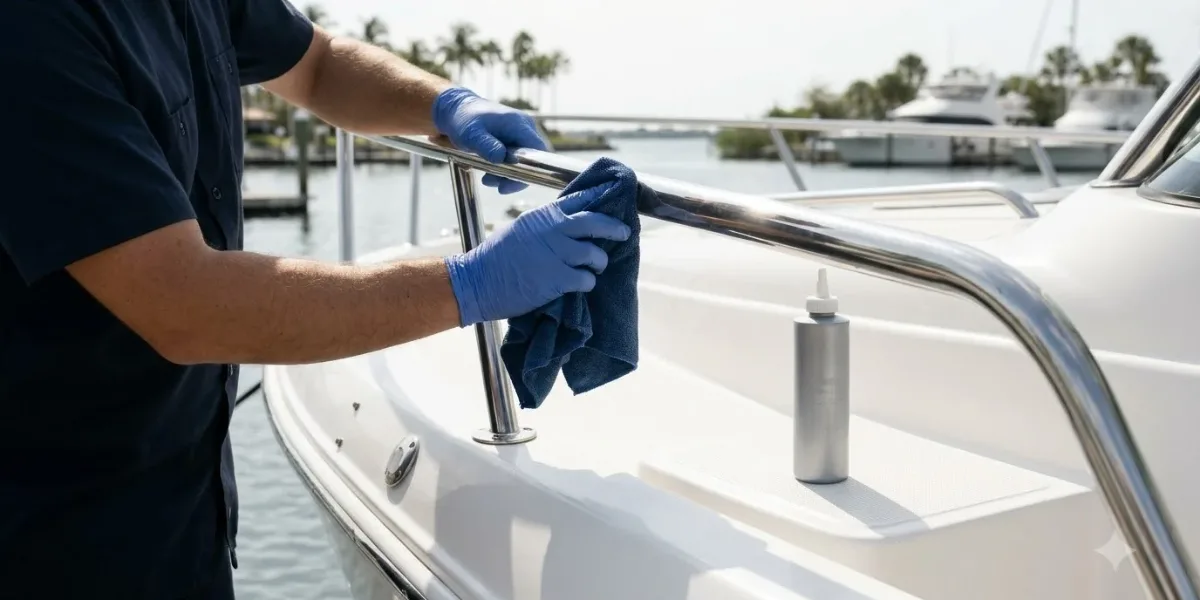
Choose a clean microfiber cloth or another soft material suitable for stainless steel.
Avoid rough scouring pads, steel wool, and abrasive brushes unless a professional has confirmed that a specific tool is appropriate for the surface.
Even durable stainless steel can develop visible scratches from improper cleaning.
Avoid Harsh Household Chemicals
Not every household cleaning product suits marine stainless steel.
Chloride-containing cleaners, strong acids, and unsuitable abrasive products may damage the surface or contribute to corrosion.
Always choose a cleaner designed for the material and follow its instructions.
Dry the Surface After Cleaning
Allowing water to evaporate naturally can leave mineral spots, especially in areas with hard water.
After washing, use a clean, soft microfiber cloth to dry visible stainless steel components.
This small step can make a noticeable difference in the appearance of railings and hardware.
Check Hidden Areas Regularly
Do not focus only on the metal surfaces you can see easily.
Inspect:
- Around screws and fasteners.
- Beneath handrail connections.
- Around ladder mounting points.
- Near deck fittings.
- Around rod holders and hardware joints.
These areas may hold moisture and collect dirt or salt deposits.
Schedule Professional Maintenance When Needed
Routine cleaning is helpful, but it cannot address every type of staining or surface damage.
If your stainless steel remains dull after cleaning, develops persistent spots, or shows signs of corrosion, consider a professional inspection.
Common Mistakes to Avoid When Cleaning Boat Stainless Steel
Sometimes, the biggest maintenance problems come from cleaning a surface too aggressively.
Stainless steel is durable, but the wrong products and methods can affect its finish.
Here are a few mistakes worth avoiding.
Using Steel Wool or Rough Scrubbing Pads
Steel wool may leave tiny particles behind that can contaminate stainless steel surfaces and contribute to rust staining.
Rough pads can also create visible scratches, especially on polished finishes.
Use suitable soft cleaning materials instead.
Assuming Stainless Steel Never Rusts
Stainless steel is corrosion-resistant, not completely corrosion-proof.
Salt deposits, contamination, surface damage, and unsuitable cleaning practices can all contribute to staining or corrosion.
Regular inspection and maintenance are still necessary.
Using the Same Product on Every Surface
Your boat may contain stainless steel, aluminum, chrome-plated parts, fiberglass, vinyl, and painted surfaces.
A product suitable for one material may not suit another.
Always check the product label, and avoid letting metal cleaners or polishes contact surfaces they are not designed for.
Polishing Without Cleaning First
Applying polish over dirt, sand, or salt can cause unnecessary scratching.
Clean the surface thoroughly before polishing.
Ignoring Small Stains for Too Long
A small spot may not seem important, but it is worth checking rather than ignoring.
Early inspection helps determine whether the mark is simple surface contamination or something that needs more attention.
How Often Should You Polish Your Boat's Stainless Steel?
No single polishing schedule works for every boat.
The right frequency depends on several factors, including how often you use the vessel, whether it is exposed to saltwater, where it is stored, and the condition of its stainless steel components.
For example:
- Boats used frequently in saltwater: Rinse with freshwater regularly and inspect often.
- Boats kept at marinas: Check for salt deposits, water spots, and moisture buildup between trips.
- Boats stored on trailers: Inspect exposed hardware after outings and before longer storage periods.
- Boats used occasionally: Clean and inspect stainless steel before and after use, especially after saltwater exposure.
- Yachts with extensive polished hardware: Consider a consistent professional maintenance schedule based on the finish's condition.
Remember, routine cleaning and professional polishing are not the same. You may need to rinse and clean your hardware regularly without needing a full polishing treatment every time.
The goal is to maintain the finish, not to polish unnecessarily.
Why Stainless Steel Care Matters in Tampa Bay's Marine Environment
Boat owners in Tampa Bay understand how quickly marine conditions can affect a vessel's appearance.
Between saltwater exposure, strong sunlight, humidity, and regular boating activity, exterior surfaces face plenty of challenges year-round.
Stainless steel components are no exception.
Whether your boat is kept at a marina, used for fishing trips, or taken out for relaxing weekends, regular maintenance helps prevent salt and environmental residue from accumulating.
For local boat owners searching for Boat Detailing Tampa, stainless steel polishing can be an important part of a more complete exterior care routine.
A professional detailing service can help address multiple surfaces, including:
- Stainless steel railings and hardware.
- Fiberglass surfaces.
- Exterior gelcoat.
- Boat seating and vinyl.
- Deck and interior surfaces.
- Other exposed marine components.
Combining these services helps create a more consistent finish instead of focusing on only one part of the boat.
Choosing the Right Stainless Steel Polishing Service
Not all boat detailing services approach stainless steel maintenance in the same way. Before choosing a professional, it helps to understand what the service includes.
Look for Experience with Marine Surfaces
Boat hardware faces different conditions than indoor stainless steel fixtures.
A detailer familiar with marine environments should understand the effects of saltwater, moisture, and coastal exposure.
Ask About the Cleaning and Polishing Process
A professional should be able to explain how they will inspect, clean, and polish the stainless steel.
It is also reasonable to ask which products are used and whether they are appropriate for your boat's particular finish.
Consider the Entire Boat's Condition
Sometimes stainless steel is only one part of a larger maintenance requirement.
If your fiberglass is dull, your gelcoat has oxidation, or your exterior needs waxing, choosing a detailing service that can assess these areas together may be convenient.
Avoid Promises of Permanent Protection
No polishing treatment can make stainless steel completely immune to saltwater, staining, or corrosion.
Be cautious of anyone promising a permanent shine without maintenance.
A realistic service should focus on improving the surface's current condition and helping you maintain it with appropriate aftercare.
Give Your Boat's Stainless Steel the Attention It Deserves with Royal Blue Boat Detail
A boat can have a beautifully polished fiberglass exterior, clean seating, and a well-maintained deck, but dull or stained stainless steel hardware can still affect its overall appearance.
That is why stainless steel care deserves a place in your regular boat maintenance routine.
If you are looking for professional help polishing and protecting your boat's exterior, Royal Blue Boat Detail is worth considering. The company provides mobile boat detailing services in the Tampa Bay area, making it a relevant option for local boat owners who want professional attention for their vessels.
Whether you own a fishing boat, pontoon, center console, sailboat, or yacht, professional detailing can address the visible surfaces that affect your boat's overall condition.
Explore Royal Blue Boat Detail's services to learn more about stainless steel polishing, boat polishing, waxing, oxidation removal and compounding, and other detailing options.
The best approach is to have your boat's current condition assessed and discuss which treatments suit its surfaces. That way, you can focus on the care your vessel actually needs rather than paying for treatments that may not be necessary.
Final Thoughts: Keep the Shine with Consistent Care
Stainless steel may be built for demanding marine conditions, but it still needs regular attention. Saltwater, humidity, fingerprints, and everyday use can gradually affect its appearance.
The good news is that maintaining stainless steel does not have to be complicated. Freshwater rinsing, gentle cleaning, proper drying, and regular inspections can go a long way toward keeping your boat's hardware looking clean.
When ordinary cleaning is no longer enough, professional marine stainless steel polishing can help improve the finish and address surface stains.
Whether you own a small recreational boat or a larger yacht, remember that the details matter. Caring for railings, cleats, ladders, and other stainless steel components completes the look of a well-maintained vessel.
Give those metal details the attention they deserve, and your boat will be ready to make a great impression every time you head out.