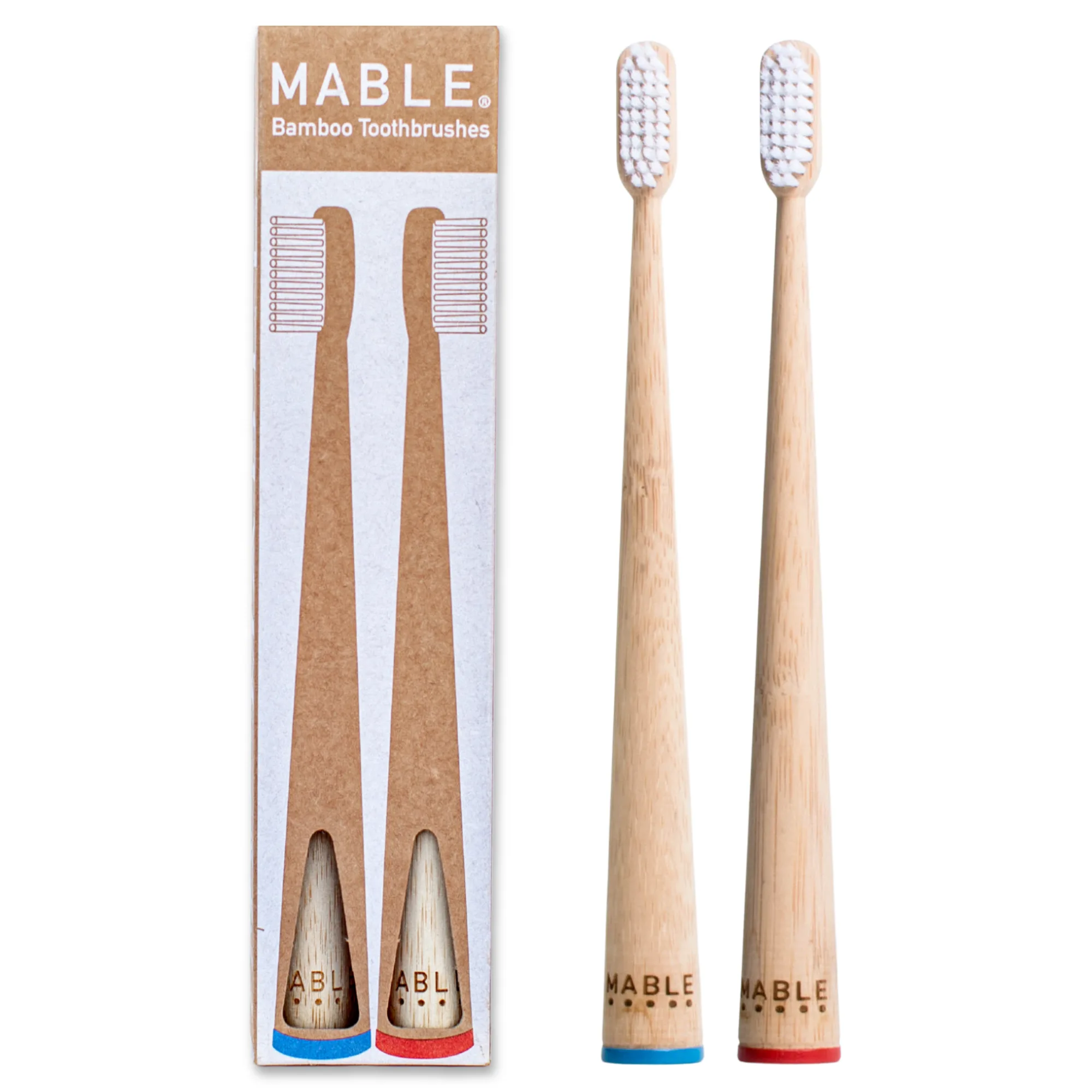
Electric toothbrushes were supposed to be the greener choice, and in one way they are. The handle lasts for years, charges again and again, and does a better job of cleaning than most manual brushes. The problem is the part we throw away. Every three months, dentists recommend a fresh head, and that head is usually a small piece of plastic with a plastic neck. Multiply that by millions of brushes, four times a year, and the green upgrade starts to look like a steady stream of waste.
The simplest fix does not require a new brush at all. It requires a different head. A bamboo electric head keeps the handle you already own and changes only the part that wears out. The brushing action stays the same, the fit stays the same, and the daily routine does not change. What changes is what happens at the end of the head's life, because a bamboo neck is a plant material that can break down, rather than a piece of plastic that will outlast all of us in landfill.
Fit is the first question most people ask, and it is the right one. Electric heads are not universal, so a head made for one handle will not suit another. If you brush with a Sonicare, bamboo toothbrush heads for Sonicare are made to click onto the handle you already own, so there is no need to learn a new brush or buy a new charger. The same logic applies across the other popular handles. Laifen owners have the same option, because bamboo toothbrush heads for Laifen are shaped for that handle, not forced onto it. Checking the fit before you order takes a minute, and it is the only real homework involved.
Once the fit is right, the swap feels unremarkable, which is exactly the point. You brush for two minutes, morning and night, exactly as before. The head reaches the same places, the bristles do the same work, and the handle does the same job it has always done. Sustainable swaps fail when they ask people to accept a worse experience, and this one does not. It works because it leaves the good part alone and replaces only the disposable part.
There is also a quiet money argument. A new electric handle is the expensive part of the system, and replacing it every time a head wears out would be absurd. Keeping it for years, while swapping only heads, is how the system was designed to work. Bamboo heads fit that design rather than fighting it. Buying heads in a small pack keeps the cost per head reasonable, keeps a spare in the drawer, and avoids the last-minute dash to buy whatever plastic head is on the shelf.
The wider lesson goes beyond toothbrushes. Much of the plastic in a bathroom comes not from the big items we keep, but from the small items we replace again and again. Heads, floss picks, cotton swabs and razor cartridges add up because they are replaced so often. Changing the material of a frequently replaced item has a bigger effect than changing the material of something you buy once. That is why the head matters more than the handle, even though the handle is bigger.
None of this requires perfection. A bamboo head still has bristles, and no oral care product is entirely waste-free. The goal is not a perfect bathroom, but a better ratio: a long-lived handle, a short-lived head made from a renewable material, and a routine that does not change. Start with the head, keep the handle, and let the small swap do its quiet work four times a year. That is the idea behind MABLE, which makes bamboo heads for the handles people already own, so the greener choice is also the easier one.