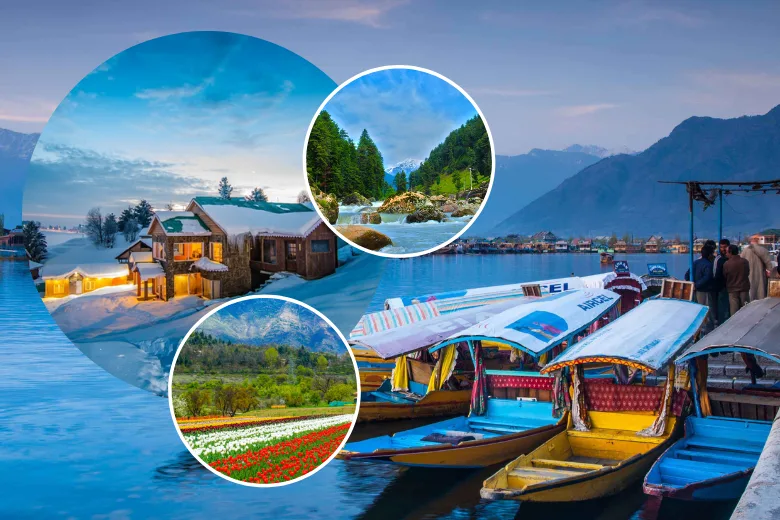
Planning a trip to the Kashmir Valley requires a balance of timing, transit logistics, and realistic regional budgeting. Whether you are backpacking through budget homestays or seeking an ultra-luxury heritage stay with private shikara transfers, five days offers enough room to experience Srinagar’s water culture, Gulmarg’s alpine meadows, and Pahalgam’s pine-flanked valleys. Having coordinated logistics across changing seasonal conditions in Jammu and Kashmir, our local team at Book My Kashmir Trip curates this comprehensive field guide to ensure your journey is practical, culturally respectful, and memorable.
Day 1: Arrival in Srinagar, Dal Lake, and Heritage Gardens
Your journey begins at Sheikh ul-Alam International Airport in Srinagar. Secure an official prepaid airport taxi or meet your pre-arranged driver to avoid aggressive curbside solicitation. Dedicate your first afternoon to gentle acclimatization and the waters of Dal Lake. A traditional one-hour wooden shikara ride takes you past floating vegetable markets, Char Chinar, and quiet interior waterways. Following the lake, explore the terraced symmetry of Nishat Bagh and Shalimar Bagh, constructed during the Mughal era to showcase Persian canal engineering fed directly by natural mountain springs.
Budget travelers can stay in community guesthouses around Dalgate or Rajbagh, using shared auto-rickshaws for transit and dining at local spots along Boulevard Road serving fresh harissa and seekh kebabs. Mid-range visitors often select comfortable stationary houseboats moored along Nigeen Lake, which offers far quieter waters than central Dal. Luxury travelers can reserve a stay at historic hillside properties overlooking the valley or boutique pinewood houseboats featuring walnut-wood carvings, dedicated private butlers, and bespoke wazwan banquets.
Day 2: Srinagar to Gulmarg High-Altitude Excursion
Depart early around 7:30 AM to cover the 50-kilometer drive to Gulmarg via Tangmarg. In winter and early spring, private vehicles must halt at Tangmarg where mandatory anti-skid snow chains are fitted by licensed local mechanics. Gulmarg sits at an elevation of 2,650 meters and serves as Asia's premier skiing destination. The central attraction is the Gulmarg Gondola, one of the highest cable cars in the world. Phase 1 transports riders through dense pine forests to Kongdoori Valley at 3,100 meters, while Phase 2 ascends directly to Apharwat Peak at 3,980 meters.
Ticket booking for the Gondola should be secured weeks in advance through the official Jammu & Kashmir Cable Car Corporation online portal, as on-site Phase 2 tickets sell out rapidly. Budget backpackers can hike the lower Kongdoori trails or enjoy snow tubing on the primary slopes while packing their own refreshments. Luxury visitors can book direct ski-in/ski-out stays at heritage mountain chalets, hire certified ski instructors, and enjoy heated indoor pools overlooking the snow-covered Pir Panjal mountain range.
Day 3: Srinagar to Pahalgam Valley Exploration
The drive from Srinagar to Pahalgam covers approximately 90 kilometers and traverses scenic saffron fields in Pampore and apple orchards in Anantnag. Stop briefly at the 8th-century ruins of the Martand Sun Temple, built under the Karkota dynasty, which showcases remarkable Greco-Roman and Kashmiri stone architecture. Upon entering Pahalgam, the roaring Lidder River sets the backdrop for outdoor leisure.
Local union regulations require hiring registered Pahalgam union cabs or local ponies to visit the outer valleys, including Aru Valley, Betaab Valley, and Chandanwari. Aru Valley serves as a peaceful gateway for trekking trails, while Chandanwari marks the starting point of the holy Amarnath Yatra. Budget travelers can book riverside wooden chalets or backpacker lodges in the main market and explore trails on foot. Luxury travelers can check into sprawling riverside golf and spa resorts that offer heated cedar rooms, fly-fishing permits on the Lidder, and customized outdoor riverside tea setups.
Day 4: Pahalgam Leisure and Return to Srinagar
Dedicate your morning in Pahalgam to hiking towards Baisaran Valley, commonly known as Mini Switzerland, accessible via a rugged forest bridle path. For photography and serene nature walks, strolling along the Lidder River banks provides unhurried views before you embark on the afternoon drive back to Srinagar.
Upon returning to Srinagar, explore the Old City's Shehr-e-Khaas for authentic cultural immersion. Visit the Jamia Masjid in Nowhatta, known for its 378 deodar wooden pillars, and wander through traditional bazaars offering hand-knotted silk carpets, GI-tagged Kashmiri pashmina shawls, and hammered copper samovars. If you prefer a seamless, pre-arranged itinerary that handles private transport, boutique houseboats, and verified mountain permits, selecting a Kashmir 4 Nights & 5 Days Tour provides an organized route covering these essential landmarks without operational stress.
Day 5: Local Food Culture and Departure
Conclude your trip by experiencing Kashmir’s authentic culinary heritage. Savor a morning cup of noon chai (salted pink tea) accompanied by freshly baked girda or lavasa from a neighborhood kandur (traditional baker). Before heading to the airport, taste an authentic trami of wazwan, featuring rogan josh, rista, and tabak maaz slow-cooked by traditional wazas.
Allow at least three hours before domestic departure when traveling from Srinagar Airport due to multi-tiered security checks and luggage screenings at the outer gates. Whether planning an economical solo journey or a curated private family holiday, choosing to book kashmir tour package with verified local logistical operators guarantees dependable road transport, transparent local union coordination, and round-the-clock ground assistance across the valley.
Practical Tips for Kashmir Travel
- Permits and Passes: Always carry physical government-issued identity cards, as frequent verification checks occur along national highways and border districts.
- Connectivity: Prepaid mobile SIM cards issued outside Jammu and Kashmir do not function here due to telecommunications regulations; purchase a local postpaid BSNL, Airtel, or Jio connection upon arrival if needed.
- Cash Readiness: Mountain villages often face intermittent network failures that disrupt UPI and card machines; carry adequate paper currency for ponies, union cabs, and local bakeries.
- Weather Clothing: Mountain weather shifts rapidly; carry thermal base layers and a windproof fleece even during summer months, especially when ascending Apharwat Peak or visiting high-altitude valleys.