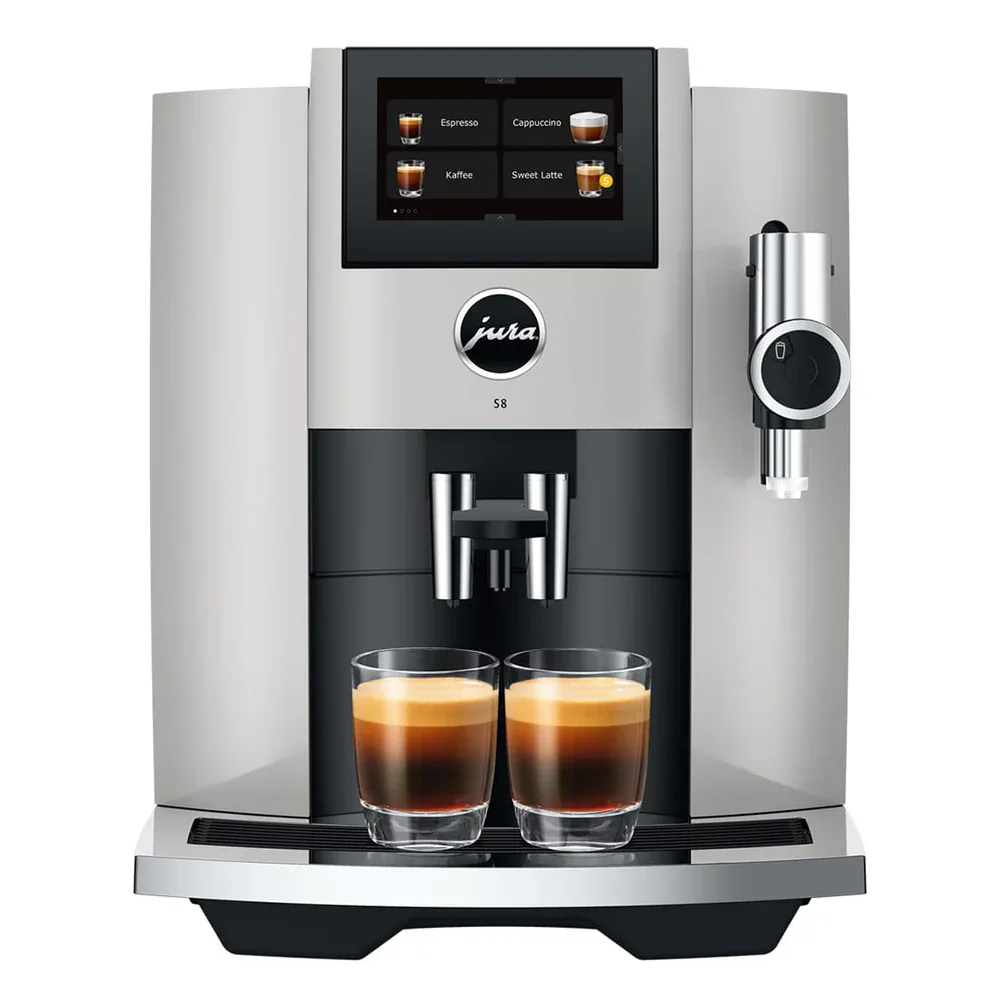
The evolution of home coffee preparation has shifted from manual craft to advanced thermodynamic engineering. Superautomatic espresso machines that replicate the complex physical variables of commercial execution within a compact framework. Replicating professional barista sensory profiles requires more than mechanical components; it demands algorithmic synchronisation of pressure, temperature, and fluid dynamics. Modern premium systems leverage embedded microcontrollers to manage fluid variables, optimizing oil emulsification and solute dissolution from coffee matrices.
Among contemporary superautomatic appliances, the Jura S8 stands out for incorporating computational fluid dynamics into consumer machinery. By translating hydraulic principles into firmware instructions, this platform bridges the gap between manual precision and automated repeatability. Achieving optimal extraction requires navigating complex physical challenges, including hydrostatic resistance, transient thermal gradients, and variable puck density. Examining internal fluid pathways reveals how automated machines transform simple water transit into a highly controlled exercise in precision physics.
Fluid Mechanics of the Pulse Extraction Process
Traditional espresso extraction utilizes a continuous, linear pressure profile, forcing water through the coffee puck at nine bars. While effective commercially, linear profiles face limitations in domestic superautomatics with smaller brewing chambers. Continuous fluid flow through compact puck geometries can induce localized channelling, where water carves paths of least resistance. Channeling creates a bifurcated extraction: over-extracted bitter compounds dissolve along channels, while bypassed coffee remains under-extracted, flattening flavor profiles.
To address this issue, the premium automated coffee appliance engineered by Jura utilizes an alternating hydraulic rhythm during short specialty extractions. Rather than maintaining a rigid stream, the system pulses hot water through freshly ground coffee at calculated micro-intervals. This non-linear fluid delivery strategy allows hydrostatic pressure inside the brewing chamber to rise and fall dynamically. These rapid pressure pulses destabilize nascent channels, forcing water to diffuse evenly across the compressed puck for uniform solute extraction.
This rhythmic extraction technique fundamentally redefines how espresso crema forms. Crema is a complex colloidal foam generated by emulsifying insoluble coffee oils into water, stabilized by microscopic gas bubbles. Rapid pressure cycles optimize gas-liquid boundary interactions, locking carbon dioxide bubbles inside the liquid emulsion rather than letting them escape. This precise control over fluid velocity yields a dense crema and elevates the mouthfeel of ristrettos and espressos beyond traditional standards.
Thermoblock Architecture and Microprocessor Optimization
Fluid dynamics cannot be decoupled from thermodynamic stability. During extracellular action, hot water acts as the primary thermal transport vector, and temperature fluctuations of a single degree alter the dissolution rate of volatile compounds. Superautomatic systems utilise low-mass thermoblock heating elements that flash-heat water on demand through a winding internal labyrinth. Controlling the thermal trajectory inside a low-mass heater presents a challenge, as cold water entering the system rapidly drains heat from aluminium walls.
The microprocessor architecture within the Jura S8 handles this by executing continuous PID feedback loops that monitor internal sensors hundreds of times per second. By analysing flow rates from the turbine flowmeter, the controller modulates the heating element's electrical duty cycle. This real-time synchronisation ensures that water moving through the brewing cylinder maintains an unwavering thermal state, preventing sour notes from underheating and harsh bitterness from unexpected thermal spikes.
Variable Brewing Mechanics and Hydraulic Compaction
The mechanical core of automated brewing relies on a variable cylinder chamber adjusting to different coffee volumes. When the internal grinder delivers ground coffee into the brewing unit, a mechanical piston compresses the particulate matrix. The density and geometry of this puck serve as the primary hydraulic restriction against incoming water flow. The machine manages this relationship through active pre-infusion, wetting grounds with low-pressure water before high-pressure extraction begins.
This pre-infusion triggers cellular swelling within the coffee matrix, closing microscopical structural gaps and normalizing hydraulic resistance across the puck. As the main pump engages, the micro-infusion system monitors mechanical resistance against the piston to evaluate puck permeability. If the grind is exceptionally fine, the computer recalibrates its volumetric delivery to maintain ideal flow velocity. This dynamic feedback loop prevents extraction choking, ensuring a stable fluid trajectory regardless of natural bean variations.
Conclusion: The Engineering of Superautomatic Perfection
The computational integration of precision fluid dynamics marks a major evolutionary milestone for home espresso systems. By converting the variable physics of manual extraction into predictable, algorithmically regulated workflows, modern superautomatics eliminate human error while preserving cup quality. Rhythmic extraction intervals, adaptive pre-infusion cycles, and microsecondsond thermal monitoring turn a highly volatile chemical reaction into a repeatable science.
Ultimately, platforms like the Jura S8 demonstrate that automated luxury is built on a foundation of rigorous engineering. Homeowners seeking café-quality beverages no longer need to master manual tamp pressures or complex pre-infusion profiles. Through careful optimization of hydraulic flow states, real-time feedback loops, and advanced material science, computational espresso systems reliably deliver the full aromatic spectrum of specialty coffee at the single touch of a button.