One of the biggest fears among students and job seekers today is uncertainty. Technologies keep changing, new frameworks appear every year, and many learners worry whether the skills they are learning today will still be useful tomorrow. In such a fast-moving industry, the real challenge is not getting your first job, but building a career that lasts.
This is where Java Full Stack Development stands out. And when this powerful skillset is taught through a Java Full Stack Course in Telugu, learners gain clarity, confidence, and a strong base that helps them adapt to future technologies easily.
This blog explains how Java Full Stack skills support long-term career growth, why Telugu-based learning strengthens fundamentals, and how this course helps you stay relevant in the IT industry for years.
The Reality of the IT Industry: Change Is Constant
The IT industry is dynamic by nature. Tools change, frameworks evolve, and project requirements shift frequently. Developers who rely only on shortcuts or trend-based skills often struggle when the market changes.
Long-term success in IT depends on:
- Strong fundamentals
- Ability to learn new tools quickly
- Clear understanding of system design
- Confidence in problem-solving
- Adaptability to new technologies
Java Full Stack Development focuses on exactly these strengths.
Why Java Full Stack Is Built for Career Longevity
Java is not a temporary technology. It has remained relevant for decades and continues to evolve with the industry.
Java Full Stack Development supports long-term careers because:
- Java is used in enterprise and large-scale systems
- Spring Boot adapts well to modern architectures
- Java concepts apply to many other languages
- Backend logic principles remain constant
- Java developers can easily shift to new frameworks
Instead of locking you into one tool, Java Full Stack trains you in core software engineering principles.
Why Learning in Telugu Strengthens Long-Term Understanding
Many learners believe that learning only in English is necessary for success. In reality, understanding matters more than the language of instruction.
Telugu Builds Deep Conceptual Clarity
When concepts like OOPs, system flow, backend architecture, and database design are explained in Telugu, learners understand why systems work the way they do.
Less Mental Load, More Focus
You focus on logic and structure instead of translating explanations.
Better Retention Over Time
Concepts learned clearly stay with you longer and help you learn new technologies faster.
Smooth Transition to English Environments
Once logic is strong, expressing ideas in English becomes easier and more confident.
Java Full Stack Course Structure That Supports Future Growth
A well-designed Java Full Stack Course in Telugu is not about finishing topics quickly—it is about building skills that scale with your career.
Core Java: The Backbone of Adaptability
Core Java teaches how programming works at a fundamental level.
You will learn:
- Java syntax and structure
- JVM execution process
- Variables, memory, and data handling
- Control statements and loops
- Arrays and strings
- Object-Oriented Programming principles
- Exception handling
- Collections framework
- Multithreading basics
- Java 8 features
Once you master these, learning any future backend language becomes easier.
Frontend Basics: Understanding the Complete System
Frontend skills help you understand how users interact with systems.
You will learn:
- HTML for structure
- CSS for layout and responsiveness
- JavaScript basics
- Responsive design principles
- Client-side validations
This knowledge helps you collaborate with frontend teams and design better backend logic.
Backend Development: Skills That Never Go Outdated
Backend development principles remain stable over time.
You will learn:
- JDBC for database connectivity
- Servlets and JSP concepts
- Spring framework fundamentals
- Spring MVC architecture
- Spring Boot project structure
- REST API development
- Request–response lifecycle
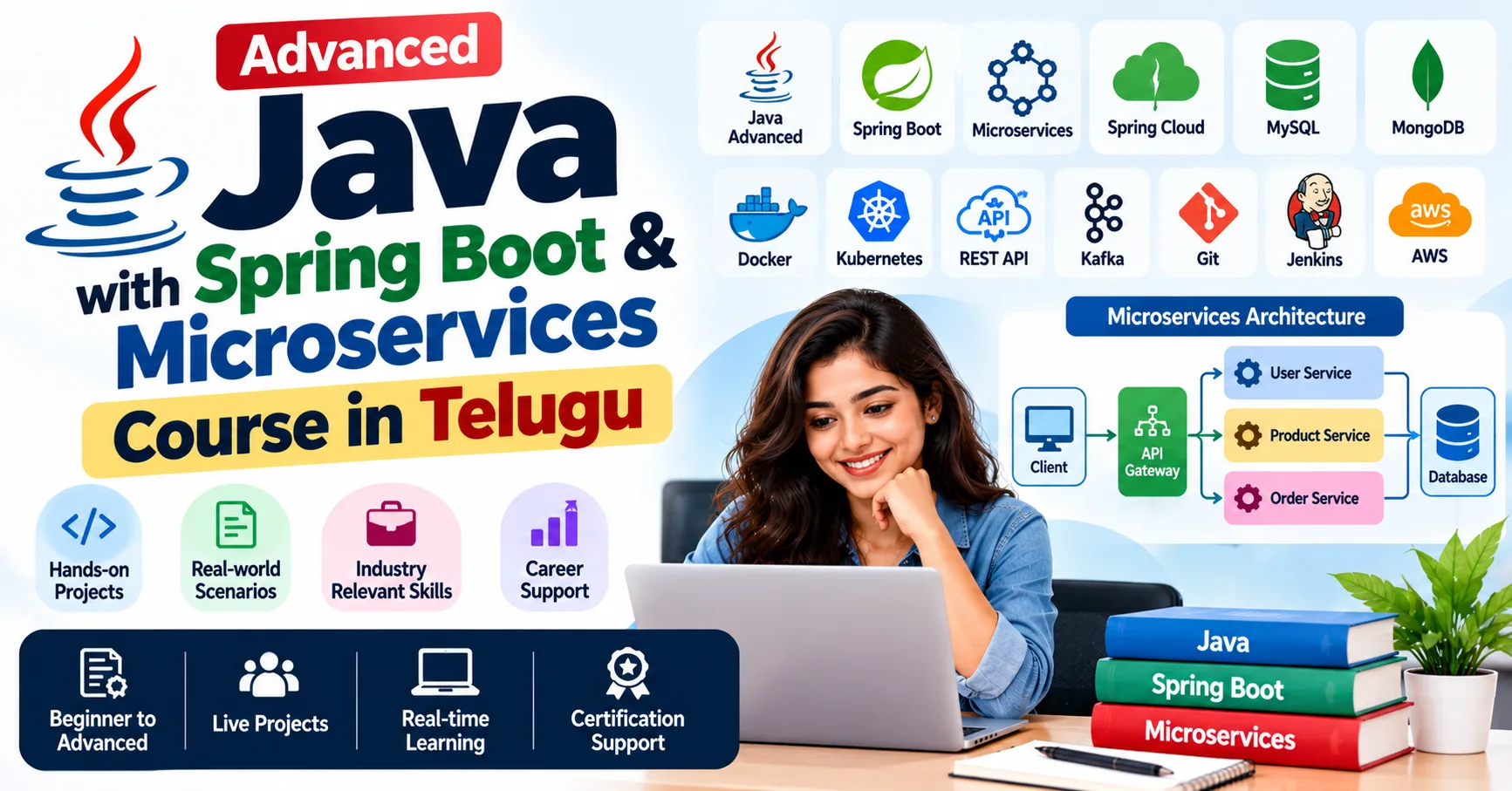
- Introduction to microservices
Even if frameworks change, these principles stay relevant.
Database Management: Core Data Skills
Data handling is essential in every generation of applications.
You will learn:
- SQL fundamentals
- Database design principles
- MySQL or PostgreSQL
- CRUD operations
- Joins and indexing
- Hibernate and JPA
Database skills apply across technologies and industries.
Tools and Workflow: Industry-Standard Practices
Tools change slowly, but workflows remain similar.
You will learn:
- Git and GitHub
- Maven or Gradle
- IDE usage and productivity tips
- Postman for API testing
- Basics of deployment concepts
These practices prepare you for real-world team environments.
Real-Time Projects: Skills That Grow With You
Projects help you understand how systems evolve.
Typical projects include:
- Student Management System
- Employee Payroll Application
- Online Shopping Application
- REST API-based Full Stack project
Projects teach:
- Code organization
- Feature enhancement
- Bug fixing
- Application scaling concepts
These skills remain valuable throughout your career.
How Java Full Stack Helps You Adapt to Future Technologies
Once you understand Java Full Stack deeply, learning new technologies becomes easier.
Examples:
- Learning cloud platforms becomes simpler
- Moving to microservices or event-driven systems is smoother
- Understanding DevOps concepts becomes easier
- Shifting to other backend languages feels natural
This adaptability is what separates long-term professionals from short-term learners.
Who Should Choose This Course?
This course is ideal for:
- Engineering students
- Degree and BSc students
- Fresh graduates
- Job seekers
- Working professionals
- Career switchers
- Beginners with zero coding knowledge
- Telugu-medium background learners
What matters is commitment, not background.
Career Roles Over Time
Java Full Stack skills grow with experience.
Career progression may look like:
- Junior Java Developer
- Java Full Stack Developer
- Backend Developer
- Senior Software Engineer
- Technical Lead
- Solution Architect
Few technologies offer this level of long-term growth.
Salary Growth and Stability
Approximate salary ranges in India:
- Freshers: ₹3 – ₹6 LPA
- 2–4 years: ₹7 – ₹12 LPA
- Senior roles: ₹15 LPA and above
Stable technologies provide consistent income growth.
How to Build a Sustainable IT Career
- Focus on fundamentals
- Avoid rushing through topics
- Practice consistently
- Improve projects over time
- Learn system design gradually
- Stay curious and adaptable
Sustainable growth always beats quick success.
Final Conclusion
A Java Full Stack Course in Telugu is not just about getting a job—it is about building a career that lasts through change. Telugu-based learning strengthens fundamentals, while Java Full Stack skills provide adaptability, stability, and long-term relevance.