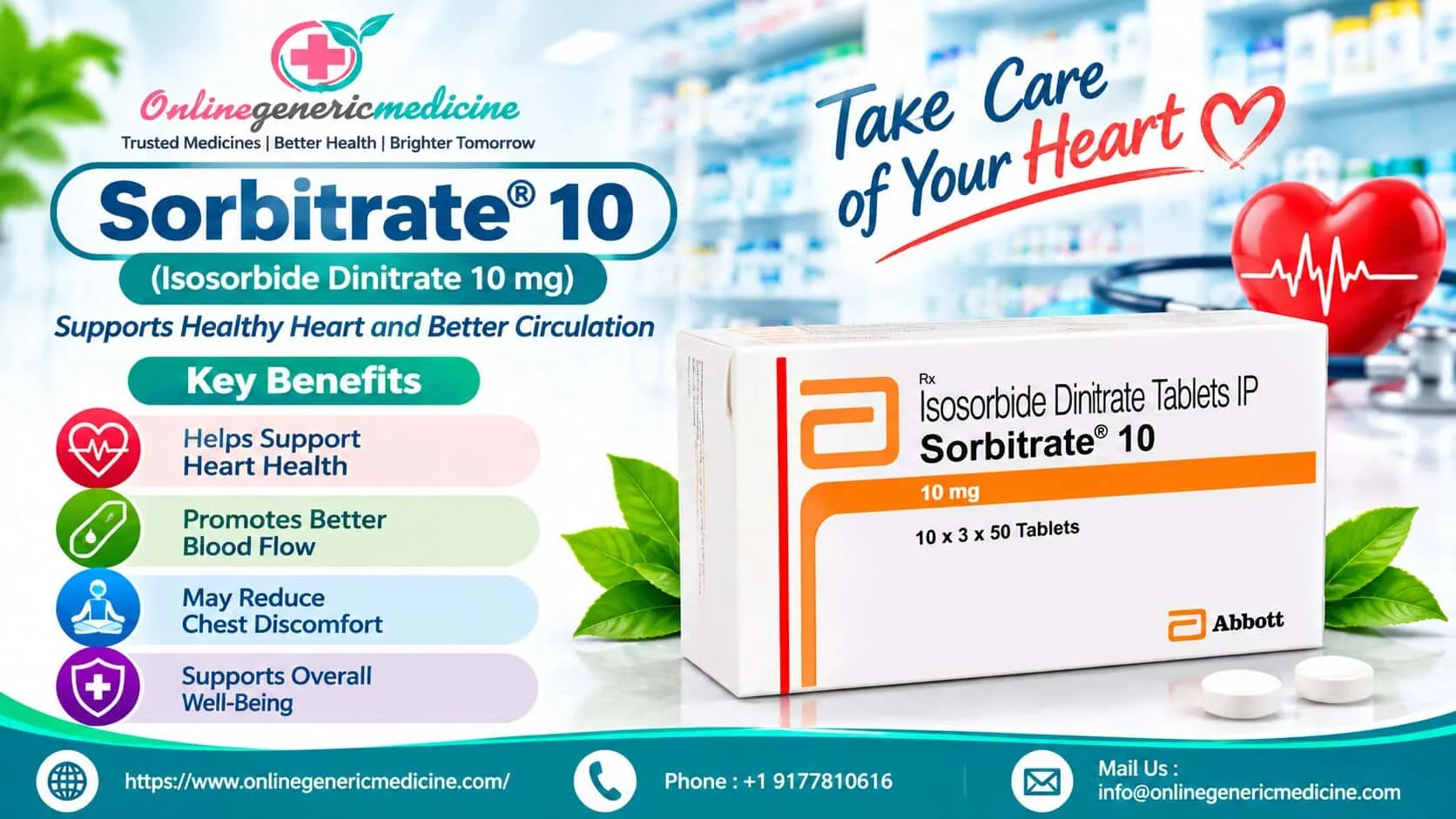
Introduction to Isosorbide Dinitrate
Isosorbide Dinitrate is a medication belonging to a group of medicines known as nitrates. It is commonly prescribed for the prevention and management of angina, a type of chest discomfort associated with reduced blood flow and oxygen supply to the heart muscle. It works by relaxing blood vessels, allowing blood to circulate more easily and reducing the workload on the heart.
Understanding Isosorbide Dinitrate, its uses, dosage forms, working mechanism, possible side effects, and precautions is important for individuals who have been prescribed this medication. Learning about its properties can also help patients understand why following medical instructions is an essential part of treatment.
This article provides general information about Isosorbide Dinitrate, including its role in cardiovascular care and the factors that should be considered during its use.
What Is Isosorbide Dinitrate?
Isosorbide Dinitrate is a nitrate-based medicine used primarily to prevent and manage angina pectoris. Angina occurs when the heart muscle does not receive enough oxygen-rich blood to meet its requirements.
The medication works by relaxing smooth muscles in the walls of blood vessels. This process causes blood vessels to widen, which can improve circulation and reduce the amount of work the heart needs to perform.
Depending on the prescribed formulation, Isosorbide Dinitrate may be available as conventional tablets, sublingual tablets, or other dosage forms. Different formulations have different absorption rates and durations of action.
What Is Isosorbide Dinitrate Used For?
Isosorbide Dinitrate is primarily prescribed for cardiovascular conditions involving angina.
Its medical applications include:
1. Prevention of Angina
Angina may develop when the heart muscle receives insufficient oxygen. Isosorbide Dinitrate helps reduce the heart's oxygen demand by relaxing blood vessels and decreasing the workload on the heart.
Certain oral formulations are prescribed regularly to help prevent episodes of angina.
2. Management of Coronary Artery Disease
Coronary artery disease develops when the arteries supplying blood to the heart become narrowed or obstructed. This can reduce oxygen delivery to the heart muscle.
Isosorbide Dinitrate may be included in a treatment plan to manage angina symptoms associated with coronary artery disease.
3. Cardiovascular Treatment Plans
In selected circumstances, healthcare professionals may use nitrate medications as part of a broader cardiovascular treatment approach. The choice of medication depends on the patient's condition, symptoms, medical history, and other treatments.
How Does Isosorbide Dinitrate Work?
Isosorbide Dinitrate works by releasing nitric oxide-related activity within the body. This activates an enzyme pathway that increases cyclic guanosine monophosphate (cGMP) in vascular smooth muscle cells.
The increased cGMP helps relax the smooth muscles in blood vessel walls, resulting in vasodilation.
The main effects include:
- Relaxation of blood vessels.
- Reduced pressure in the heart's filling chambers.
- Lower cardiac workload.
- Reduced oxygen requirements of the heart muscle.
- Improved circulation in the cardiovascular system.
The medication has a stronger effect on veins than on arteries at commonly used doses. This reduces the amount of blood returning to the heart and decreases cardiac workload.
Different Forms of Isosorbide Dinitrate
Isosorbide Dinitrate may be supplied in different dosage forms. Each formulation has a particular purpose and pattern of absorption.
1. Oral Tablets
Oral tablets are generally prescribed for scheduled use. They are commonly used to help prevent angina episodes.
2. Sublingual Tablets
Sublingual tablets are placed under the tongue, where the medicine is absorbed through the oral tissues. They have a faster onset than conventional swallowed tablets.
The prescribed formulation and instructions should always be checked before administration.
3. Other Formulations
Availability varies between countries and manufacturers. The formulation, strength, and release characteristics should be verified from the product packaging and prescribing information.
Isosorbide Dinitrate Dosage Information
The appropriate dosage depends on several individual factors, including:
- The condition being treated.
- The formulation and strength.
- The patient's age.
- Overall cardiovascular health.
- Other medications being taken.
- Response to treatment.
- Blood pressure and other clinical measurements.
Healthcare professionals determine the appropriate dose and administration schedule.
Patients should not change the prescribed dose, increase the frequency, or stop treatment without consulting their healthcare professional.
Different formulations are not necessarily interchangeable because their absorption and duration of action can vary.
Importance of a Nitrate-Free Interval
One important consideration with long-term nitrate treatment is the development of tolerance.
Nitrate tolerance occurs when the body becomes less responsive to the medication after continuous exposure. This can reduce its effectiveness over time.
To address this issue, healthcare professionals may prescribe a daily nitrate-free interval for certain formulations.
The timing and duration of this interval depend on the individual treatment plan. Patients should not adjust their medication schedule independently.
Possible Side Effects of Isosorbide Dinitrate
Like other medicines, Isosorbide Dinitrate may cause side effects. Their frequency and severity vary between individuals.
Commonly reported effects include:
- Headache.
- Dizziness.
- Flushing.
- Low blood pressure.
- Light-headedness.
- Nausea.
- Weakness.
Headaches may occur because the medicine causes blood vessels to widen.
Some people may experience dizziness when standing up quickly. Moving slowly between sitting and standing positions can help reduce the likelihood of sudden light-headedness.
Serious Side Effects
In some cases, more serious reactions may occur, including severe hypotension, fainting, or an unusually rapid heartbeat.
Seek prompt medical attention if serious symptoms develop.
New, severe, or persistent chest pain requires emergency medical assessment. Isosorbide Dinitrate should not be relied upon as a substitute for emergency treatment.
Important Precautions Before Taking Isosorbide Dinitrate
Before starting treatment, patients should provide their healthcare professional with information about their medical history and current medicines.
Important precautions include:
1. Low Blood Pressure
Isosorbide Dinitrate can lower blood pressure. People who already have low blood pressure may require additional assessment and monitoring.
2. Heart Conditions
Certain cardiovascular conditions require careful evaluation before nitrate treatment. The healthcare professional should review the patient's diagnosis and overall heart function.
3. Liver and Kidney Conditions
People with significant liver or kidney conditions should discuss their medical history with their healthcare professional before beginning treatment.
4. Pregnancy and Breastfeeding
Anyone who is pregnant, planning pregnancy, or breastfeeding should seek medical advice before using this medication. The potential benefits and risks need to be evaluated individually.
5. Alcohol Consumption
Alcohol can increase the blood-pressure-lowering effects of nitrates. Combining alcohol with Isosorbide Dinitrate may increase the risk of dizziness or fainting.
Drug Interactions
Isosorbide Dinitrate can interact with other medicines. Certain combinations may cause a significant reduction in blood pressure.
Particular care is required with:
PDE-5 inhibitors: Medicines such as sildenafil, tadalafil, and vardenafil must not be combined with nitrate medications because the combination can cause a potentially dangerous fall in blood pressure.
Other blood-pressure medicines: Certain antihypertensive medicines may increase the blood-pressure-lowering effect.
Other nitrate preparations: Taking multiple nitrate-containing products may increase the risk of excessive vasodilation and hypotension.
Alcohol: Alcohol may increase dizziness and low blood pressure.
Patients should provide a complete list of prescription medicines, non-prescription products, and supplements to their healthcare professional.
Isosorbide Dinitrate and Isosorbide Mononitrate: Understanding the Difference
Both medicines belong to the nitrate group and are used in cardiovascular care. However, they have differences in their chemical structure and pharmacological properties.
FeatureIsosorbide DinitrateIsosorbide MononitrateDrug categoryOrganic nitrateOrganic nitrateMain useAngina prevention and managementAngina preventionFormulationsMultiple formulationsMultiple formulationsAbsorptionDepends on formulationGenerally predictable oral absorptionMetabolismUndergoes metabolism to active metabolitesLess extensive first-pass metabolismAlthough they are related, these medications should not be substituted for one another without medical advice.
Lifestyle Considerations for Cardiovascular Health
Medication is only one part of cardiovascular care. Appropriate lifestyle habits can support overall heart health.
Some useful measures include:
- Following a balanced diet with vegetables, fruits, and whole grains.
- Maintaining regular physical activity as advised by a healthcare professional.
- Avoiding tobacco products.
- Monitoring blood pressure and cholesterol.
- Maintaining a healthy body weight.
- Managing stress.
- Getting sufficient sleep.
- Attending scheduled medical appointments.
People with angina should discuss suitable exercise levels with their healthcare professional before starting a new physical activity programme.
Storage and Handling Information
Proper storage helps maintain the quality of Isosorbide Dinitrate.
General storage recommendations include:
- Keep the medication in its original packaging.
- Store it according to the manufacturer's instructions.
- Protect it from excessive heat and moisture.
- Keep it away from direct sunlight when required by the product instructions.
- Store it out of the reach of children.
- Do not use tablets beyond their expiry date.
Specific storage requirements may differ between manufacturers and dosage forms.
Frequently Asked Questions About Isosorbide Dinitrate
1. What is Isosorbide Dinitrate mainly used for?
It is mainly prescribed to prevent and manage angina associated with reduced blood flow to the heart muscle.
2. Is Isosorbide Dinitrate a nitrate medication?
Yes. It belongs to the organic nitrate group and works by relaxing blood vessels.
3. Does Isosorbide Dinitrate lower blood pressure?
Yes. It causes blood vessels to widen, which can lower blood pressure. Some individuals may experience dizziness or light-headedness.
4. Can Isosorbide Dinitrate cause headaches?
Yes. Headache is a commonly reported side effect and is associated with the medication's blood-vessel-relaxing action.
5. Can Isosorbide Dinitrate be taken with sildenafil?
No. Isosorbide Dinitrate must not be combined with sildenafil or other PDE-5 inhibitors because the combination can cause a dangerous drop in blood pressure.
6. Is Isosorbide Dinitrate used for immediate chest pain?
Different formulations have different onset times and intended uses. Sublingual formulations act faster than conventional oral tablets. Follow the specific medical instructions, and seek emergency care for new or severe chest pain.
7. Can Isosorbide Dinitrate be stopped suddenly?
Patients should not discontinue prescribed treatment without medical advice. A healthcare professional can determine the appropriate treatment plan and any necessary changes.
8. What is the difference between Isosorbide Dinitrate and Nitroglycerin?
Both are nitrate medications that relax blood vessels and are used in angina management. However, they differ in their pharmacological properties, formulations, and duration of action.
Conclusion
Isosorbide Dinitrate is an important medication in cardiovascular care, particularly for the prevention and management of angina. Its main action involves relaxing blood vessels, reducing the workload on the heart, and lowering the heart muscle's oxygen requirements.
Understanding its uses, formulations, dosage considerations, side effects, and drug interactions can help patients follow their treatment plans more responsibly.
Medical supervision is essential when using Isosorbide Dinitrate, particularly because of its effects on blood pressure and its potentially serious interactions with certain medications. Following professional instructions, maintaining regular health check-ups, and adopting appropriate lifestyle habits are important aspects of long-term cardiovascular care.