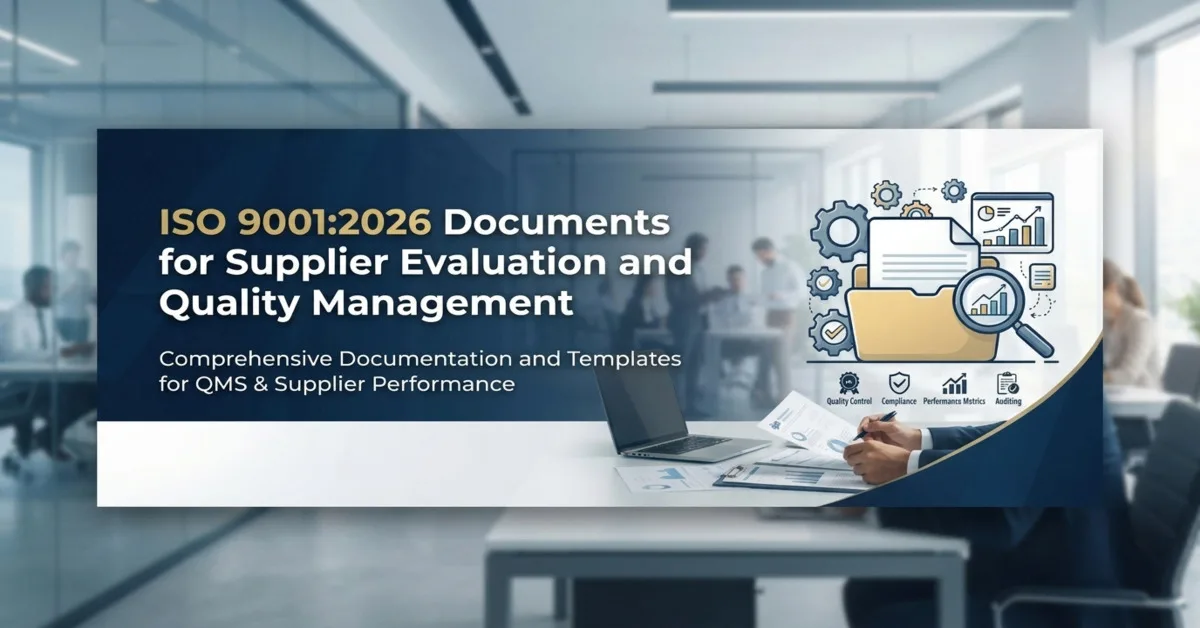
Suppliers play an important role in maintaining product quality, meeting customer requirements, and ensuring consistent business operations. Organizations need a structured approach to selecting suppliers, evaluating their performance, and maintaining reliable purchasing controls. ISO 9001:2026 documents can help businesses organize these activities and establish a more consistent quality management system (QMS).
Why Is Supplier Evaluation Important in ISO 9001:2026?
Supplier evaluation helps organizations determine whether external providers can consistently meet specified requirements. Poor supplier performance may lead to defective materials, delivery delays, increased costs, and customer complaints.
ISO 9001:2026 emphasizes effective operational control and the evaluation of quality management system performance. Organizations should establish appropriate criteria for evaluating, selecting, monitoring, and re-evaluating external providers according to their impact on product and service conformity.
A documented supplier evaluation process helps purchasing teams make informed decisions and maintain evidence of supplier performance.
Essential Documents for Supplier Evaluation
A well-organized supplier management process may include several practical documents and records, depending on the organization's activities and applicable requirements.
- Supplier evaluation forms: Record supplier capabilities, product quality, delivery performance, and other relevant selection criteria.
- Approved supplier list: Maintain details of suppliers authorized for purchasing activities.
- Supplier performance records: Track delivery reliability, nonconforming materials, complaints, and corrective actions.
- Purchasing procedures: Define responsibilities for supplier selection, purchasing approvals, and verification of purchased products or services.
- Incoming inspection records: Document inspection results where verification is necessary to confirm conformity.
- Corrective action records: Record supplier-related problems, investigation findings, and follow-up actions when appropriate.
These documents should reflect the organization's actual processes rather than creating unnecessary paperwork. Clear responsibilities, consistent evaluation criteria, and reliable records make supplier management more effective.
For a broader understanding of QMS documentation, read our guide to ISO 9001:2026 documents businesses should prepare, which explains the key documentation organizations should consider when preparing their quality management system.
How to Improve Supplier Evaluation and Quality Control
Start by identifying suppliers whose products or services can significantly affect quality. Establish evaluation criteria that match the level of risk and operational importance. For example, a manufacturer may consider material conformity, delivery reliability, technical capability, and responsiveness to quality issues.
Review supplier performance at suitable intervals and retain records of important decisions. When problems occur, communicate the findings to the supplier and determine whether corrective action or re-evaluation is necessary.
Organizations should also control revisions to supplier forms and purchasing procedures so employees use current, approved documents. Regular internal audits can help identify weaknesses in supplier monitoring and purchasing controls.
Simplify QMS Implementation with Editable Documentation
Preparing quality manuals, procedures, forms, and audit records from scratch can require considerable time and effort. A structured documentation package gives organizations a practical starting point and helps them organize their quality management activities.
Explore the ISO 9001:2026 documents to simplify quality management system implementation. The documentation package includes editable Microsoft Word manuals, procedures, work instructions, forms, process flowcharts, and internal audit checklists. Customize the documents to match your organization's processes, supplier evaluation practices, and quality management requirements.
The documents can be customized to suit your organization's processes, supplier management practices, and operational requirements. Reviewing the available product demo can help you understand the document structure and determine whether the package meets your needs.
Conclusion
Effective supplier evaluation supports consistent quality, stronger purchasing controls, and better supplier relationships. By establishing suitable evaluation criteria, maintaining relevant records, and reviewing supplier performance, organizations can strengthen their quality management system.
Choose practical, customizable documentation that supports your actual business processes and helps your team manage supplier quality more efficiently and compliance.