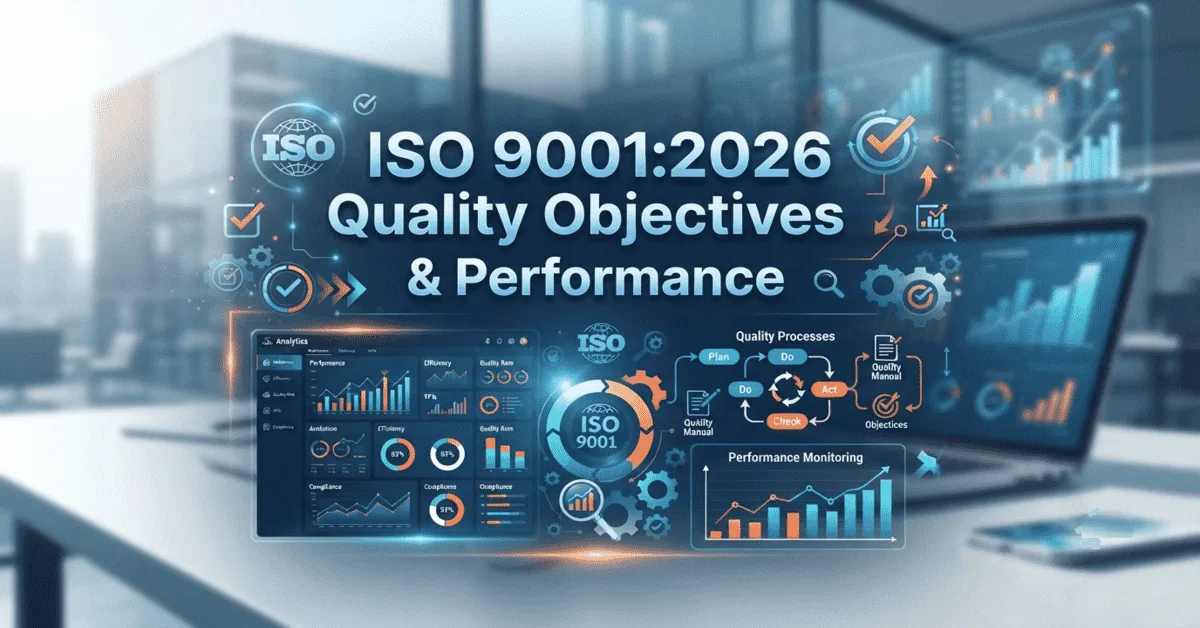
Monitoring quality objectives and process performance is essential for maintaining an effective Quality Management System (QMS). Organizations must establish measurable targets and evaluate whether their processes achieve the expected results. For manufacturers, service providers, and other businesses, structured ISO 9001:2026 documents help maintain records, identify performance gaps, improve efficiency, and support informed decisions.
The ISO 9001:2026 quality objectives approach encourages organizations to establish measurable targets that align with their quality policy and business direction. Proper documentation should make it easier to track progress, evaluate results, and demonstrate that planned quality activities are being implemented effectively.
Establishing Measurable Quality Objectives
Quality objectives should reflect actual operations, customer expectations, and improvement priorities. Instead of setting general goals such as improving product quality, businesses should establish measurable targets that can be evaluated over a defined period.
Examples include reducing product defects, improving on-time delivery, minimizing customer complaints, and increasing production efficiency. Each objective should have assigned responsibilities, required resources, a completion period, and an evaluation method.
Organizations should maintain documented information about their objectives and plans. A quality objectives register or monitoring format helps managers review progress and identify areas requiring attention.
Monitoring ISO 9001:2026 Process Performance
Effective process monitoring helps organizations understand whether activities are operating as planned. It involves identifying suitable indicators, collecting relevant information, and evaluating results against established criteria.
Manufacturers may monitor production rejection rates, equipment downtime, rework percentages, and order delivery performance. Service organizations may evaluate response times, customer feedback, complaint resolution, and service completion rates.
Clearly defined process interactions also help identify operational gaps. Understanding ISO 9001:2026 process mapping and risk control can further support effective process monitoring and improvement.
Businesses should select indicators that provide meaningful information about their processes. Regular monitoring helps identify recurring problems before they affect customer satisfaction or business performance.
Essential Documents for Tracking Quality Performance
Organized records make performance evaluation more consistent. Depending on their activities, organizations should maintain relevant documents and formats, such as:
- Quality Objectives Register: Records measurable targets, responsibilities, timelines, and progress.
- KPI Monitoring Format: Tracks performance indicators against planned targets.
- Process Performance Report: Summarizes process results, trends, and improvement areas.
- Quality Monitoring Records: Maintain relevant inspection, testing, and operational information.
- Management Review Records: Document performance discussions, decisions, and follow-up actions.
- Corrective Action Records: Track problems, root causes, corrective actions, and effectiveness reviews.
These documents should reflect actual processes rather than create unnecessary paperwork. ISO 9001:2026 documentation requirements should be addressed by maintaining the information needed for effective QMS operation and evidence of results.
Reviewing Results and Improving QMS Performance
Collecting performance data is useful only when management evaluates and acts on the findings. Organizations should periodically compare actual results with established quality objectives, investigate significant deviations, and determine whether improvement actions are necessary.
Management reviews should provide opportunities to evaluate quality performance, customer satisfaction, process effectiveness, and improvement opportunities. Clear records of these reviews should help ensure that decisions are followed by appropriate actions.
A well-organized ISO 9001:2026 quality management system should connect quality objectives, process monitoring, performance evaluation, and continual improvement. This approach helps businesses make better decisions and maintain consistent operational results.
Preparing Effective ISO 9001:2026 Documentation
Preparing QMS documentation from scratch can require considerable time and effort. Organizations should consider using structured ISO 9001:2026 documents that include editable manuals, procedures, SOPs, process flowcharts, forms, and audit checklists.
Professionally prepared documentation can provide a useful starting point for developing quality objectives registers, KPI monitoring formats, process performance reports, and other QMS records. Businesses should review these resources, customize them according to their activities, and ensure that the documented processes reflect actual implementation.
The right documentation approach should help organizations reduce preparation time, maintain consistent records, evaluate quality performance, and continually improve their Quality Management System.