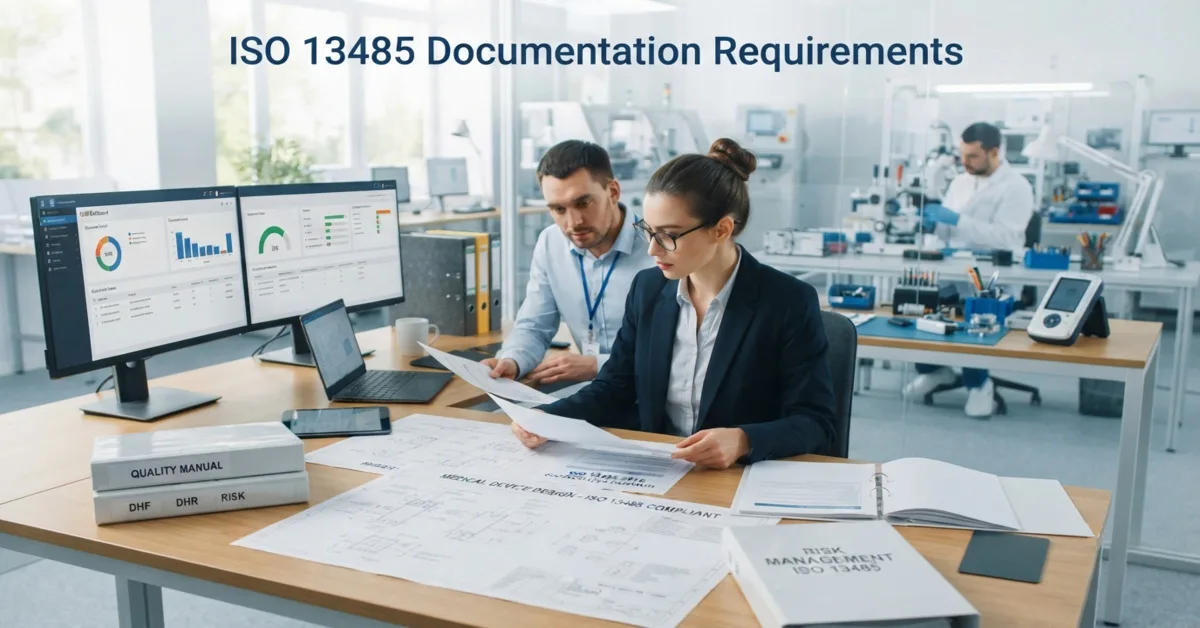
Medical device manufacturers need a well-structured quality management system (QMS) to maintain product quality, manage risks, and meet applicable regulatory requirements. Understanding ISO 13485 documentation requirements helps organizations identify which documents and records are needed to control processes, demonstrate conformity, and prepare for certification audits.
ISO 13485 specifies quality management system requirements for organizations involved in the design, production, storage, distribution, installation, and servicing of medical devices, as applicable to their activities. Its main auditable requirements are covered in Clauses 4 to 8.
Clause 4: Quality Management System Documentation
Clause 4 establishes the foundation of the QMS. Organizations need appropriate documented processes, a quality manual, and a medical device file for each device type or family. Document control and record control are also essential.
Typical documentation includes the quality manual, document control procedure, record control procedure, process descriptions, and medical device specifications. These documents help ensure that approved information is available and records remain identifiable, protected, and retrievable.
Clause 5: Management Responsibility
Clause 5 focuses on leadership, quality planning, responsibilities, communication, and management review. Documentation should demonstrate how management supports the QMS and evaluates its effectiveness.
Relevant records may include the quality policy, quality objectives, organizational responsibilities, management review minutes, and assigned authorities. Maintaining these records helps organizations track quality performance and document decisions about improvement.
Clause 6: Resource Management
Clause 6 addresses the resources needed to operate an effective QMS, including personnel competence, infrastructure, and the work environment. Medical device manufacturers must determine and maintain appropriate resources for their operations.
Common records include employee training and competency records, equipment maintenance logs, infrastructure records, and environmental monitoring records where applicable. Organizations handling sterile medical devices or contamination-sensitive processes may need additional controls based on applicable requirements.
Clause 7: Product Realization
Clause 7 covers the processes involved in bringing medical devices to production and delivery. It includes planning, customer requirements, design and development, purchasing, production, traceability, and monitoring and measuring equipment.
Depending on the organization's activities, relevant ISO 13485 documents may include design and development plans, verification and validation records, supplier evaluation forms, purchasing records, production instructions, inspection reports, device traceability records, and calibration records.
These documents help demonstrate that product requirements are defined, risks are managed, and manufacturing activities are controlled. Organizations should tailor their documentation to the devices they produce and the regulatory requirements that apply.
Clause 8: Measurement, Analysis, and Improvement
Clause 8 focuses on monitoring QMS performance, identifying problems, and implementing corrective actions. It includes feedback, complaint handling, internal audits, nonconforming products, data analysis, and corrective and preventive action (CAPA).
Supporting records may include internal audit schedules, audit checklists, nonconformity reports, complaint records, CAPA forms, and trend analysis reports. Effective documentation helps organizations investigate issues, identify root causes, verify corrective action effectiveness, and support continual improvement.
Department-wise internal audits help verify whether quality procedures are followed consistently across different functions. Properly prepared ISO 13485 documents for department-wise audits can support systematic audit planning, evidence collection, and identification of nonconformities.
How to Organize ISO 13485 Documentation Effectively
A practical documentation system should clearly identify document owners, approval responsibilities, revision status, access controls, and record retention requirements. Procedures should reflect actual work practices rather than simply repeat standard requirements.
Using structured, editable ISO 13485 documents can help manufacturers organize quality manuals, procedures, forms, and records more efficiently. These resources can be adapted to the organization's processes, product range, and applicable regulatory obligations.
Conclusion
Understanding ISO 13485 documentation requirements clause by clause helps medical device manufacturers build a consistent, auditable QMS. By maintaining appropriate documents and reliable records across Clauses 4 to 8, organizations can improve process control, prepare for audits, and demonstrate conformity. The key is to implement documentation that supports real operations and meets applicable requirements, rather than relying on templates alone.