Introduction
When it comes to industrial surface preparation, choosing the right method can make or break your results. Whether you’re preparing metal for coating, cleaning concrete, or restoring machinery, the technique you use directly affects durability, finish quality, and cost-effectiveness.
But here’s the catch: many businesses are unknowingly sticking with outdated prep methods like sandpaper grinding, acid cleaning, or manual brushing — all of which waste time, increase costs, and compromise surface quality.
That’s where shot blasting machines step in. They’re not just an upgrade; they’re a game-changer. In this guide, we’ll explore why shot blasting outperforms traditional surface prep, share real-world case studies, and help you decide if it’s the right investment for your operations.
Why Surface Preparation Matters More Than You Think
Before coatings, paints, or treatments are applied, the surface must be perfectly cleaned and textured. A poorly prepped surface leads to:
- Premature coating failure
- Rust and corrosion issues
- Unnecessary rework and repair costs
- Shorter product lifespan
Traditional prep methods — such as wire brushing, sanding, or acid cleaning — may work for small projects but fall short in industrial applications. They’re time-consuming, inconsistent, and labor-intensive.
Shot blasting, on the other hand, delivers uniform cleaning and roughness in record time, ensuring coatings bond effectively and last longer.
What is Shot Blasting and How Does It Work?
Shot blasting is a surface preparation technique where abrasive media (steel shots, grit, or sand) are propelled at high velocity against the surface. This removes rust, scale, and contaminants while simultaneously creating the perfect texture for coatings.
Different machines serve different needs:
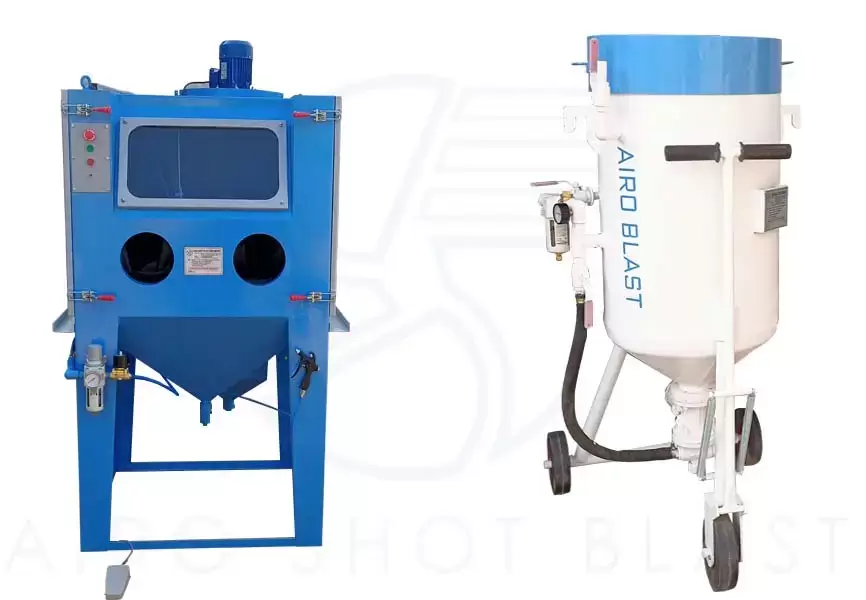
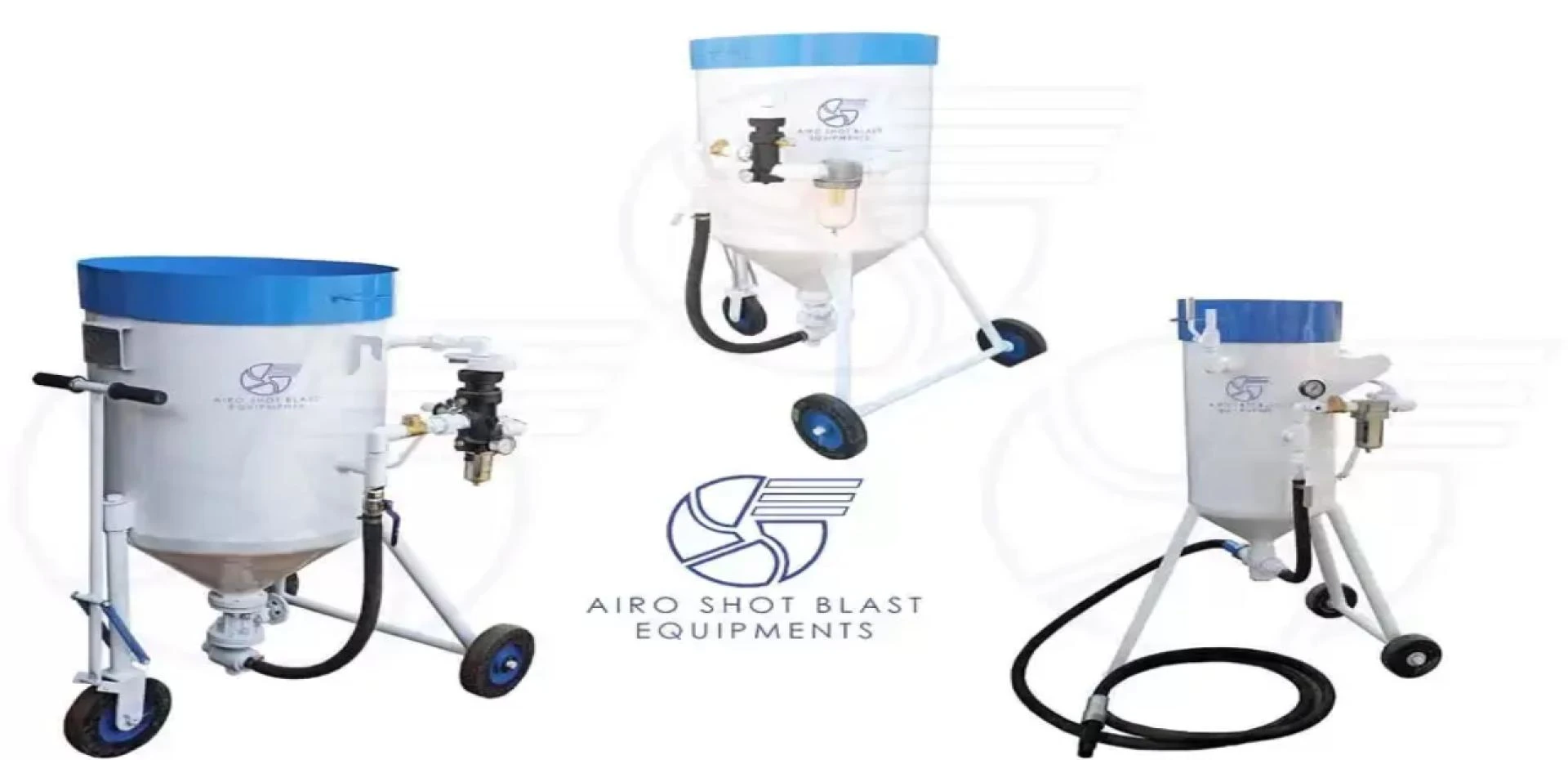
- Portable shot blasting machines – Best for on-site cleaning of bridges, tanks, or ship decks.
- Cabinet type machines – Ideal for precision parts like engine components or aerospace tools.
- Hanger type shot blasting machines – Used for bulk or batch cleaning of castings, forgings, and large parts.
- Tumble blast machines – Perfect for small, repetitive components.
By selecting the right machine, businesses can save time, cost, and manpower while achieving a superior finish.
Case Study: From Manual Grinding to Shot Blasting
A mid-sized fabrication company in India previously relied on manual grinding to clean welded structures before painting. Each piece took up to 45 minutes to prepare, and the results were inconsistent.
After switching to a hanger type shot blasting machine, the company cut prep time by 70%, reduced labor costs, and improved paint adhesion. Coatings now last longer, reducing warranty claims.
This real-world example shows how shot blasting pays for itself quickly, not just in efficiency but also in long-term durability.
Shot Blasting vs. Other Surface Prep Methods
Here’s how shot blasting compares to common alternatives:
Method Pros Cons Best Use Manual Brushing/Grinding Low cost, simple tools Inconsistent, slow, labor-heavy Small DIY projects Chemical Cleaning (Acid/Alkali) Removes rust/paint Hazardous, costly waste disposal Limited industrial use Sandblasting Effective cleaning Generates dust, environmental concerns Outdoor jobs Shot Blasting Fast, uniform, eco-friendly, long-lasting results Higher upfront machine cost Industrial-scale surface prep Clearly, for industries aiming for efficiency and quality, shot blasting is the superior choice. For more information Visit URL - https://www.sandblast.in/product/shot-blasting-machine-manufacturers
Key Benefits of Shot Blasting Machines
- Speed & Efficiency – Prepares surfaces in minutes instead of hours.
- Cost-Effective – Reduces labor, rework, and coating failures.
- Eco-Friendly – Recycles abrasive media multiple times, unlike sandblasting.
- Better Adhesion – Creates an ideal anchor profile for coatings.
- Versatility – Works on metals, concrete, composites, and more.
- Safety – Modern machines come with dust collectors and automation to protect workers.
Buyer’s Guide: Choosing the Right Shot Blasting Machine
If you’re considering an upgrade, here are key factors to evaluate:
- Type of Material – Steel, aluminum, concrete, or composites?
- Production Volume – Small batches vs. high-output operations.
- Surface Area & Geometry – Flat plates, pipes, or irregular parts.
- Automation Needs – Manual, semi-automatic, or PLC-controlled machines.
- Budget & ROI – Balance upfront cost with long-term savings.
Pro Tip: Always ask your shot blasting machine manufacturer for a demo or sample run to see how well the machine handles your specific application.
Real-World Applications of Shot Blasting
Shot blasting is widely used across industries:
- Automotive – Prepares chassis, engine blocks, and brake components.
- Construction – Cleans steel beams, rebars, and concrete surfaces.
- Shipbuilding – Removes corrosion and old coatings from hulls.
- Aerospace – Ensures precision cleaning for turbine blades and parts.
- Foundries & Fabrication – Removes casting scale, rust, and welding slag.
Common Misconceptions About Shot Blasting
- “It’s too expensive.” → While the machine cost is higher, the ROI is quick due to lower labor and reduced failures.
- “It damages surfaces.” → When properly set up, shot blasting enhances surface quality without harming the base material.
- “It’s outdated.” → In reality, modern shot blasting machines use automation and eco-friendly designs to meet current standards.
FAQs on Shot Blasting
Q1. What is the difference between sandblasting and shot blasting?
Sandblasting uses fine sand and creates dust, while shot blasting uses steel shots or grit, making it cleaner, safer, and more sustainable.
Q2. How often should I service a shot blasting machine?
Routine inspection every 3–6 months ensures efficiency. Critical parts like turbines and liners should be checked more frequently.
Q3. Can I use shot blasting for concrete floors?
Yes, it’s one of the most effective methods for floor cleaning, paint removal, and epoxy prep.
Q4. Is shot blasting environmentally friendly?
Absolutely. Unlike chemicals, abrasives are recyclable up to 1000 cycles, reducing waste and environmental impact.
Q5. What industries benefit most from shot blasting?
Automotive, construction, shipbuilding, aerospace, and metal fabrication industries see the highest returns on investment.
Why You Shouldn’t Wait to Upgrade
Every day spent on outdated methods is costing your business — in time, money, and customer trust. With global industries adopting shot blasting as the gold standard for surface prep, companies that delay the switch risk falling behind competitors.
If durability, efficiency, and sustainability matter to your business, investing in a shot blasting machine is not optional — it’s essential.
Explore more -
Conclusion
So, is your current surface prep method holding you back? If you’re still relying on manual grinding, chemical cleaning, or old-fashioned sandblasting, the answer is yes.
Shot blasting delivers faster, cleaner, and longer-lasting results, ensuring your coatings and finishes stand the test of time. By embracing this technology, you’ll not only save money but also enhance product quality and customer satisfaction.