The honest answer: yes — for most businesses. But not in the way most people expect it to work, and not without understanding what the channel actually requires.
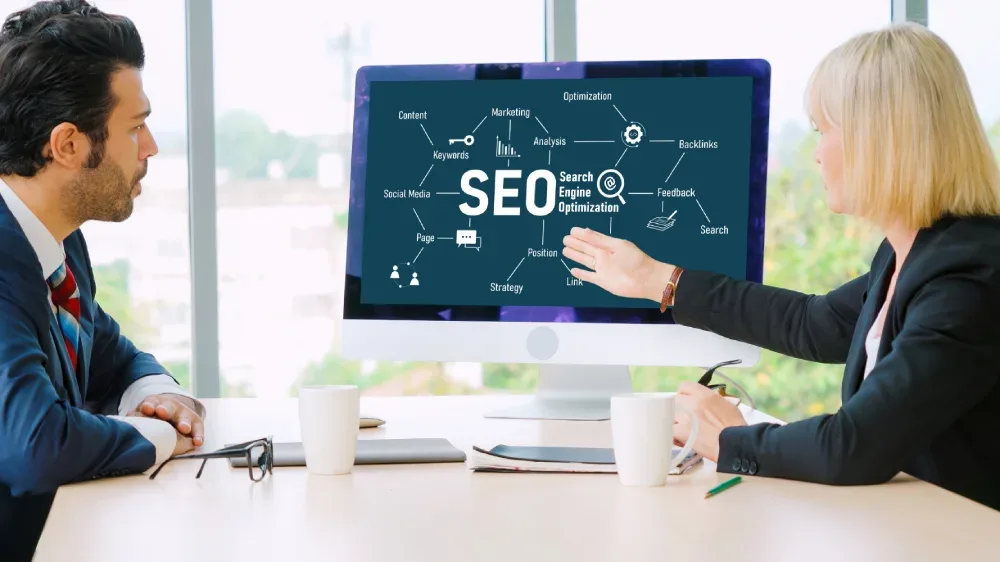
SEO gets oversold and undersold in equal measure. Agencies pitch it as passive income from Google. Skeptics dismiss it as too slow, too uncertain, and too easy to lose. Neither is accurate.
What is accurate: search is still where most buying decisions start. And knowing how to rank #1 in Google AI mode — alongside traditional organic results — is increasingly where the real competitive advantage in search is being built in 2026.
What You're Actually Paying For
SEO spend goes into three things: technical health (making sure Google can find and correctly index your site), content (creating pages that match exactly what your buyers are searching), and authority (building the credibility signals that tell Google your site is trustworthy for those topics).
Each of these takes time to compound. None produce results in 30 days. That's not a flaw in the channel — it's how it works. Businesses that go in with that understanding stay long enough to see the return. The ones that don't cancel at month 3, just before things start moving.
The Case For It
When it works, SEO is one of the highest-ROI channels available to a small business.
The math is direct. A page ranking position 1 for a buying-intent keyword generates traffic every month without a per-click cost. Over 24–36 months, the cost per lead from organic search typically falls well below what you'd pay for the same lead through Google Ads for the same keyword.
The asset is also defensible. A strong organic position is genuinely difficult for a competitor to displace quickly — unlike a paid campaign, which anyone can outbid tomorrow. Once the ranking is earned, you own it in a way you never own a paid placement.
For businesses with consistent monthly budgets and a 12-month horizon, the return rarely needs defending. The question is whether you can sustain the investment long enough to reach it.
The Case Against It
SEO fails small businesses in predictable ways.
If you need leads this month — a new business, a cash-flow crunch, a time-sensitive campaign — SEO won't help you. It's a 6–12 month play at minimum. Using it as a short-term fix is the wrong tool for the job.
It also fails when the wrong metrics are tracked. Traffic going up while leads stay flat is a common and expensive trap — usually the result of ranking for informational keywords instead of commercial ones, or bringing in visitors from outside your actual service area.
And it fails when it's done poorly. Thin content, low-quality backlinks, and unresolved technical issues can mean months of budget with no meaningful movement. Who does the work — and how — matters a great deal.
The 2026 Factor: Google AI Mode Changes the Equation
Something worth understanding specifically for 2026: Google's AI overviews and AI mode have changed how the top of the search results page looks. For informational queries — "how does X work", "what is Y" — AI-generated summaries now appear above organic results, reducing click-through for those terms.
This doesn't make SEO less relevant. It makes content strategy more important.
Transactional and commercial-intent queries — "plumber in Dallas," "web design agency for small businesses," "Google Ads management" — still route directly to organic results and paid listings. Those are the searches that produce leads. The AI summary disrupts the informational layer, not the buying layer.
For small businesses, the practical implication: optimise for the keywords your buyers use when they're ready to buy or enquire, not just when they're learning. That's always been good SEO. In 2026, it's the difference between getting clicks and not.
Final Thoughts
SEO is worth it for small businesses in 2026 if you have a 12-month horizon, a consistent monthly budget, and clear enough goals to know whether it's working.
It's not worth it if you need leads in the next 60 days, expect fast returns, or treat it as something you can start and stop depending on the month.
The businesses getting the most from it right now are the ones who started 12–18 months ago and kept going when results were slow. The clock doesn't restart — it just keeps running. The sooner you start, the sooner it compounds.