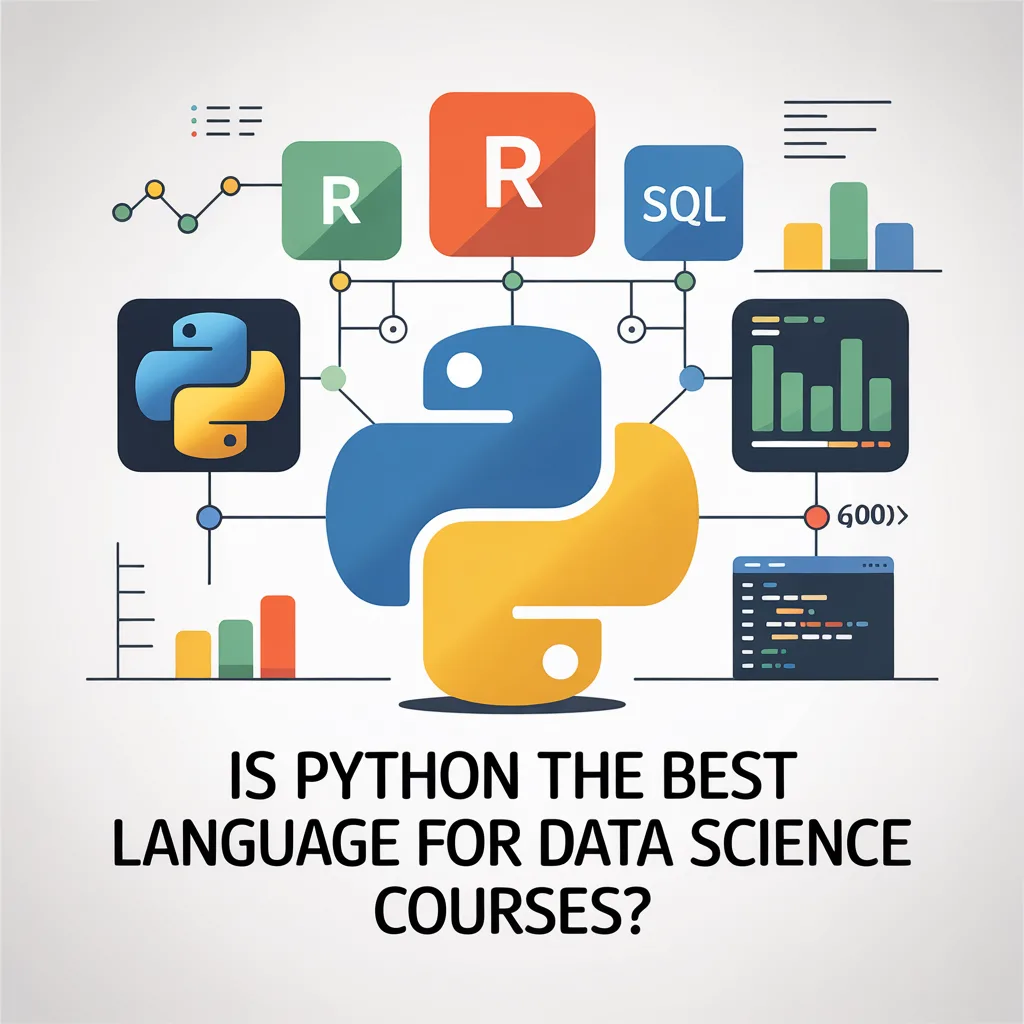
In the professional and academic landscape of 2026, the consensus is overwhelmingly yes: Python is the best language for the majority of data science with Python courses. While specialised languages like R and SQL remain essential for specific niches, Python’s dominance is driven by its role as the primary interface for Generative AI and its unparalleled ecosystem.
Why Python Leads in 2026
Python is currently considered the "undisputed champion" of data science education for several strategic reasons:
- The AI & Machine Learning Standard: In 2026, data science is inseparable from AI. Python is the native language for frameworks like PyTorch and TensorFlow, making it the only choice for courses covering Deep Learning and Large Language Models (LLMs).
- Beginner-Friendly Syntax: Its "English-like" readability allows students to focus on learning statistical concepts and data logic rather than struggling with complex coding rules.
- High-Performance Libraries: While Python was once criticized for speed, modern libraries like Polars and Dask allow it to process massive datasets as efficiently as lower-level languages.
- Career Versatility: Python is a general-purpose language. A student who learns Python for data science also gains skills applicable to web development, automation, and software engineering.
Python vs. The Competition
While Python is the best "all-rounder", other languages are often taught alongside it or used for specialised research:
LanguagePrimary Use Case in 2026Why It’s Still TaughtPythonAI, ML, & General Data ScienceVersatility, AI integration, and the largest job market demand.RAdvanced Statistics & AcademiaPreferred for precision statistical modeling and high-quality research graphics.SQLData Retrieval & ManagementEssential for interacting with databases; almost always taught with Python.JuliaScientific ComputingTaught in high-performance computing courses for its extreme execution speed.When Python Might Not Be the Best Choice
You might want to consider a different focus if you fall into these specific categories:
Pure Academic Statistics: If you are pursuing a PhD in social sciences, epidemiology, or bioinformatics, R often remains the gold standard for publication-quality visuals and specialized statistical tests.
High-Performance Computing: If you are working on massive physics simulations or ultra-low-latency financial systems, Julia is gaining traction for its "C-like" speed with "Python-like" ease.
Big Data Infrastructure: If your goal is to build the "pipes" that move data rather than the models that analyze it, Java or Scala (used with Apache Spark) are highly valued.
The Verdict for Students
If you are choosing your first or primary data science course with Python, Python is the safest and most rewarding investment.
- Job Market Proof: LinkedIn's 2025/2026 reports show Python mentioned in roughly 70% of data science job descriptions.
- Educational Support: Because of its popularity, Python has the most extensive range of tutorials, community forums, and pre-built code "packages", ensuring you never stay stuck for long.