
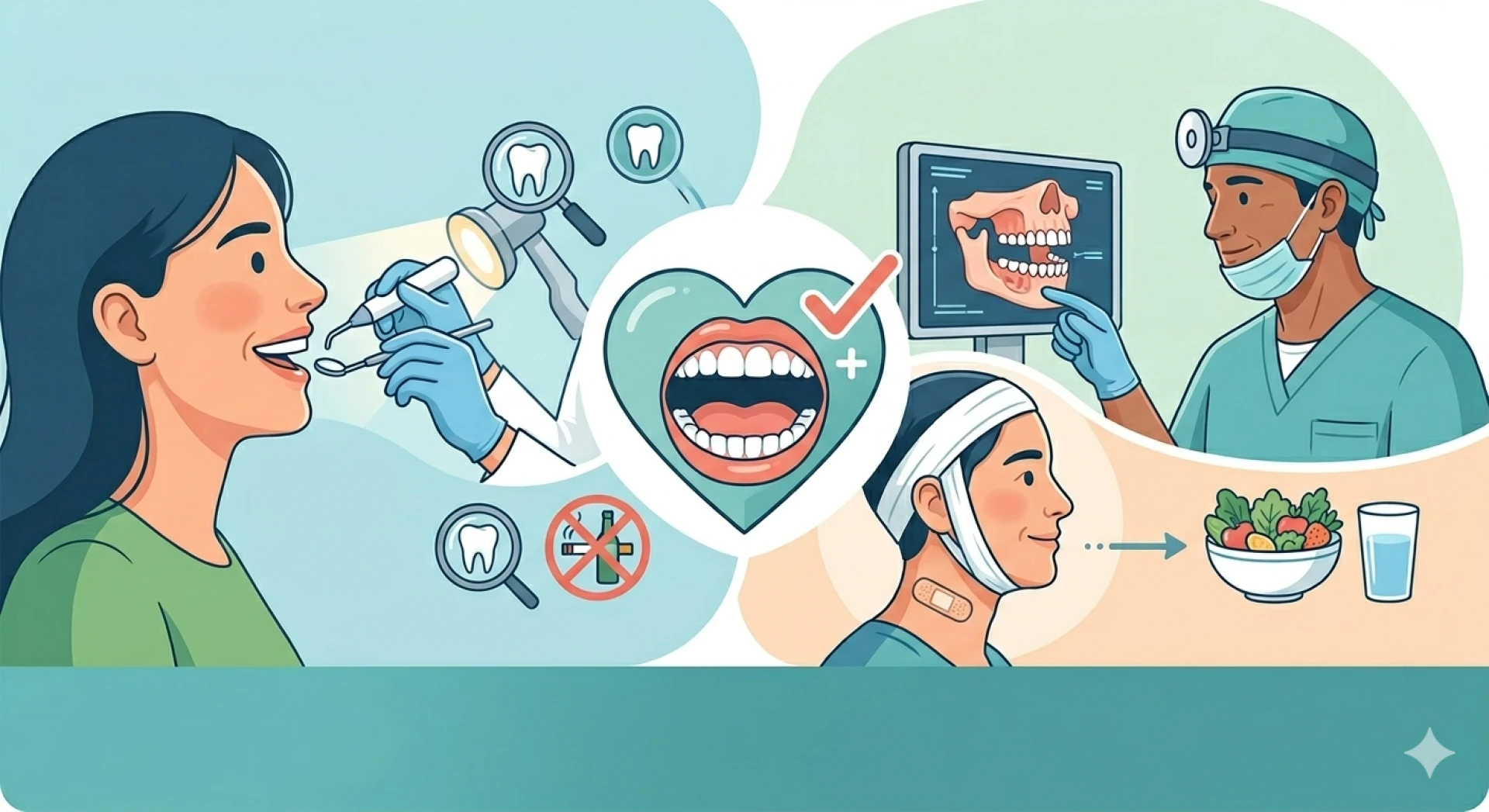
Hearing the words “oral cancer” can immediately bring fear and uncertainty. One of the first questions most patients and families ask is, “Is oral cancer curable?” The answer depends on several factors, including how early the cancer is detected, its stage, location, and the overall health of the patient.
The encouraging news is that oral cancer can be curable, especially when diagnosed early and treated promptly. In this detailed guide, we’ll explain treatment success rates, what affects prognosis, and how modern medical advances — including mouth cancer surgery — have improved outcomes significantly.
Understanding Oral Cancer
Oral cancer refers to cancers that develop in the lips, tongue, gums, inner lining of the cheeks, roof of the mouth, and floor of the mouth. It is a type of head and neck cancer, most commonly arising from squamous cells.
Common symptoms may include:
- A non-healing mouth ulcer
- Red or white patches
- A persistent lump in the mouth
- Difficulty swallowing
- Unexplained bleeding
Risk factors include tobacco use (smoking or chewing), excessive alcohol consumption, HPV infection, and prolonged sun exposure (for lip cancer).
Early detection plays a major role in whether oral cancer is curable.
Is Oral Cancer Curable?
Yes, oral cancer can be curable, particularly when diagnosed at an early stage.
The chances of cure depend mainly on:
- The stage of the cancer
- Tumor size
- Lymph node involvement
- Whether the cancer has spread (metastasized)
- The patient’s general health
When cancer is localized (confined to the original site), treatment success rates are significantly higher.
Survival Rates by Stage
Survival rates provide a general idea of treatment success but vary from person to person.
Stage I and II (Early Stage)
- Cancer is small and confined to one area.
- No spread to lymph nodes.
- Five-year survival rates are high, often around 70–90%.
At this stage, surgery alone — often mouth cancer surgery — may be enough to completely remove the tumor.
Stage III
- Larger tumors or limited lymph node involvement.
- Treatment typically involves surgery followed by radiation therapy.
- Survival rates are moderate but still promising with proper care.
Stage IV (Advanced Stage)
- Cancer has spread to multiple lymph nodes or distant organs.
- Treatment may include surgery, radiation, chemotherapy, or a combination.
- Survival rates are lower compared to early stages but vary widely depending on the individual case.
It’s important to remember that survival statistics are averages and cannot predict an individual patient’s outcome.
How Mouth Cancer Surgery Improves Cure Rates
Surgery is one of the most effective treatments for oral cancer, especially when the disease is localized.
The primary goal of mouth cancer surgery is to:
- Remove the entire tumor
- Achieve clear margins (no cancer cells at the edges of removed tissue)
- Remove affected lymph nodes if necessary
When clear margins are achieved and there is no spread, the chance of complete cure is high.
In early-stage cancer, surgery alone may be curative. In advanced cases, it becomes part of a combination treatment plan designed to maximize disease control.
Other Treatment Options and Their Role in Cure
While surgery is often the main treatment, other therapies may be used depending on the stage:
Radiation Therapy
- Uses high-energy beams to destroy cancer cells.
- May be used after surgery to eliminate remaining microscopic cells.
- Sometimes used as the primary treatment if surgery is not possible.
Chemotherapy
- Uses drugs to kill cancer cells.
- Often combined with radiation for advanced cases.
- Can help shrink tumors before surgery (neoadjuvant therapy).
Targeted Therapy and Immunotherapy
- Designed to specifically attack cancer cells or boost the immune system.
- Used in selected advanced or recurrent cases.
These treatments improve overall control and may increase survival chances, especially when combined appropriately.
Factors That Influence Treatment Success
Several factors determine how curable oral cancer may be:
1. Early Detection
This is the most critical factor. Oral cancer detected early is significantly more treatable.
2. Tumor Location
Certain locations are easier to operate on completely, improving surgical success rates.
3. Depth of Invasion
Deeper tumors have a higher risk of spreading to lymph nodes.
4. Lymph Node Involvement
Cancer spread to neck lymph nodes lowers survival rates but does not eliminate the possibility of cure.
5. Overall Health
Patients in good general health tolerate treatment better and often recover more quickly.
Can Oral Cancer Come Back After Treatment?
Yes, recurrence is possible. Oral cancer may return:
- At the original site (local recurrence)
- In nearby lymph nodes
- In distant organs
The risk of recurrence is higher in advanced stages and in patients who continue tobacco or alcohol use.
This is why regular follow-up appointments are essential. Early detection of recurrence allows prompt treatment, which may still result in long-term control.
Quality of Life After Treatment
Modern treatment approaches focus not only on curing cancer but also on preserving function and appearance.
After mouth cancer surgery, patients may experience:
- Temporary difficulty speaking
- Changes in swallowing
- Mild cosmetic alterations
However, advances in reconstructive surgery, speech therapy, and rehabilitation have dramatically improved long-term outcomes.
Many patients return to work, social activities, and normal routines after recovery.
Importance of Lifestyle Changes
Treatment success also depends on lifestyle choices after diagnosis.
Patients are strongly advised to:
- Stop tobacco use completely
- Limit or avoid alcohol
- Maintain regular dental checkups
- Follow a nutritious diet
These changes reduce the risk of recurrence and improve overall health.
Psychological Impact and Support
Facing cancer treatment can be emotionally challenging. Anxiety about recurrence is common.
Support from:
- Family
- Healthcare teams
- Counseling professionals
- Cancer support groups
can significantly help patients cope with the journey.
Mental well-being plays an important role in overall recovery.
The Bottom Line: Is It Curable?
Yes, oral cancer is often curable, especially when detected early. With timely diagnosis and proper treatment — including mouth cancer surgery when indicated — many patients achieve long-term survival.
Even in more advanced cases, modern therapies have improved outcomes and extended life expectancy significantly.
The key factors remain:
- Early detection
- Expert medical care
- Appropriate combination therapy
- Regular follow-up
If you notice a non-healing mouth ulcer, persistent lump, or unusual oral symptoms lasting more than two weeks, seek medical evaluation promptly. Early action can dramatically increase the chances of successful treatment.