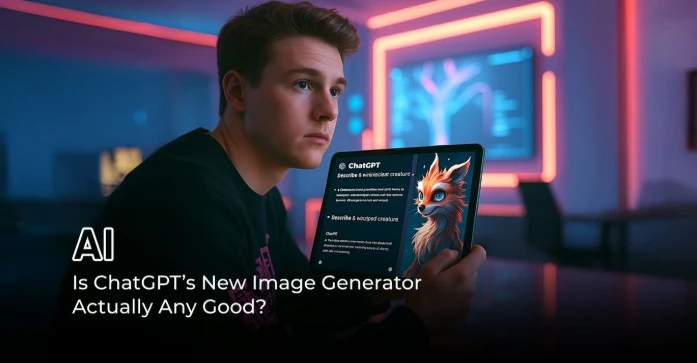
Ruby Sparks (2012) cleverly explores the idea of creating your “perfect” partner—much like how OpenAI’s ChatGPT image generator lets you “create” visuals with just text prompts. The article compares the film’s fantasy concept—where Calvin’s dream girl, Ruby, appears from his writing—to how ChatGPT brings prompts to life, though with some quirks.
The piece tests the tool’s capabilities through six scenarios: realistic human poses, scenic landscapes, collages, artistic styles, business infographics, and branding materials. While ChatGPT often produces impressive visuals—capturing detailed backgrounds, vibrant colors, and complex compositions—human elements like accurate hand positioning or realistic facial features sometimes trip it up. Editing features help refine outputs, but details like logos or repeated prompts can still confuse the tool.
For businesses, the image generator shows promise by creating infographics, leaflets, mood boards, and marketing content—great for startups without big design budgets. However, there are limits: file size, layout precision, text formatting, and logo consistency still need human oversight.
Overall, the verdict is positive: ChatGPT’s new image generator is easy to use, versatile, and surprisingly good at turning ideas into visuals—especially for casual users or small businesses needing quick, editable graphics. But like Calvin’s fictional Ruby, it’s not flawless yet. With thoughtful prompts and a bit of trial and error, it can be a magical creative companion—just don’t expect it to replace designers entirely (at least not yet!).