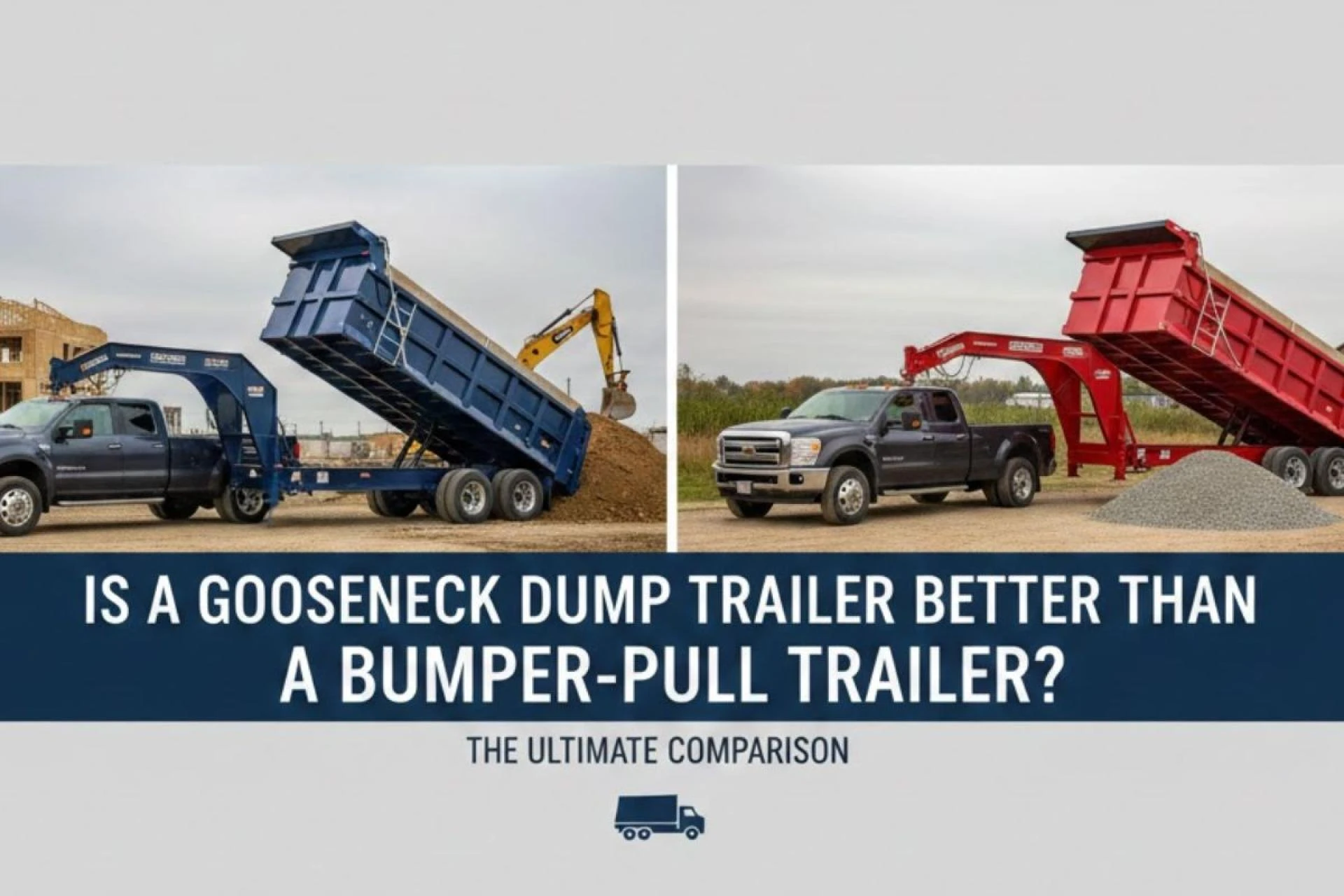
Choosing the right trailer matters for anyone moving heavy loads, especially those hauling materials for construction, landscaping, agriculture, or commercial transport. Many buyers compare gooseneck dump trailers and bumper-pull trailers, trying to understand which option provides better handling, stability, and long-term value. In the middle of these considerations, the demand for a dump truck trailer also influences expectations around strength, control, and load performance.
This guide looks closely at how both trailer styles function, what makes them distinct, and how different work conditions shape the choice between them.
Understanding the Structure and Pull Style
Gooseneck Attachment and Stability
A gooseneck hitch connects inside the bed of a pickup truck, placing the trailer’s weight over the rear axle. This design increases traction and reduces sway during towing. With more load centered inside the truck’s wheelbase, the entire setup feels steadier on highways, rural roads, job sites, and uneven terrain. For users working with large quantities of gravel, soil, debris, or equipment, that centered balance becomes a key factor.
Bumper-Pull Attachment and Versatility
A bumper-pull trailer attaches to a standard receiver hitch at the back of the vehicle. This layout appeals to operators who want quick hookups or who prefer using a variety of tow vehicles. While it can carry impressive loads, its attachment point places weight farther behind the truck’s axle, which leads to more sway at higher speeds or when traveling with heavier material.
Load Capacity and Weight Management
Higher Capacity with Gooseneck Designs
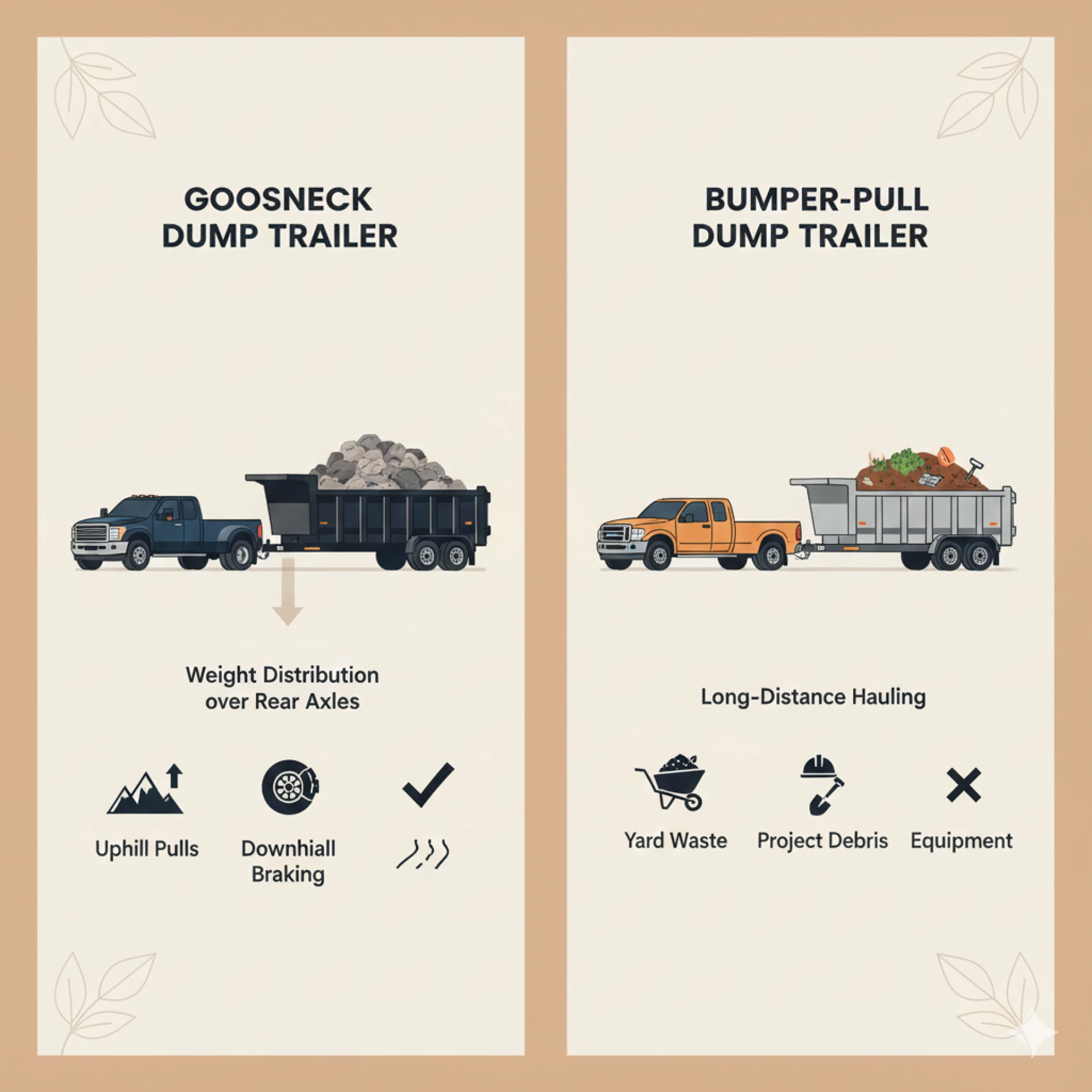
Gooseneck dump trailers often handle greater payloads due to their reinforced frames and hitch style. Heavier loads sit more comfortably over the tow vehicle, improving control and distributing pressure more evenly. This helps during uphill pulls, downhill braking, and long-distance hauling where balance becomes essential.
Moderate to Strong Capacity for Bumper-Pulls
Bumper-pull trailers provide sufficient capability for medium jobs—yard waste, project debris, mulch, equipment, or smaller construction loads. They’re suitable for users who work with lighter material or who don’t require the enhanced stability that comes with a gooseneck. Their load range tends to be lower, but still meets the demand of small business operators, homeowners, and mobile contractors.
Maneuverability and Towing Behavior
Goosenecks Excel in Tight or Challenging Areas
Backing up a gooseneck trailer feels smoother because the pivot point sits closer to the truck. This wider turning radius supports precise movement in job-site environments, crowded yards, warehouses, and narrow entrances. Operators who regularly navigate sharp angles or restricted spaces often prefer this setup because it offers a more responsive feel.
Bumper-Pull Trailers Offer Familiar Handling
Most drivers find bumper-pull handling more familiar. The shorter learning curve helps new operators get comfortable quickly. While it doesn’t match the control of a gooseneck during sharp maneuvers, it performs well for straightforward hauling or for trips that don’t involve extreme terrain. For short-distance tasks, its simplicity becomes a useful advantage.
Tow Vehicle Requirements and Compatibility
Gooseneck Requires a Pickup with a Bed Hitch
The tow vehicle must support a gooseneck ball installed in the truck bed. This limits compatibility to pickups equipped for heavy towing. For buyers already using strong work trucks, this is an easy match. It also improves towing strength because the design reduces stress on the vehicle.
Bumper-Pull Works with More Vehicles
A wider variety of vehicles can pull a bumper-pull trailer, including SUVs, standard pickups, and some commercial vehicles. This flexibility appeals to buyers who share trailers across multiple trucks or who don’t want to modify their vehicle with a bed-mounted hitch.
Cost Difference and Long-Term Value
Higher Upfront Cost for Goosenecks
Gooseneck dump trailers typically come with a larger price tag, reflecting their stronger structure, increased capacity, and enhanced towing security. For long-term or high-volume users, the added investment often pays off through improved performance and longer equipment life.
More Budget-Friendly Bumper-Pull Options
Bumper-pull trailers cost less and fit comfortably in many small business budgets. They serve efficiently for medium tasks, seasonal work, or part-time hauling. This makes them attractive for operators who don’t need the extra weight stability or capacity of a gooseneck.
Safety Considerations and Road Behavior
Gooseneck Stability Reduces Sway
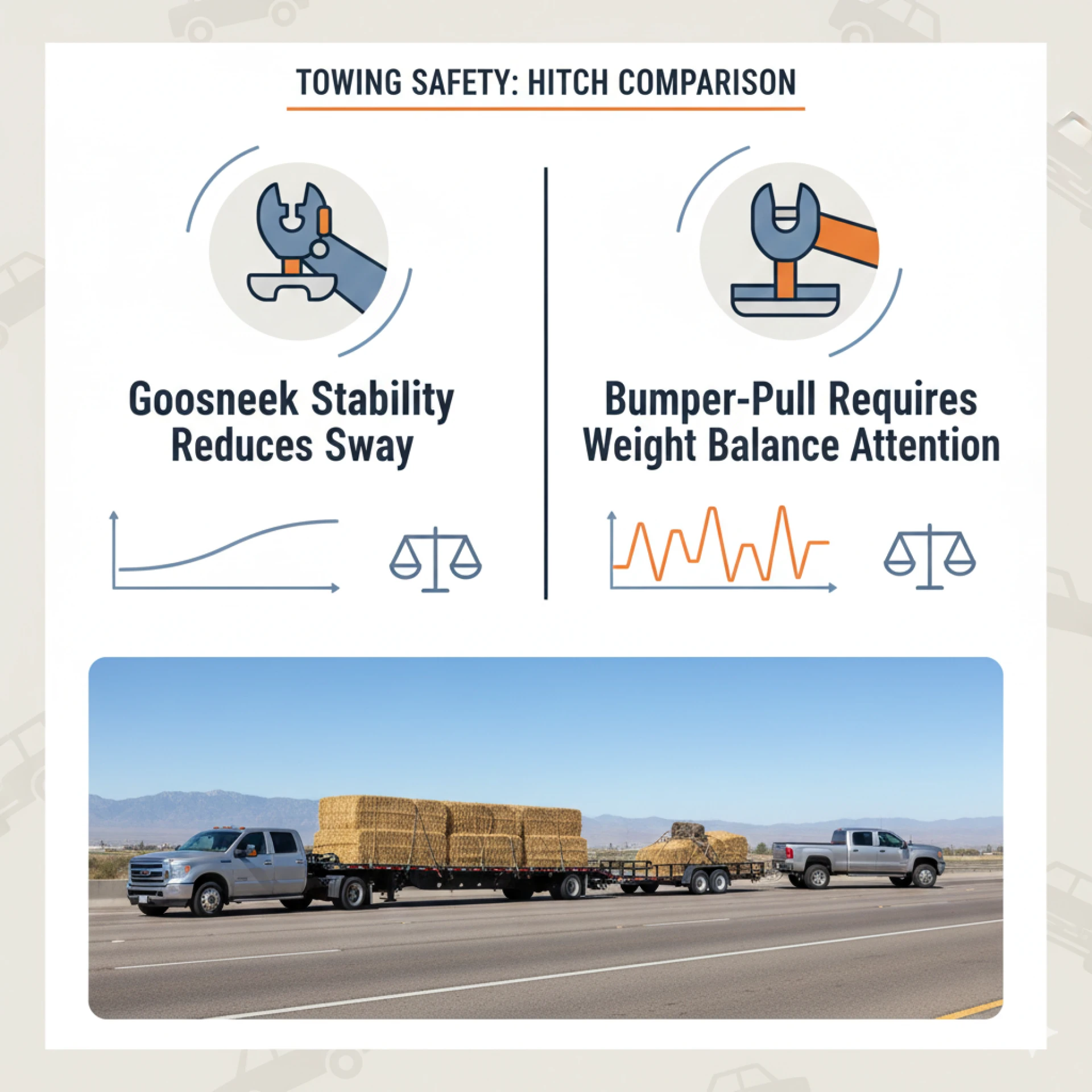
The placement of the hitch naturally minimizes sway, making highway travel steadier. This is valuable for large loads or frequent transport between distant sites. Better balance lowers the stress on both the driver and the vehicle.
Bumper-Pull Requires Weight Balance Attention
Proper weight distribution becomes essential for bumper-pull towing. When loaded thoughtfully, it performs well, but misalignment or excessive weight in the wrong location can cause instability. Users must pay closer attention to tongue weight and load positioning.
Work Environment and Use-Case Suitability
Gooseneck Works Well for Heavy Construction, Farming, and Commercial Hauling
Those moving bulk materials every day benefit from a trailer that supports strength, stability, and endurance. Gooseneck designs match rugged tasks and long hours, making them a dependable tool for continuous use.
Bumper-Pull Fits Light Construction, Home Projects, and Local Services
Operators running landscaping routes, home repairs, junk removal, or medium-scale material transport find bumper-pull trailers more than adequate. They offer straightforward operation and easier storage in driveways or small yards.
Conclusion
A gooseneck dump trailer stands out for those who move heavy loads regularly, work across challenging ground, or want the most stable towing experience. Its attachment point, weight balance, and higher capacity give it an edge for demanding conditions. A bumper-pull trailer suits users who prioritize versatility, affordability, and simpler vehicle matching. The right choice depends on work volume, towing comfort, and long-term plans for material transport.