Applying for an Initial Public Offering (IPO) can be an exciting step for investors who want to participate in a company's stock market listing. After submitting an application, one of the most important things to check is the IPO allotment status. It tells you whether you have been allotted shares in the IPO and, if applicable, how many shares have been allocated to you.
In India, investors can check their IPO allotment status online through the registrar's website, the stock exchange websites, or other authorised platforms that provide IPO-related services. The exact process depends on the IPO and the platform handling the application.
In this guide, we explain how to check IPO allotment status in 2026, what details you need, how allotment works, and what happens to your shares after allotment. We also cover the role of your demat account and common issues you may face while checking the status.
What Is IPO Allotment Status?
IPO allotment status refers to the outcome of your application for shares in a public issue. Once the IPO application window closes, the registrar processes valid applications and completes the allotment according to the applicable rules and basis of allotment.
Your IPO allotment status may indicate that:
- Shares have been allotted: You have received all or some of the shares you applied for.
- Partial allotment: You have received fewer shares than you applied for.
- No allotment: You have not received any shares in the IPO.
- Application under process: The final status may not yet be available, or the platform may still be updating its records.
For an oversubscribed IPO, demand exceeds the number of shares available in a particular investor category. As a result, not every applicant necessarily receives shares. The final outcome depends on the issue's allotment rules and the valid applications received.
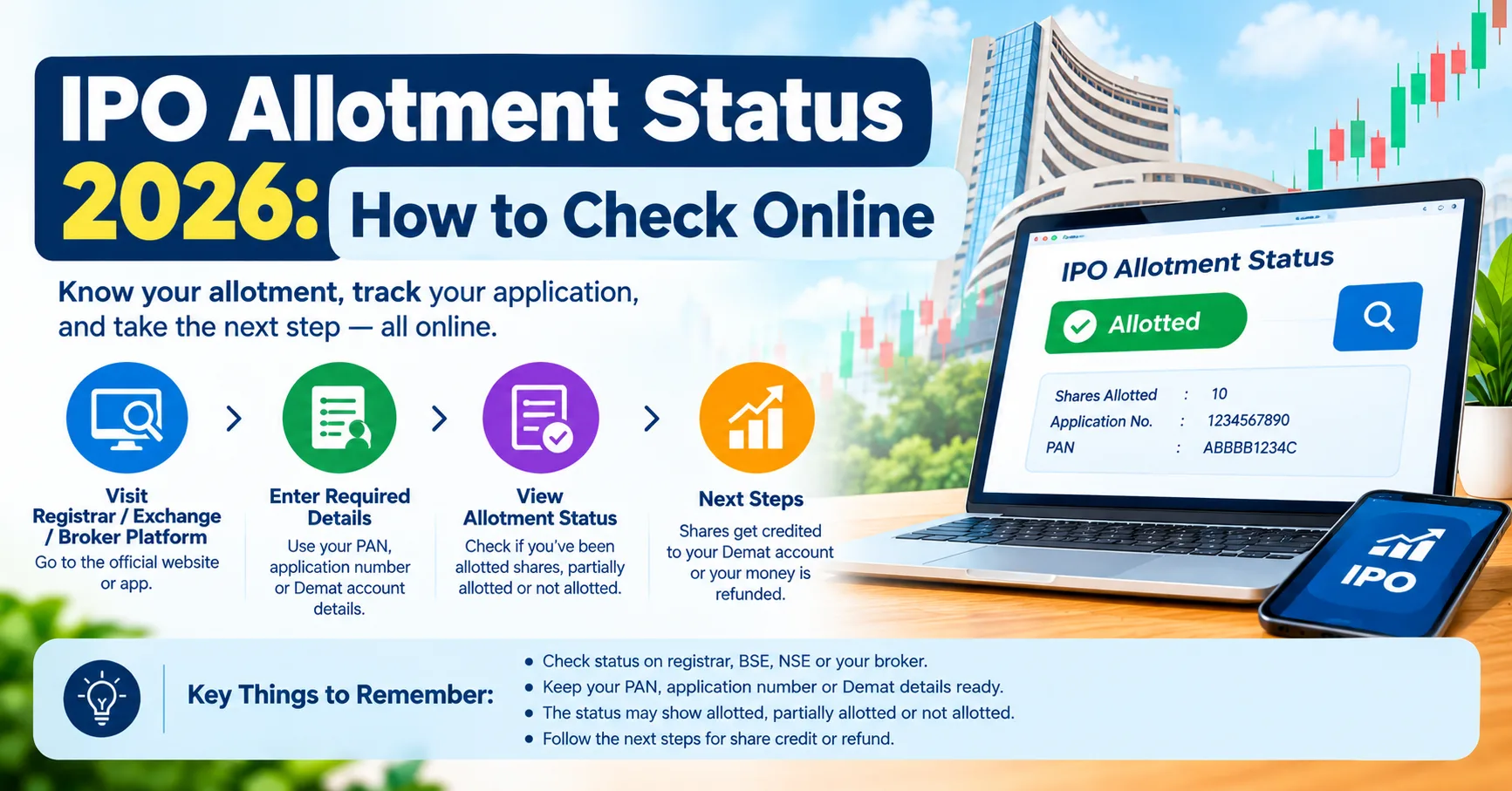
How to Check IPO Allotment Status Online in 2026
You can check your IPO allotment status online using the registrar's website or the relevant stock exchange's IPO application-status facility, where available.
Before you begin, keep your application details handy. These may include your PAN, application number, or Demat Account number, depending on the platform.
Method 1: Check IPO Allotment Status on the Registrar's Website
The registrar is responsible for processing IPO applications and managing the allotment process for the issue. It publishes the allotment status after the relevant process has been completed.
Follow these steps:
- Visit the official website of the registrar handling the IPO.
- Find the IPO allotment or application-status section.
- Select the relevant IPO from the available list.
- Choose the identification method supported by the website, such as PAN, application number, or Demat Account details.
- Enter the required information.
- Complete any verification step displayed on the page.
- Submit the details to view your IPO allotment status.
If the status is not available yet, check the IPO's announced allotment schedule and try again once the registrar publishes the results.
Method 2: Check IPO Allotment Status on the BSE Website
The Bombay Stock Exchange (BSE) provides an online facility for checking IPO application status for eligible issues.
The general process is as follows:
- Visit the official BSE website.
- Navigate to the IPO application-status facility.
- Select the relevant issue, if it is listed in the available options.
- Enter the required details, such as your application number or PAN, according to the fields provided.
- Complete any verification requirements.
- Submit the information and review the result.
The fields and steps may change as the exchange updates its website. Use the official BSE website and follow the instructions displayed for the particular IPO.
Method 3: Check IPO Allotment Status on the NSE Website
The National Stock Exchange (NSE) also provides IPO-related application-status information for eligible issues through its official website.
To check your status:
- Visit the official NSE website.
- Locate the IPO application-status section.
- Select the relevant IPO, where available.
- Enter the required application details.
- Complete the verification process.
- Submit the form and check the displayed status.
Availability and identification requirements may vary by issue. If you cannot find the IPO on the exchange website, check the registrar's website or the official issue-related instructions.
Method 4: Check Through Your Broker or Investment Platform
Some brokers and investment platforms provide IPO application tracking or status updates. If you applied through a broker, you can sign in to its official website or application and check whether an IPO-related status option is available.
For example, investors using platforms such as m.Stock may be able to review IPO-related information through the platform's available features.
Keep in mind that the application status displayed by a broker may not update at exactly the same time as the registrar's records. If you need to confirm the final allotment result, refer to the official registrar or exchange facility for that issue.
What Details Do You Need to Check IPO Allotment Status?
The information required depends on the website or service you use. Common details include the following:
Required detail Purpose PAN Helps identify your IPO application Application number Identifies the specific IPO application Demat Account details May be accepted by the registrar or platform for status lookup IPO name Helps you select the correct issue Verification details May be required to protect the status-checking facilityYou do not necessarily need every detail listed above. Enter only the information requested by the official website you are using.
For your security, avoid sharing your PAN, bank details, or Demat Account information on unofficial websites or with unknown individuals claiming they can confirm your allotment.
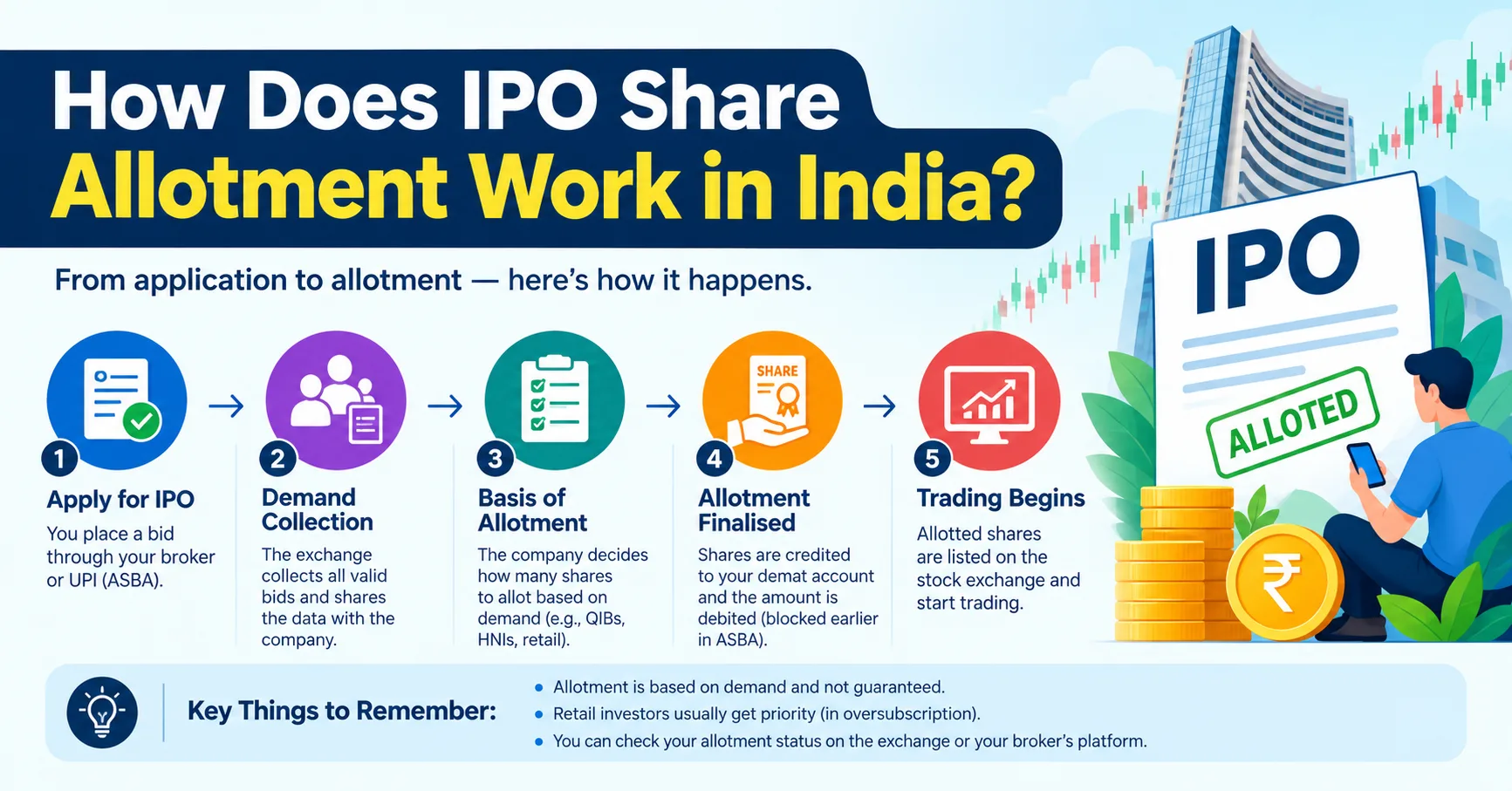
How Does the IPO Allotment Process Work?
Understanding the allotment process can help you know what happens after you submit your IPO application.
Step 1: IPO Subscription Period Closes
Investors can apply for shares during the IPO's announced subscription period. Once the issue closes, the registrar begins processing applications and subscription data.
Step 2: Applications Are Reviewed
Applications are checked according to the applicable issue rules and procedures. Invalid or rejected applications may not qualify for allotment.
Step 3: Basis of Allotment Is Finalised
The basis of allotment is finalised in consultation with the relevant parties, following the applicable regulatory and issue-specific requirements. The process depends on factors such as the investor category, number of valid applications, and subscription level.
In an oversubscribed category, shares may be allocated through a prescribed process rather than simply giving every applicant the full quantity requested.
Step 4: Allotment Status Is Published
After the allotment is finalised, the registrar makes the application outcome available through the relevant status-checking channels.
Step 5: Shares or Refunds Are Processed
Investors who receive shares generally have them credited to their registered demat accounts according to the issue schedule. For applicants who do not receive shares, blocked funds are released or refunds are processed, as applicable to the payment method and issue process.
Step 6: Shares List on the Stock Exchange
After allotment and the completion of the required formalities, the company's shares are listed on the exchange on the announced date. Investors who have received shares can then view their holdings in their demat account, subject to the broker's display and update process.
What Is the Role of a Demat Account in IPO Allotment?
A demat account is an account used to hold securities in electronic form. If you receive shares through an IPO, they are credited to the demat account provided in your valid application.
A demat account is important because:
- It holds allotted IPO shares electronically.
- It allows you to view your shareholding through your depository participant or broker.
- It enables you to hold shares after listing and sell them through the appropriate trading arrangements.
- It reduces the need to hold physical share certificates.
Before applying for an IPO, ensure that your demat account is active and that the account details entered in the application are correct. Your PAN, bank or payment details, and demat information should also match the applicable requirements.
Opening a demat account does not guarantee IPO allotment. Allotment depends on the number of shares available, valid applications, category-specific rules, and the issue's final basis of allotment.
How Long Does It Take for IPO Allotment Status to Be Updated?
IPO allotment status is generally published after the basis of allotment is finalised. The exact timing depends on the IPO's schedule and the completion of the required procedures.
You should refer to the official issue timeline for the expected allotment date rather than assuming every IPO follows the same timetable.
If the status is not available on the expected date:
- Check the official registrar's website again later.
- Confirm that you selected the correct IPO.
- Verify the PAN or application number entered.
- Review any updates published by the issuer, registrar, or exchange.
A delay in a website's status update does not automatically mean your application has been rejected.
What Does Your IPO Allotment Status Mean?
When you check your IPO allotment status, you may see different results depending on the platform.
Status or result What it generally means Allotted Shares have been allocated to your application Partially allotted You received fewer shares than requested Not allotted No shares were allocated to your application Rejected The application was rejected under the applicable process Pending or unavailable The result may not yet be published or the platform may not have updatedThe wording may differ across registrars and platforms. If a result is unclear, refer to the official allotment information or contact the registrar through its published support channels.
What Should You Do After Checking Your IPO Allotment Status?
Your next step depends on the result.
If You Receive an Allotment
Check that the allotted shares are credited to the correct demat account according to the announced schedule. You can then review the company's prospectus, business model, financial position, valuation, and market risks before deciding whether to continue holding or sell after listing.
Receiving shares does not guarantee that you will make a profit. The market price after listing may be higher or lower than the issue price.
If You Do Not Receive an Allotment
Check your bank account or payment application for the release of blocked funds, where applicable. Under the ASBA or UPI mandate process, the amount may have been blocked rather than debited permanently. The release timeline depends on the issue process and payment arrangements.
If the funds remain blocked beyond the expected timeline, contact your bank, payment service provider, broker, or the relevant issue support team.
If Your Application Shows Rejected
Review the application details and any rejection reason provided by the registrar or platform. Possible issues can include incorrect details, payment or mandate problems, or failure to meet applicable application requirements.
Do not assume that every rejection can be corrected after the IPO closes. For future applications, verify the information carefully before submitting.
Common Problems While Checking IPO Allotment Status
Investors may sometimes have difficulty viewing their results online. Here are common issues and possible solutions.
1. IPO name is not available: The allotment result may not have been published yet, or the website may not have updated its list. Check the official schedule and try again later.
2. Application number is not recognised: Confirm that you entered the correct number and selected the appropriate IPO.
3. PAN details do not match: Recheck the PAN entered and ensure that you are using the details associated with your application.
4. Website is slow or unavailable: High traffic can affect access around the time allotment results are published. Try again after some time or use another official status-checking channel.
5. Shares are not visible in your demat account: Check the announced share-credit schedule and allow time for the broker or depository interface to update. If the expected timeline has passed, contact your broker or the registrar.
Tips to Follow Before Applying for an IPO
Checking allotment status is only one part of the IPO investment process. Before applying, consider these points:
- Read the company's offer documents and understand its business.
- Review its revenue, profitability, debt, cash flows, and major risks.
- Understand the IPO price band and valuation.
- Check the purpose of the issue, including the use of fresh issue proceeds and any offer-for-sale component.
- Confirm that your PAN, bank or payment details, and demat account information are accurate.
- Apply through an authorised platform and follow the official application process.
- Avoid making an investment decision based only on grey market premium (GMP) or social media claims.
IPO investing involves market risk, and neither allotment nor listing gains are guaranteed.
Frequently Asked Questions (FAQs)
1. How can I check IPO allotment status in 2026?
You can check your IPO allotment status through the official registrar's website or the BSE or NSE website, where the relevant application-status facility is available. You may need your PAN, application number, or other requested details.
2. Can I check IPO allotment status using my PAN?
Yes. Many official registrar and exchange status-checking facilities accept PAN as an identification option. The available methods depend on the platform and issue.
3. Do I need a demat account to receive IPO shares?
Yes. A valid demat account is required to hold IPO shares electronically. The account details must meet the applicable application requirements, and allotted shares are credited to the demat account specified in the valid application.
4. What happens if I am not allotted IPO shares?
If you do not receive shares, funds blocked for the application are generally released or refunded as applicable to the payment method and issue process. Check the official schedule and contact your bank or payment provider if the release is delayed.
5. Can I check IPO allotment status through my broker?
Some brokers and investment platforms provide IPO application tracking or status updates. However, the available features vary. You can also check the official registrar or exchange facility for the final result.
6. Why is my IPO allotment status not showing?
The result may not have been published yet, the website may be experiencing high traffic, or the information entered may not match the application. Check the official allotment date, verify your details, and try again later.
7. When will IPO shares be credited to my demat account?
Shares are generally credited according to the IPO's announced schedule after allotment and the completion of the required procedures. Refer to the official issue timeline for the expected date.
8. Does IPO allotment guarantee listing gains?
No. IPO allotment only means that shares have been allocated to you. The listing price depends on market demand, investor sentiment, company fundamentals, valuation, and broader market conditions. You may gain or lose money after listing.
Conclusion
Checking your IPO allotment status online helps you confirm whether you have received shares in a public issue. You can generally use the official registrar's website or the relevant BSE or NSE application-status facility, depending on the IPO.
Keep your application details ready, verify the result through an official channel, and check your demat account after the scheduled share-credit date. If you do not receive an allotment, monitor the release of blocked funds or applicable refund process.
Most importantly, treat IPO investing as a research-driven decision rather than a way to pursue guaranteed listing gains. Review the company's fundamentals, valuation, business risks, and offer documents before applying.