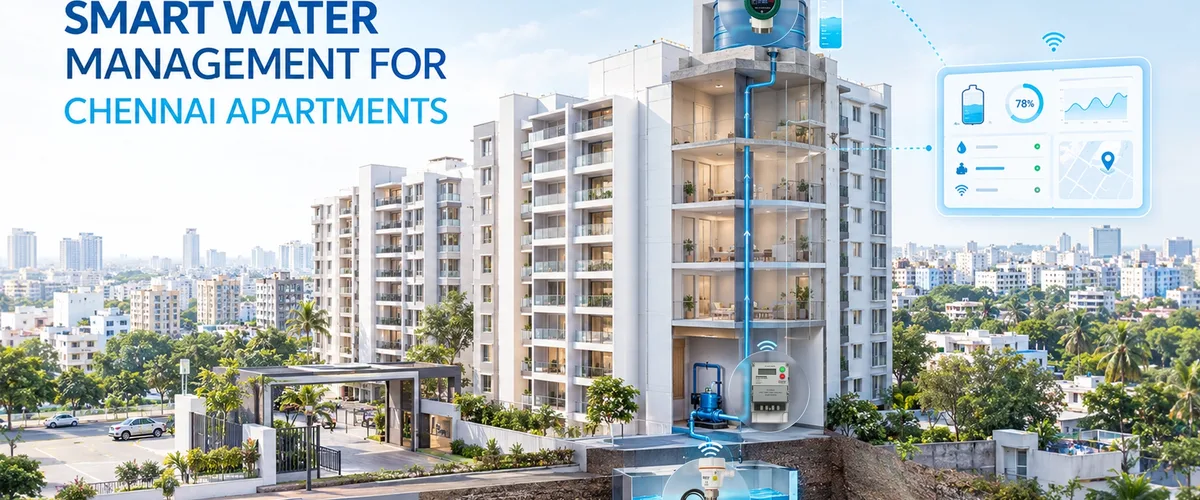
Water management is becoming increasingly important for residential communities, commercial buildings, manufacturing facilities, and agricultural operations. Traditional water management methods often depend on manual inspections, which can lead to water wastage, overflowing tanks, unexpected shortages, and inefficient pump operation.
An IoT water management system offers a smarter approach by connecting sensors, communication devices, and cloud-based platforms. This technology enables users to monitor water levels remotely, receive alerts, and automate selected water management operations.
https://mytank.cloud/?utm_source=chatgpt.com
What Is an IoT Water Management System?
An IoT water management system uses Internet of Things technology to collect, transmit, and analyze water-related information. Depending on the application, it can monitor tank levels, water flow, consumption, and other operating parameters.
Users can access information through a connected dashboard or mobile application, allowing them to make informed decisions without regularly visiting every tank or monitoring location.
These systems are suitable for overhead water tanks, underground sumps, reservoirs, industrial storage facilities, and large residential complexes.
How Does an IoT Water Management System Work?
An IoT-based water management solution generally operates through five main stages.
- Data collection: Sensors measure water levels, flow rates, or other selected parameters.
- Data processing: A connected controller processes the sensor readings.
- Wireless communication: Information is transmitted using technologies such as Wi-Fi, 4G, LoRaWAN, or NB-IoT.
- Cloud-based monitoring: Data is displayed on a centralized dashboard or supported mobile application.
- Automation and alerts: Configured notifications and compatible control devices help users respond to changing conditions.
This integrated approach makes water management more convenient and improves visibility into water storage and usage.
Key Benefits of an IoT Water Management System
1. Real-Time Water Monitoring
Users can check tank levels and other supported measurements remotely. This is particularly helpful for facilities with multiple tanks or locations that are difficult to access.
2. Reduced Water Wastage
High-level alerts help users identify tanks approaching their maximum capacity. When integrated with suitable automation equipment, the system can stop filling pumps at predefined levels to reduce overflow.
3. Smart Pump Automation
IoT monitoring can be combined with automatic pump controllers to manage water transfer according to configured conditions. Appropriate safeguards are essential to prevent dry running, excessive cycling, and equipment damage.
4. Better Water Consumption Visibility
When flow meters and suitable analytics are integrated, users can review water consumption patterns and identify unusual usage that may require investigation.
5. Centralized Management
A cloud-connected platform can help facility managers monitor multiple tanks and locations from one interface, depending on the system's supported capacity.
Applications of IoT Water Management Technology
IoT-based solutions can support water management across several sectors.
- Residential buildings: Monitor household water tanks and automate refilling.
- Apartment complexes: Track overhead tanks and underground sumps across multiple buildings.
- Industrial facilities: Monitor water storage and selected process-water parameters.
- Agriculture: Improve visibility into irrigation water availability.
- Commercial properties: Manage water storage in hotels, offices, and hospitals.
- Water distribution facilities: Monitor reservoirs and support remote operational planning.
Choosing the Right Sensors and Connectivity
Selecting suitable equipment is essential for building a dependable IoT water management system.
Water-Level Sensors
Radar sensors offer non-contact measurement and can be suitable for many tank-monitoring applications. Ultrasonic sensors may also be appropriate depending on the tank environment and measurement requirements.
Wireless Communication
Different communication technologies serve different needs:
- Wi-Fi: Suitable for locations with reliable Wi-Fi coverage.
- 4G: Useful for remote monitoring where cellular coverage is available.
- LoRaWAN: Supports long-range, low-power communication through a compatible network.
- NB-IoT: Suitable for supported cellular IoT deployments.
The choice depends on coverage, installation conditions, power availability, data requirements, and operating costs.
How IoT Technology Supports Smart Water Conservation
Smart water management goes beyond simply measuring tank levels. When monitoring data is combined with suitable flow sensors, alerts, and analytics, users can better understand how water is stored and consumed.
For example, unexpected changes in water consumption may indicate a leak or abnormal usage. Historical tank-level data can also help facility managers understand filling patterns and plan maintenance more effectively.
These insights support more responsible water usage and help organizations improve operational efficiency.
Future of IoT Water Management Systems
As connected devices and automation technologies advance, IoT water management systems are becoming increasingly useful for buildings and industrial operations. Improvements in low-power sensors, wireless connectivity, and cloud analytics can support more flexible monitoring solutions.
Future deployments may integrate water-level monitoring, pump automation, flow measurement, and predictive maintenance into a unified platform.
Conclusion
An IoT water management system helps modernize water monitoring by combining connected sensors, remote visibility, alerts, and optional automation. It can help reduce overflow, simplify tank inspections, improve pump management, and provide better insight into water consumption.
For homes, commercial buildings, and industrial facilities, adopting a suitable IoT-based solution is a practical step toward more efficient and sustainable water management.