
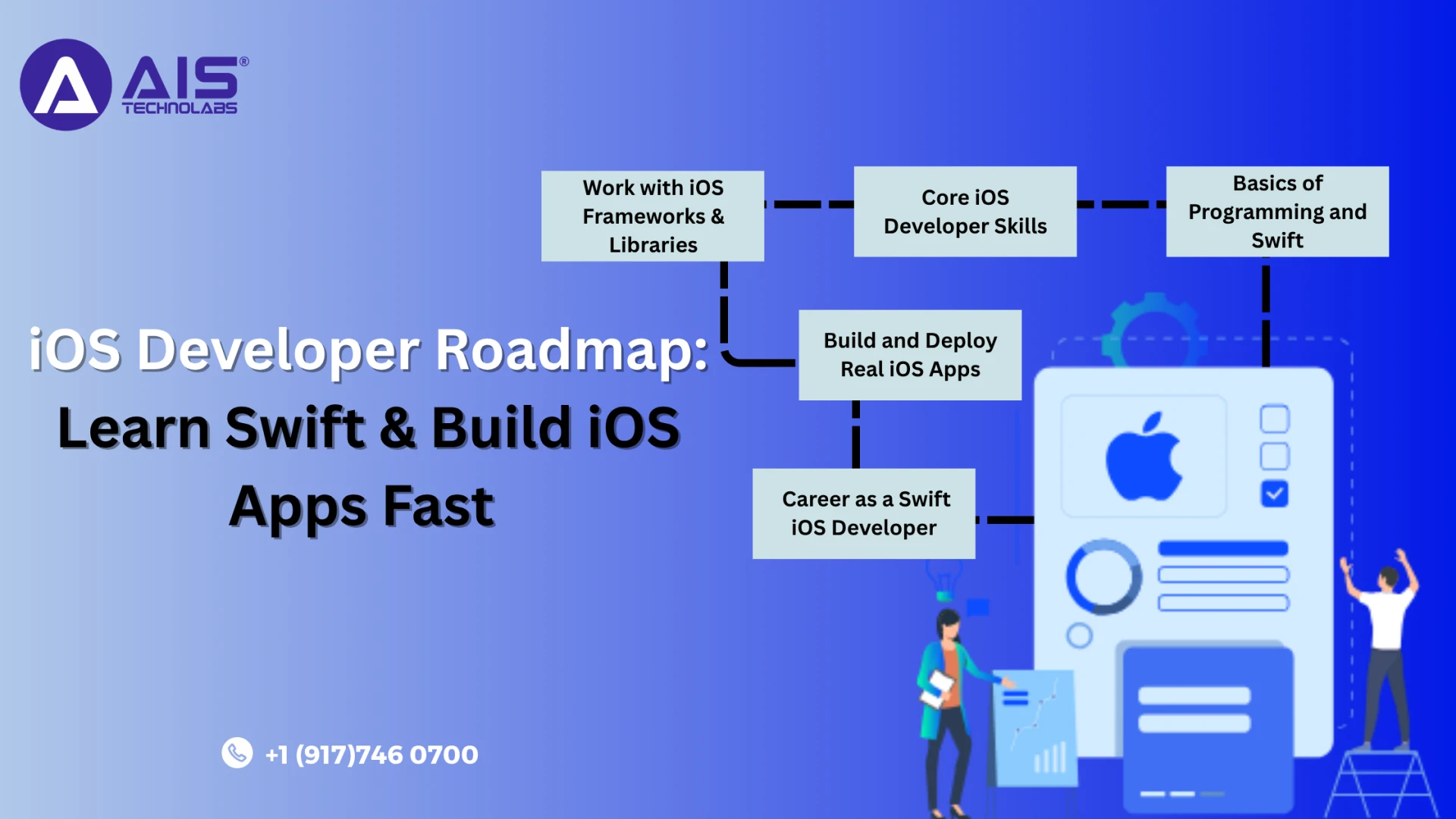
You're here because you're ready to dive into one of the most exciting and lucrative areas of technology. And oh yeah, The Ultimate Roadmap for iOS Developers is a simple, step-by-step guide to mastering Swift and launching a SUCCESSFUL career in iOS app development. Forget endless lessons. We only focus on iOS developers skills that matter. Let’s build something great.
Introduction to the iOS Developer Roadmap
Why Choose iOS App Development in 2025?
iOS app development is now less of an option and more of a strategic career move. Apple's ecosystem is a huge resource with more than 1.8 billion active devices. This directly means huge business potential and a rapidly expanding job market.
- Explosive Ecosystem Growth: The introduction of innovative platforms such as VisionOS, the continuous introduction of new iOS releases (such as the rapid , rapid adoption of iOS 18), and Apple's focus on new devices (such as the Apple Vision Pro) provide a fresh and new challenging ecosystem. This continuous development means that your skills will always be in demand.
- High-Value Job Opportunities: Swift iOS developer The roles are consistently among the highest paying positions in the tech , tech industry. Like, From , From dynamic start-ups to large , large corporations, companies compete fiercely for developers to master Apple's cutting-edge technologies.
- Surging Demand for Swift: Swift, Apple's modern programming language, is the gold , gold standard. Its safety features, performance and straightforward installation make it highly sought after. Like, Becoming a skilled Swift iOS developer will put you at the forefront of this high demand.
What This iOS Developer Roadmap Covers
This roadmap strips away the noise and focuses on the high-impact knowledge you need to succeed.
- Coding in Swift: Mastering the core programming language.
- Developing for iOS: Learning the essential tools and environment (Xcode).
- Mastering iOS Frameworks: Getting fluent in the building blocks like SwiftUI and UIKit.
- Building Real-World Apps: Applying your iOS developer skills to create functional, polished projects.
- Publishing Apps: Understanding the entire App Store submission process.
Learn the Basics of Programming and Swift
You can't build a palace without a foundation. This is the first step in creating your own design using Swift.
Understanding Swift: The Core Language for iOS Developers
Swift is powerful, intuitive, and designed with security in mind. Seriously, As a potential Swift iOS developer, you need , need to understand the basic concepts
Fundamentals: Variables (var) and constants (let), data types (int, string, bool) and basic control flow (if/else, switches). Constants (LETs) are a great safety feature - use them when a value should not change to prevent accidental errors.
- Syntax: Swift's syntax is concise and highly readable, minimizing boilerplate code. Say goodbye to excessive semicolons!
- Key Features:Learn about optionals (graciously handle missing values using the ? symbol) and error handling (using do-catch blocks). These are language features that make Swift code inherently safer than older languages like Objective-C.
Pro Tip: Start with the basics. The official Swift documentation is the best and most authoritative source for learning the language. [Official Swift Documentation] [Evolution of Apple's Swift Routing]
Essential Tools to Get Started (Xcode, Playgrounds, and Simulators)
The entire Apple developer environment is integrated into one application: Xcode.
- Xcode: This is your integrated development environment (IDE). You'll write your code, design your interfaces, run tests, and debug your apps all in Xcode. This is not negotiable for iOS app development.
- Playgrounds: A great feature in Xcode that allows you to quickly write and run Swift code without building a full application. Use it to test concepts faster and strengthen your understanding of Swift syntax.
- Simulators: These are virtual iPhones, iPads and other Apple devices on your Mac. You will use them constantly to run, test and debug your applications across different screen sizes and operating system versions.
Master Core iOS Developer Skills
Once you know Swift, it's time to apply platform-specific iOS developer skills that turn a coder into an app builder.
Key Programming Concepts Every iOS Developer Must Know
Moving beyond basic SYNTAX these concepts are essential for designing professional applications:
- Object-Oriented Programming (OOP): Understanding of classes, structures, inheritance and protocols. Swift is based on object-oriented programming (POP), a powerful concept that favors defining BEHAVIOR through interfaces (protocols) over traditional class inheritance.
- Data Structures and Algorithms: You don't need to be a theoretical genius, but knowing how to use arrays, dictionaries and sets efficiently is key to having efficient apps.
- APIs and Networking: Most modern apps talk to servers. You should know how to make asynchronous network calls and parse JSON data to integrate with external APIs.
- Debugging: The ability to efficiently find and fix bugs (using Xcode's breakpoints) is arguably the most important iOS developer skill.
- Version Control (Git):All professional developers use Git. Learn how to commit push pull and merge code on platforms like GitHub.
UI/UX Fundamentals for iOS App Development
iOS users have high demands on aesthetics and responsiveness. Guess what? The app should look "native" and follow Apple's human interface guidelines.
- Design Intuitive and Responsive Interfaces: Learn more about adaptive layout and how to make , make sure your design looks great on iPhone SE, iPhone Pro Max, and iPad.
- Design Patterns (MVVM): Use patterns like Model-View-ViewModel (MVVM) to keep your code organized, testable, and maintainable. Putting all your logic in one big file is a beginner's trap!
How to Practice: Create simple apps like a currency converter, a basic to-do list, or a weather app that pulls data , data from a free , free public API. Like, This immediately puts your programming and design skills to the test.
Work with iOS Frameworks and Libraries
Frameworks are powerful tools of iOS app development. It gives you access to all the amazing features of the Apple ecosystem without reinventing the wheel.
Essential iOS Frameworks You Must Master
For modern development, you need to be comfortable with both declarative and imperative UI approaches:
- SwiftUI: Apple's modern, declarative UI framework. It allows you to describe how your interface should look and handles framework updates. This is the future and it must be learned.
- UIKit: The classic, essential UI framework. It still powers most existing apps and is often needed for complex custom scenes or deep system integration.
- Core Data / SwiftData: Apple's solution for local data persistence - how to store data on the user's device. SwiftData is the newest, most Swift iOS developer-friendly alternative.
- Combine: Apple's framework for handling asynchronous events and data streams in a clean, responsive way. Important for modern networking and state management.
- AVFoundation and CoreAnimation: Use AVFoundation to handle audio and video , video and CoreAnimation to create smooth high-performance visual effects and animations. You can create that polished native feel with these iOS frameworks.
Integrating Third-Party Libraries and APIs
No application exists in a vacuum. You often need to integrate code written by others , others or connect to external services.
- Dependency Managers: Learn how to use Swift Package Manager (SPM) Apple's built-in and now favorite tool for managing third-party libraries. Seriously While older projects use CocoaPods or Carthage tools SPM is the right choice for the future.
- RESTful APIs: It is important to understand how to structure your network calls for data transfer. This is what allows your app to connect to databases, services and other platforms.
Real-World Tip: Create a small project that integrates external APIs - a movie database app, a simple stock quote, or a weather app that displays a 5-day weather forecast. This forces you to handle networking, parsing, and data display together.
Build and Deploy Real iOS Apps
The ultimate goal TO Hire iOS developer roadmap is to get your creation into the hands of users.
Turning Your Code into a Functional App
A finished app isn't just code that runs—it's code that runs reliably.
- Testing and Debugging:Use Xcode's built-in testing tools to write unit tests (testing small pieces of logic) and UI tests (simulating user interactions). You should also use the debugger and console frequently to troubleshoot errors.
- App Preparation: Organize your code, optimize assets (images, icons), and make sure you've handled all necessary permissions (info.plist entries like camera or location usage) before the final build.
Joining the Apple Developer Program
To publish, you need to join the program ($99/year). This grants you access to the tools you need:
- App Store Connect: Online portal where you manage the app's listings, submissions and analytics.
- App Signing & Provisioning Profiles: This is how Apple verifies that your app comes from a known, trusted source (you). You will manage your certificates and profiles in Xcode.
- Submission Guidelines: You must read the App Store Review Guidelines. Apple is strict and breaking their rules (eg poor UI/UX, broken functionality, misleading content) will result in rejection.
Publish Your First App: Don't wait for the "perfect" idea. Publish a small, simple utility app to experience the entire end-to-end process. This leap is a huge step in the iOS developers roadmap.
Advance Your Career as a Swift iOS Developer
The learning never stops in tech. A successful Swift iOS developer is always evolving.
Continuous Learning and Staying Updated
The Apple world moves fast. Staying current is part of the job:
- Apple WWDC Events: Follow the events of the annual Worldwide Developers Conference (WWDC) closely. This is where Apple announces new frameworks API changes and future platform trends.
- Developer Blogs and GitHub: Follow famous developers, read tech blogs and study popular open source iOS frameworks on GitHub to learn how the pros BUILD their code.
Building a Portfolio and Networking
Your portfolio speaks volumes.
- GitHub Projects: Host all your side projects and professional work (where allowed) on GitHub. Clean code, well-written documentation, and a disciplined commit history will impress any hiring manager.
- LinkedIn Optimization: Clearly list your iOS developer skills, focusing on your expertise in Swift, SwiftUI, UIKit, and any notable projects.
- Contributing to Open-Source: Jump in on an open-source project—it's one of the best ways to collaborate and learn from senior developers.
Top iOS Certifications and Resources for 2025: While an official Apple certification is not required, completing Apple Developer documentation guides and online courses (for example from reputable providers) can demonstrate commitment and add structure to your learning.
Common Mistakes to Avoid in Your iOS Developer Journey
Why learn the hard way? Avoid these common pitfalls that trip up new developers:
- Ignoring UI Testing: Relying solely on manual , manual testing is a recipe for failure. Write automated tests!
- Skipping Documentation: Forgetting to read Apple's official documentation can lead to using outdated APIs , APIs or missing out on new and better methods.
- Misunderstanding Memory Management (ARC): Swift uses automatic reference counting (ARC), you still need to understand reference cycles , cycles (strong and weak/unknown references) to prevent memory leaks in your applications.
- Blocking the Main Thread: All long-running tasks (heavy calculations, large network calls) should , should, be moved from the main thread to the background queue. You know what? Disabling the main thread freezes the application's UI, resulting in a poor user experience.
Conclusion: Path to iOS Success
The journey on this iOS developer roadmap is challenging but incredibly rewarding. By focusing on mastering Swift, building a solid foundation of iOS developer skills, and consistently practicing with real iOS frameworks, you can quickly transition from an aspiring programmer to a professional Swift iOS developer.
Remember, success in this field isn't just about code-it's about empathy for the user and attention to detail. At AIS Technolabs, we recognize the commitment it takes to build a truly great app. Now, armed with this guide, go ahead and create the next revolutionary app for the world's most dynamic mobile ecosystem.
Visit us>>https://justpaste.it/ktav9